Table Of Contents
- Lopulgunzer: The Concept
- How Does It Work?
- · Trigger
- · Action
- Why Are So Many People Asking, “Should I Use Lopulgunzer”?
- What Are The Potential Advantages And Disadvantages Of Lopulgunzer?
- Who Should Use Lopulgunzer (And Who Should Skip It)
- Follow These Tips If You Are Planning To Use Lopulgunzer
- · Pinpoint The One Single Cross-App Task You Do Most
- · Define The Trigger And The Action To Beperformed (Or Desired Action).
- · Run And Debug The Automated Workflow In Isolation
- · Check The Logs And The Results Of The First Run
- · Your First Automation Is The Only One Running Cleanly Go Ahead With The Second One.
- Comparison Between Lopulgunzer And The Alternatives
Should I Use Lopulgunzer? The Ultimate Decision Guide To Its Meaning, Potential, And Uses
Last Updated on: August 17th, 2026
Lopulgunzer is a workflow automation ideology that links your applications, eliminates repetitive tasks, and sustains your workflows without being on the lookout for any manual input all the time.
Your situation will determine whether it is suitable for you by how many hours of your day you lose to low-value busy work compared to the effort involved in properly setting it up.
Each tool or method has its strengths and a particular kind of user.
This article explains in all-inclusive terms what Lopulgunzer does, places where it can genuinely add value, areas where it is lagging, and what the difference is when compared to alternatives you may already use.
Lopulgunzer: The Concept
Lopulgunzer is an automation-centric method or system that aims to minimise manual tasks by connecting applications and automatically activating actions across the platforms.
What it basically does is that when a predetermined event in one application occurs, Lopulgunzer then performs a previously specified action in a different app.
This kind of operation makes it a business process automation (BPA) tool, a broad term for any technology that can automate repetitive manual work.
You could see it as an invisible thread joining the different tools which normally cannot talk to each other. A new email generates a new calendar appointment.
A filled-in form creates cells in a spreadsheet.
After a user finishes a payment and gets a confirmation, she immediately receives a Slack message. The work can be carried out this way without any human intervention, i.e., nobody has to press any buttons.
Even a definition of LOPULGUNZER does not exist, and that itself is an interesting point.
The name of the tool might vary per user. Nevertheless, the idea is always that users switch from one app to another less often. They have to type and click fewer times, so they can finally get to doing meaningful work.
How Does It Work?
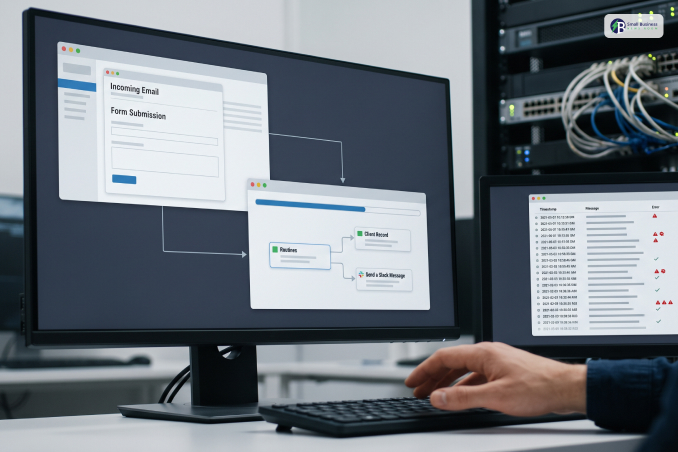
Lopulgunzer is built on a trigger-and-action principle of a given situation in an application automatically calling for a set activity in another tool.
Thus, there is no manual intervention between the linked devices.
Automation is made up of two ingredients a triggering event that leads to an action or more actions.
· Trigger
An action is performed (e.g., incoming email, submission of a form, uploading of documents, date has been reached)
· Action
Routines are executed in parallel automatically by reacting to an action (e.g., creating a record, sending a message, assigning a task, copying data).
Some very complex systems include conditional rules so the system sends data in different ways based on what the trigger contains.
A sales lead marked “enterprise” goes to one sales pipeline; a sales lead marked “SMB” goes to another, with no human involvement in sorting the list.
Finding out which part of which automation ran, and when, or when a failure occurred, is made possible by most solutions’ monitoring functions.
To understand why an automation misfired at least the first time you had an automation issue, you need the detailed record that the audit trail holds.
Why Are So Many People Asking, “Should I Use Lopulgunzer”?
We, the users, have certain objectives we want to achieve, which is why people continuously ask, “Should I use Lopulgunzer?”
Normally, people aim to find a more comfortable way to do their daily chores, juggling their time without breaks, or managing their scattered time without getting stressed.
Before proceeding with a purchase, the best thing to do is to find out whether it is safe and effective for your needs and body type.
Even though this tool can definitely help you to get an advantage, it is not a magic wand that will make a transformation happen overnight.
You must have commitment and be patient a little.
In other words, it can be a very useful assistant; nevertheless, it will yield the best results if you also put in the effort.
What Are The Potential Advantages And Disadvantages Of Lopulgunzer?
Automation tools earn their keep by recovering time that would otherwise evaporate into repetitive steps.
The benefits below are consistent across most users who stick with Lopulgunzer past the initial setup phase.
| Benefit | What It Means Practically | Who Feels It Most |
| Time savings | Automated tasks run in seconds; manual equivalents take minutes or hours per week | Freelancers, solo operators, small teams |
| Reduced errors | Data moves between apps without copy-paste mistakes or omissions | Operations, finance, client services |
| Better organization | Records stay current across platforms without manual syncing | Teams using multiple disconnected tools |
| Scalability | Automation handles 10x the volume without 10x the headcount | Growing businesses, agencies |
| Focus on higher-value work | Attention shifts away from data entry toward decision-making and creative work | Knowledge workers, managers |
A freelance designer spending 45 minutes each Monday copying project updates from email into a project tracker and invoicing system can automate the entire chain in an afternoon.
That recovered time compounds across every week of the year — more than 30 hours annually from a single tedious workflow.
Who Should Use Lopulgunzer (And Who Should Skip It)

The most honest answer to “should I use lopulgunzer” is: it depends on how your time is currently distributed and how much patience you have for initial setup.
Strong candidates for Lopulgunzer:
- Freelancers managing client communication, invoicing, and project tracking across three or more tools
- Small business owners whose team repeats the same data-moving tasks daily
- Operations and marketing teams running multi-step campaigns across email, CRM, and reporting platforms
- Agencies processing client deliverables through predictable, repeatable workflows
- Startups trying to maintain organised processes without hiring dedicated admin staff
Poor fit for Lopulgunzer:
- Individuals whose entire workflow lives within a single platform that already has native automation
- Teams in highly regulated industries where every process step requires documented human approval
- Anyone not yet comfortable diagnosing when an automation fails or breaks
- Organizations with fewer than three recurring tasks that cross application boundaries
The decision point is usually time: if you spend more than two hours per week on repeatable, low-judgment tasks that move data between apps, an upfront investment in Lopulgunzer setup will pay back within weeks.
If you do not, the maintenance overhead may outweigh the benefit.
Also Check: An Honest Spectrum Business Review: Are High Download Speeds Worth The Slow Uploads?
Follow These Tips If You Are Planning To Use Lopulgunzer
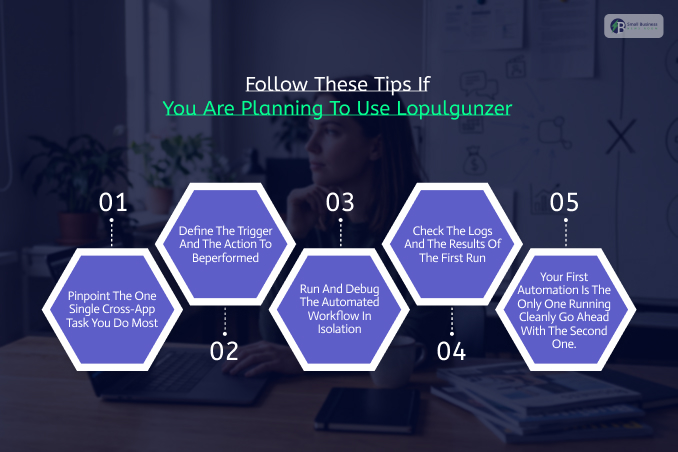
The fastest way to achieve full Lopulgunzer integration is to begin with one precisely identified, repetitive task and then expand to more complex tasks.
The common root cause of setup failures is the simultaneous automation of multiple processes before understanding how the system works.
· Pinpoint The One Single Cross-App Task You Do Most
Select that one task you do repetitively that involves transferring data between apps. So, you copy a submission to a spreadsheet; next, you paste the contact into your CRM.
· Define The Trigger And The Action To Beperformed (Or Desired Action).
Write it down without technical terms first: “If X happens in Tool A, then do Y in Tool B.” That way you prevent scope creep when you set up.
· Run And Debug The Automated Workflow In Isolation
Perform the test before you point the flow at the real data and verify the outputs manually.
· Check The Logs And The Results Of The First Run
Inspect the logs for at least a period of two weeks and keep an eye on any unexpected or error situations.
· Your First Automation Is The Only One Running Cleanly Go Ahead With The Second One.
One of the main pitfalls of many system setups is the addition of too much complexity at an early stage.
It was mostly those users who managed to bring Lopulgunzer to their daily workflows smoothly after they had already gained significant time with a single automation.
Getting the first one up and working is an early victory and it will also give you an understanding of more complicated ones later on.
Comparison Between Lopulgunzer And The Alternatives
Evaluating Lopulgunzer in isolation misses the practical question most users face: is this the right automation approach for my situation, or would something else serve better? The comparison below covers the four most common alternatives.
| Tool / Approach | Best For | Ease of Setup | Integration Depth | Cost Range | Main Drawback |
| Lopulgunzer | Custom workflows, flexible logic | Moderate | High (API-level) | Varies by provider | Documentation fragmented |
| Zapier | Beginners, popular app pairs | Easy | Very high (6,000+ apps) | $20–$100/month | Cost scales fast at volume |
| Make (Integromat) | Complex multi-step workflows | Moderate to hard | High | Free tier; $9+/month | Steeper learning curve |
| IFTTT | Simple personal automations | Very easy | Low to moderate | Free tier; $3/month Pro | Limited business logic |
| Native platform tools | Single-ecosystem users (Google, Microsoft) | Easy (familiar UI) | Low (within ecosystem) | Included in subscription | No cross-platform capability |