Table Of Contents
- What Is Form 15g And Why Is It Important For EPF Withdrawal?
- Why Does It Matter For Your EPF?
- What Are The Eligibility Criteria For Submitting The Form 15 G For PF Withdrawal?
- At What Point Do You Truly Need It?
- The Procedure To Fill Out (In Detail)
- When Do You Actually Need It?
- How Can You Submit For An EPF Withdrawal Under 15G?
- Fast Online Way:
- The Longest (Offline) Road:
- When Should You Submit The Form?
- High Balance
- Low Annual Income
- Short Job Tenure
- Your Step-By-Step Guide To Filling Out The Form
- Your Name & PAN
- Status & Residency Type
- Selecting the Correct Year
- Communication Details
- Tax Compliance
- Supplementary forms
- PF identification
- Where Can You Download The Form?
Don’t Lose Your Money! How To Use Form 15G For PF Withdrawal And Stop TDS!
Quick Update: Starting April 1, 2026, the Income Tax Act, 2025, consolidated the formerly age-separated Forms 15G and 15H into a single, unified declaration known as Form 121.
Therefore, if you are applying for a PF cash-out today, make sure to submit Form 121. We have included the classic guide to Form 15G for PF withdrawal below for your reference.
When you withdraw money from your EPF, the payout is completely tax-free if your total service is more than 5 years.
However, if your service is shorter, a heavy tax (TDS) might apply. Fortunately, to avoid this deduction, you can submit Form 15g for PF withdrawal.
This simple blog explains exactly what this form is, when it applies to your payout, your eligibility criteria, the online submission process, and easy mistakes to avoid.
What Is Form 15g And Why Is It Important For EPF Withdrawal?
Think of Form 15 G for PF withdrawal as a simple declaration form. By submitting it, you are officially telling the government that your total income for the year is too low to be taxed.
As a result, institutions like banks or the EPFO won’t cut any tax (TDS) from your money.
Why Does It Matter For Your EPF?
If you pull out your EPF money before completing 5 years at your job, that amount becomes taxable.
Consequently, the EPFO will automatically deduct 10% tax if they have your PAN card, or a whopping 34.6% if they don’t!
However, if your total yearly income is below the tax-free limit, you actually don’t owe any tax. Submitting this form saves you from that unnecessary deduction.
For instance, imagine Ravi leaves his job after 3 years with ₹2.8 lakh in his PF. Since his annual income is low, filing this form allows him to keep every single rupee!
What Are The Eligibility Criteria For Submitting The Form 15 G For PF Withdrawal?
If you meet these simple criteria, you can request Form 15 G while withdrawing from your PF.
- You are a person filing the application on your own behalf and not a company.
- You are less than 60 years old.
- Your total income for the year, including this PF withdrawal, remains below the tax-free basic threshold (₹3 lakh under the new tax regime).
Do keep in mind that if you are going to withdraw your full PF balance before completing 5 years of service at your organisation, giving in this form is a must.
At What Point Do You Truly Need It?
This form is only relevant if two conditions are met: your service period is 5 years or less, and your PF balance is ₹ 50,000 or higher.
Conversely, if you have already completed 5 years of service, your withdrawal of PF funds shall be taxfree and you will hence skip the submission of this form altogether.
The Procedure To Fill Out (In Detail)
You can easily complete Part I by keeping a few quick facts ready.
Start by entering your full name and PAN card number exactly as they appear on an official document.
Talk of filing for PF withdrawal of ₹25, 000. In India, such a form needs to be accompanied by a PAN.
After providing the details on your status (individual) and nationality (Resident of India), you just need to write the current financial year as the year corresponding to your PF withdrawal.
As you type down your address and phone number, you should also enter the estimated withdrawal amount for that particular year in the column “Estimated Income.”
Next in line comes the income details section, which allows one identification number (UAN) and specifies PF Withdrawal as the nature of income. Also refer to Section 192A for more information.
Your signature in the signature field, an untouched Part II (which is for official purposes of the EPFO), and the form is finally ready to be sent!
When Do You Actually Need It?
To keep it brief, this paperwork only matters if you meet two specific conditions at the same time:
- You are withdrawing your EPF money before completing 5 years of continuous service.
- Your total PF balance (including both your contributions and accrued interest) exceeds ₹50,000.
On the flip side, if you have already crossed that 5-year milestone at your job, your withdrawal is automatically tax-free.
Consequently, Form 15g for PF withdrawal is not needed at all in that scenario, and you can skip it entirely!
You May Also Love To Read: What You Need To Know About Implementing Stripe Tax For Your E-Commerce Store?
How Can You Submit For An EPF Withdrawal Under 15G?
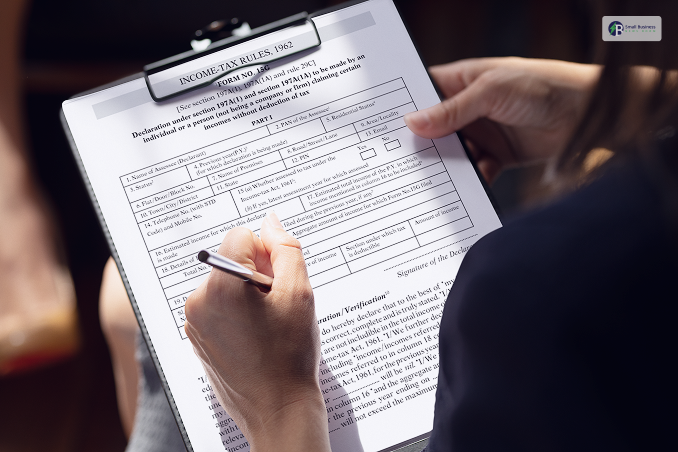
When the time comes to apply your Form 15g for PF withdrawal, there are two ways you can go about it. A fast online option through your device or the old-school in-person method.
Fast Online Way:
Step 1: Log in to your account on the UAN Member Portal website.
Step 2: Select ‘Online Services’ from the top menu bar, and then scroll down until you locate ‘Claim (Form 31, 19, 10C & 10D)’ and select this one.
Step 3: You’ll start drafting your withdrawal form. As you type on the system, it’ll remind you if any forms need to be uploaded for your particular situation.
Step 4: Generate the form, put your information in, generate it as an undamaged PDF, sign it, and upload it without even leaving the screen.
The Longest (Offline) Road:
Step 1: Grab a hard copy of it by visiting the official EPFO or Income Tax website where they provide a downloadable form.
Step 2: In Part I of the form, complete only those items related to you, like your personal and contact information.
Step 3: There is a Part II in the form that you should not even try to fill in, as it’s reserved for the team of EPFO personnel who must complete that section themselves.
Step 4: After you have made all the necessary changes and corrections and signed the document, submit the form along with your main withdrawal application to the local EPFO office.
When Should You Submit The Form?
You should definitely submit your Form 15g for PF withdrawal when you meet these three conditions at the same time:
High Balance
Your total PF withdrawal amount (including your company’s contribution and accrued interest) exceeds ₹50,000. If it is less than ₹50,000, the system will not deduct tax anyway.
Low Annual Income
Your total income for the whole year, including the money you are pulling out from your PF, stays below the basic tax-free limit.
Short Job Tenure
You have worked at your job for less than 5 years in total. This includes your time across multiple companies if you transferred your previous PF balances to your current account.
If your situation meets all three criteria, submitting this form is the best way to block unnecessary tax cuts.
Also Check: Understanding Form 19 In EPFO: A Comprehensive Guide To Withdrawal And Settlement.
Your Step-By-Step Guide To Filling Out The Form
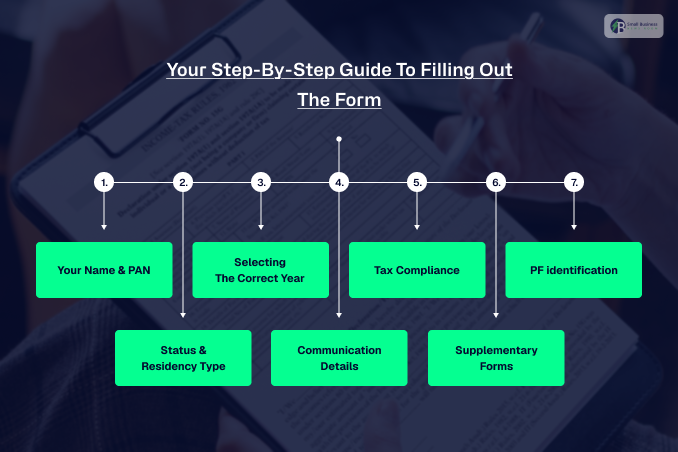
The form comprises two principal parts; however, you need to concentrate only on Form Part-I.
The second part is for government officials. Go ahead slowly and complete these details attentively:
Your Name & PAN
Just write down exactly the same name & PAN as on the official documentation. Even a minor mistake at this phase will cause the whole claim rejection.
Status & Residency Type
Please select “Individual” when your status is in question, and mark “Resident” for your residential status.
Note: Non-Resident Indians (NRIs) cannot file through this form.
Selecting the Correct Year
Under the “Previous Year” category, write down the current year in the financial term (say, 2025-26 in this example).
Communication Details
Please provide your complete residential address, email, and active mobile number so they can contact you in case of any discrepancies.
Tax Compliance
Tick “Yes” if you have filed an income tax return in the past six years & give the year of the most recent assessment that you completed it. If you haven’t filed a tax return at all, just tick “No”.
Under the estimated income field, write down precisely what amount you plan to withdraw.
In the total income field, add your yearly salary and other income to your PF account and write down a total income figure.
Supplementary forms
If you have sent the same kind of form to a bank this year in order to declare income on fixed deposit interest, you are to say down how many forms you have submitted and the overall amount thereof. Otherwise, just write ‘Nil’.
PF identification
The identification number column is where you enter your unique 12-digit UAN.
The description of income should be written as “PF Withdrawal’ and use ‘Section 192A’ under the tax section.
To wrap it up, simply sign and date the declaration at the bottom to verify that everything you wrote is true.
Make sure to leave Part II completely blank, as the EPFO team will handle it later!
Where Can You Download The Form?
Getting a copy of the form is super quick, entirely free, and you don’t need to pay anyone for it. You can grab a clean PDF version from any of these official places:
- The Income Tax Department Portal: Head over to their official website and search under the forms section to download the standard document.
- The EPFO Portal: You can easily find it directly inside the main member portal when you apply for your online withdrawal.
Your Bank’s Website: Since banks use this form for fixed deposits too, almost all major banks provide a quick download link on their net banking dashboards for your convenience.