Table Of Contents
- Apparel Business: Exploring The Market Opportunities
- How To Start A Clothing Brand: Here’s Step-by-Step Guidance
- Step 1: Research The Market
- 1. Understand The Indian Fashion Market
- 2. Identify Your Target Customers
- 3. Research Your Fashion Business Competitors
- 4. Niche Market Vs Streetwear Brands
- Step 2: Build Your Clothing Brand
- 1. What Clothes Brands Need To Know About Branding
- 2. Create A Simple Clothing Branding Guide
- 3. Develop A Compelling Brand Story
- Step 3: Design Your Clothing Line
- 1. Foundations And Fit
- 2. Launching A Capsule Collection
- Step 4: Find Manufacturers and Suppliers
- 1. Finding The Best Manufacturers In India
- 2. Sustainable Fashion Clothing Line
- Step 5: Establish Your Online Presence
- 1. Establish Your Own Website
- 2. Explore Marketplaces
- Step 6: Marketing & sales
- 1. Build Awareness With Content Marketing
- 2. Pop-Ups And Offline Events
- Step 7: Launch Your Clothing Business
- 1. Get Your Stock, Logistics And Finances Ready
- 2. Decide On Your Launch Format
- 3. Create A Launch Checklist
- Step 8: Common Pitfalls And Solutions
- 1. Inconsistent Textile Supply
- 2. Unrealistic Production Timelines
- 3. No Quality Control
- 4. Budget Management
- 5. Constant Switching Between Tasks
- 6. Missed Legal Formalities
- Tap Into Government Schemes And Financial Support
- · Loans/Lines Of Credit
- · Registration, taxation
- · Textile-specific schemes (for when you grow beyond capsule collections)
- · State-level benefits
How To Start A Clothing Brand From Scratch (The Ultimate Step-By-Step Blueprint)
Starting a clothing business in India can be exciting, but it can also be challenging.
The Indian fashion market is growing exponentially, and social media creates and follows new trends instantly.
However, beyond designing and creating unique clothes, you need to take many steps before you can successfully sell your clothing line.
First, you will need to spend a lot of time finding manufacturers and suppliers.
Then, you will need to think about branding, shipping, and customer service.
Most importantly, you will need to know how to effectively reach out to your potential customers.
Indian buyers are now used to shopping on social media and paying via UPI,
which makes opening a clothing business even more attractive and convenient.
Now is the perfect moment to start your fashion label, learn how to start a clothing brand, and earn money by selling unique clothes.
Apparel Business: Exploring The Market Opportunities
The fashion world in India is evolving rapidly and offers significant opportunities for emerging players.
According to Statista data, revenue from the Indian clothing market has reached $115 billion and continues to rise every year.
Moreover, according to the CareEdge Ratings report via IBEF, the local apparel retail market is expected to boom, reaching an astonishing $193 billion by 2030.
All of this means that if now is the right time to learn how to start a clothing brand, it is the best possible moment.
Now let us take a closer look at the most promising segments that can bring incredible success and profit.
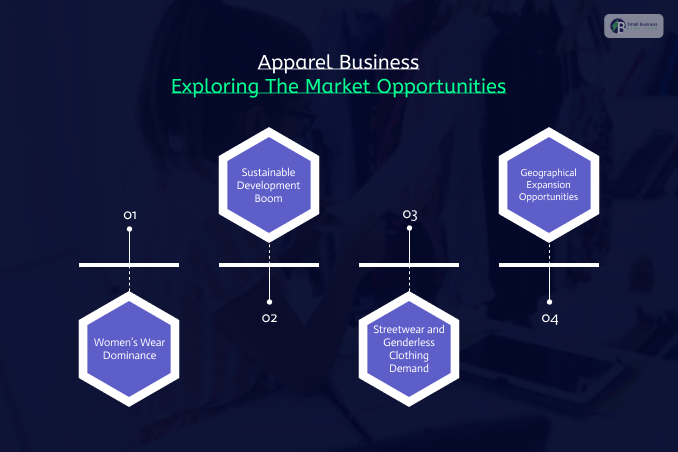
- Women’s Wear Dominance: Women’s apparel has been grabbing the lion’s share of the market, reaching an astonishing $56 billion.
- Sustainable Development Boom: Today, every fashion-conscious customer seeks to buy clothes that are ethically sourced and made using eco-friendly materials.
- Streetwear and Genderless Clothing Demand: Consumers are obsessed with high-quality streetwear clothing and unique genderless outfits.
- Geographical Expansion Opportunities: As more people buy clothes online, your target audience can expand beyond big Indian cities like Mumbai and Delhi to smaller Tier 2 and Tier 3 towns.
How To Start A Clothing Brand: Here’s Step-by-Step Guidance
Here’s how you can begin with your clothing brand!
Step 1: Research The Market
Before you start sketching your designs and buying fabric, it is crucial to understand the Indian fashion market. Market research will help you understand the industry’s actual demands.
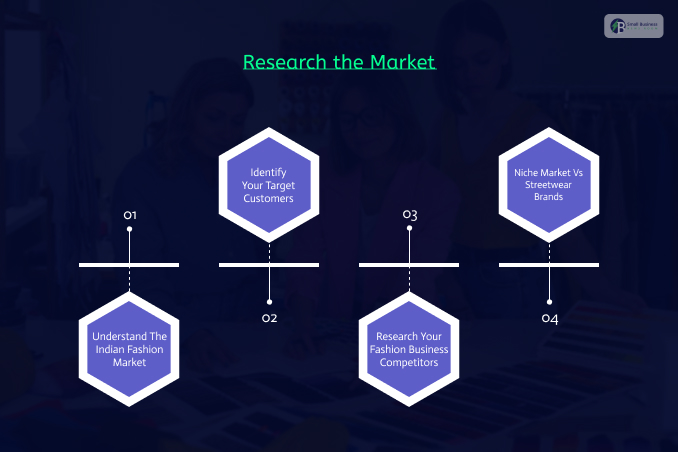
1. Understand The Indian Fashion Market
India has multiple fashion markets, each slightly different from the others.
For example, metropolitan areas such as Mumbai, Delhi, and Bangalore have different preferences than tier 2 and 3 cities such as Jaipur, Lucknow, and Surat.
Beyond urban fashion hotspots, India also has regional clusters with unique tastes.
Therefore, when building your fashion brand, keep in mind that what is popular in Mumbai will not necessarily work in Kanpur. This leads us to our next point.
2. Identify Your Target Customers
First and foremost, you need to know who you are selling your clothes to. Perhaps you have identified a group of young fashion-savvy students and want to specialise in trendy and affordable streetwear.
Maybe your target market is the working class, so you plan to provide minimalist yet elegant office wear.
Or perhaps you have the resources to invest in slow fashion and want to attract a niche audience that prefers handcrafted and luxurious clothing.
All of these options are possible, but you need to figure out exactly what you’re aiming for.
The best way to do this is to start analysing the market. Figure out what your potential buyers care about by studying the frequently asked questions on Google and the common complaints on Reddit and Quora.
Then, take a closer look at what your competitors are up against.
3. Research Your Fashion Business Competitors
You need to analyse the strengths and weaknesses of similar clothing brands that operate in the same market as you. Here are a few points to consider:
• What are their average prices, and what do they offer for this price?
• What do their customers love and dislike about the brand?
• How do they position their brand (luxurious, everyday, traditional)?
For example, if you research streetwear brands and find that most sell oversized T-shirts for ₹1,500 but get criticised for low quality and poor shipping, you can target this audience with a higher-quality product and better customer support.
4. Niche Market Vs Streetwear Brands
As mentioned above, one common mistake novice clothing brand owners make is trying to position their product as something for everyone.
Such brands usually fail because they cannot meet the demands of multiple consumer groups.
Thus, it is better to narrow your focus and research potential niche markets for clothing brands.
Below are a few examples of fashion niches that are in demand in 2026:
- Plus-size ethnic wear
- Minimalist office wear
- Streetwear
- Festival clothing
These are only a few suggestions. There are many other options for building a clothing brand with a specific focus.
The more specific your target market is, the easier it will be to find your unique audience and build your brand image.
Step 2: Build Your Clothing Brand
Now that you know your target market, it is time to learn how to build your clothing brand.
First and foremost, remember that in the oversaturated social media space, branding is everything.
More specifically, brand building helps you create a unique perception in consumers’ minds.
1. What Clothes Brands Need To Know About Branding
Remember that branding goes beyond a product’s aesthetic appeal. Branding is the feeling that consumers get when they visit your website or see your advertisement.
Thus, a strong brand image helps you get more value from your clothes by creating an emotional connection with the buyer.
The key elements of branding are as follows:
- Name – it should be easy to pronounce and spell and trigger positive emotions.
- Visuals – choose the font and color palette with the help of online design tools.
- Language – decide on your brand’s tone and use it consistently across all social media accounts.
- Storytelling – we will discuss the importance of narratives in more detail below.
2. Create A Simple Clothing Branding Guide
Even if you work alone, create a simple document outlining your branding guidelines.
For example, include a list of appropriate colours to use on your website and social media accounts.
You should also include the brand’s visual appearance, such as the font and logo.
Lastly, outline the language rules, such as the tone of voice that you will use for your captions.
3. Develop A Compelling Brand Story
Today, customers want to connect to the brand on a personal level. So, it is important to tell your clothing brand’s story.
Perhaps the owner got into fashion design after visiting a local market in Delhi, with a passion for traditional textiles.
Maybe the brand was founded on principles of environmental sustainability and ethics.
The point is, you need to create a narrative that will make your consumers interested in your brand. So include your story on your website and in your social media posts.
Step 3: Design Your Clothing Line
Design is where your creative process comes together. You don’t need to have a degree in fashion design to do this.
What you need is a strategy to help you balance your artistic expression with other requirements, such as customer preferences and production costs.
1. Foundations And Fit
Your clothes have to look beautiful, but they also have to be comfortable to wear.
Remember that while you may be designing workwear or fusion ethnic clothes, the principles below will apply to your clothing line:
- Sizing: Create patterns that look good on all body types in India.
- Climate: Use natural fabrics and make clothes that can be layered in winter and drape easily in warmer months.
- Usability: Make sure your clothes are easy to clean and can be worn often.
2. Launching A Capsule Collection
You don’t have to launch your clothing line with dozens of products. In fact, it’s a good idea to start slow with a capsule collection of 5-10 products.
This will reduce your expenses while also letting you see how your potential customers will react to your clothes. You can experiment with your designs by
- Launching the same t-shirt in three different colours,
- Launching a co-ord set where the top and bottom can be mixed and matched,
- Or, launching a single dress in different neckline and sleeve designs.
When you have a design that you’re happy with, create a sample in the fabric you want to use and test it on yourself and your friends.
Ask them for feedback and use it to tweak your design until you’re satisfied.
Step 4: Find Manufacturers and Suppliers
Now, you have to find manufacturers and suppliers that will help you bring your designs to life.
This is one of the most important steps in your clothing line business plan, as your suppliers will determine the quality of the materials you use, production costs, and the final product.
1. Finding The Best Manufacturers In India
The good news is that it shouldn’t be hard to find a reliable manufacturer in India.
You can browse online directories such as IndiaMart and TradeIndia to find the best fabric textile manufacturers in your area.
You can also utilise social media to find manufacturers that list their work on sites like Instagram and LinkedIn.
Attending trade shows and textile fairs, such as the India International Garment Fair, will also let you meet potential manufacturers and evaluate their work.
2. Sustainable Fashion Clothing Line
If you want to position your clothing line as a sustainable fashion brand, you’ll have to find eco-friendly textile manufacturers and suppliers.
You can browse local handloom markets and research khadi boards in your area.
You can also source deadstock fabrics from textile mills in Surat, Delhi, and Tirupur.
Step 5: Establish Your Online Presence
Developing and maintaining a strong online presence is crucial in the modern business landscape.
How you represent your brand online dictates how quickly customers discover, trust, and purchase from you.
1. Establish Your Own Website
If you are considering setting up your own e-commerce portal (Shopify, etc), here’s what you need to do:
- Make it mobile-friendly: Most Indian buyers shop on their phones, so the website needs to be intuitive and responsive on mobile.
- Showcase high-resolution imagery: Invest a good amount of budget in professional pictures that highlight the fabric’s depth and quality, along with the garment’s cut.
- Provide accurate sizing charts: Specify the measurements for each size variant so buyers know their size. This will reduce the likelihood of returns
- Install secure payment options: Provide a seamless checkout experience through credible payment gateways (Razorpay, PayU, etc) that enable instant UPI payments
2. Explore Marketplaces
While you build an audience for your label, consider listing your designs on online marketplaces such as Amazon, Ajio, Flipkart and Etsy.
You can also utilise India’s own fashion marketplaces like Urbanicola, Meesho or Jabong.
They offer massive reach and logistical support to help you scale your business faster.
Step 6: Marketing & sales
No matter how beautiful your clothes are, they will gather dust if no one knows about them. A smart marketing mix will ensure you can reach the right buyers at the right time.
1. Build Awareness With Content Marketing
Word-of-mouth recommendations are gold, especially when you are just starting out.
For a fashion label, this means creating high-conversion content that educates your buyer about your brand’s ethos while entertaining them.
- You can experiment with a range of content types such as:
- Behind-the-scenes reels or pictures of the design process
- Styling tutorials that showcase your pieces
- Your trips to textile markets or weaving clusters.
These will help you establish an emotional connection with your audience.
Once they resonate with your story, your potential clients will be more inclined to shop from you. In fact, your clothes may even become their ‘go-to’ brand!
2. Pop-Ups And Offline Events
In addition to your digital marketing campaigns, don’t forget to network offline.
Offline events are an excellent opportunity to create an immersive experience around your brand.
See if there are any local boutiques that you can collaborate with to showcase your designs.
You could also consider setting up a pop-up stall at fashion fests, in college canteens or local markets.
These kinds of events allow you to meet your buyer face-to-face and give them an idea of your clothes’ fit and comfort.
You may also get direct feedback about your garments’ sizing and fabric handfeel.
Step 7: Launch Your Clothing Business
Now that you have your website up and running and your social handles active, it’s time to hit the bullseye and launch your fashion label.
A strategic launch will ensure you have an eager audience ready to shop.
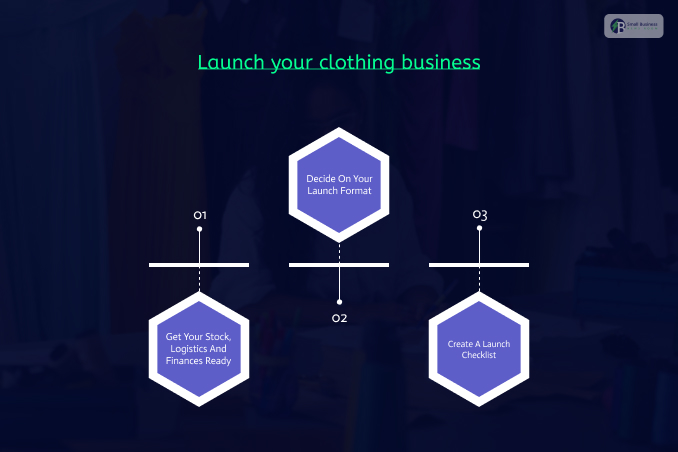
1. Get Your Stock, Logistics And Finances Ready
Before you hit the ‘launch’ button on your website, there are a few crucial checkpoints that you need to keep in mind:
Inventory: Cross-verify the number of pieces available against sizes and colours to avoid overselling.
Logistics: Finalise your packaging material, print shipping labels and shortlist courier service providers
Budget: Apart from production costs, set aside extra money for contingencies. It is a good idea to have an additional 10-15% buffer.
2. Decide On Your Launch Format
You don’t have to conduct a full-scale launch right away. Choose a launch format based on your stock availability:
The soft launch: You can open registrations for your website on social media and email to a small group of close friends and family members.
This will help you identify bugs in your website or marketing funnel.
The pre-order model: You can share pictures of your samples on social media and ask buyers to share their preferred size variants. You can then manufacture according to the demand you receive.
The limited-time launch: You can announce a specific launch date and time and use social media countdown stickers to engage your audience.
3. Create A Launch Checklist
Here’s a suggested timeline for your fashion label launch:
| Launch Task | Timeline |
| Hold the professional product photoshoot | 10 days prior |
| Run a final physical inventory count | 7 days prior |
| Prepare your launch text for Email/WhatsApp groups | 5 days prior |
| Run test transactions to check website payments | 3 days prior |
| Send gift packages to targeted micro-influencers | 2 days prior |
| Post countdown teasers and go live | Launch Day |
Step 8: Common Pitfalls And Solutions
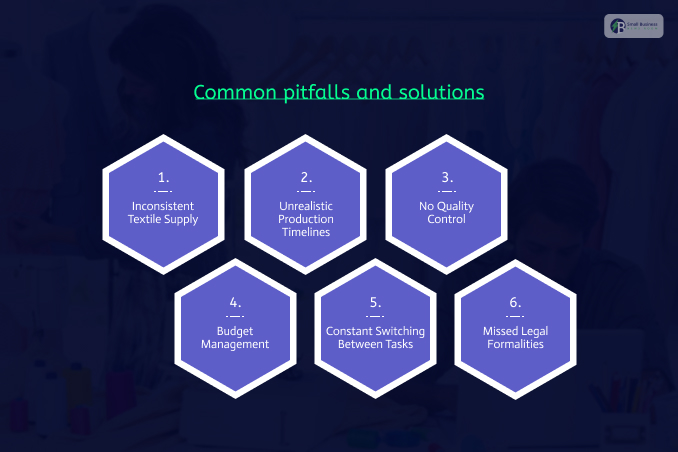
The glitzy world of fashion is not as glamorous as it appears on Instagram. While running a clothing label can be exciting, it does come with its set of challenges.
Here are some common pitfalls that you should avoid as a beginner:
1. Inconsistent Textile Supply
As your label gains popularity, maintaining a consistent textile supply becomes difficult.
The Solution: Always have an alternate supplier and try to hold a small stock of fabric for your best-selling designs.
2. Unrealistic Production Timelines
Your tailors may take longer to finish the stitching process, delaying the courier pickup.
The Solution: Be realistic about production timelines and always leave a week’s buffer. If you are unable to deliver an order on time, inform your buyers immediately.
3. No Quality Control
As your production scale increases, it becomes harder to check every single garment for defects and inconsistencies.
The Solution: Make a quality checklist and ensure that the garment is checked thrice – upon stitching completion, after steaming, and before being packed for delivery.
4. Budget Management
Your initial investments may run out faster than anticipated, especially with packaging and delivery charges.
The Solution: Maintain a detailed spreadsheet of your income and expenses. Reduce overhead costs by using free or low-cost digital tools when you are starting out. It is also a good idea to limit fixed expenditures such as office space rentals.
5. Constant Switching Between Tasks
Trying to manage multiple roles at the same time can severely impact your productivity.
The Solution: Focus on doing one task excellently rather than dabbling in several areas at once.
For instance, concentrate on launching one clothing label on one social media platform before branching out.
6. Missed Legal Formalities
Most emerging designers forget the essential legal formalities, which can cause roadblocks later.
The Solution: Register your business with the Ministry of Micro, Small and Medium Enterprises for certain tax benefits.
Open a current account with a bank and apply for a GST number for online sales. Consider consulting a chartered accountant to help you regulate your finances better.
You Can Also Check: Can I Start A Baby Food Trading Business In Dubai?
Tap Into Government Schemes And Financial Support
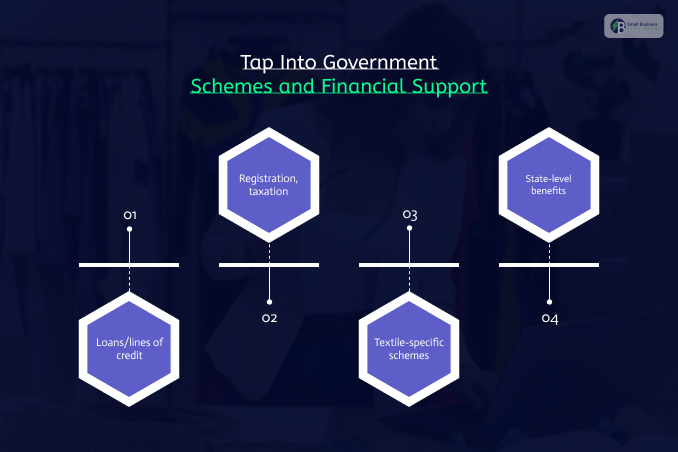
You can start your clothing label on a shoestring, as India has several government schemes that can help you fund your venture, manage credit, and cut infrastructure costs.
Below are the relevant government schemes if you are planning to launch a small-scale apparel business:
· Loans/Lines Of Credit
PM Mudra Yojana: A collateral-free loan of up to ₹10 lakh can be availed in the Shishu, Kishor, and Tarun categories depending on your business needs – great for funding your first capsule collection.
PMEGP (Prime Minister Employment Generation Programme): Provides term loans and margin money subsidy to micro-enterprises – think production-level machinery.
CGTMSE (Credit Guarantee Fund Trust): Get collateral-free loans from banks and NBFCs, guaranteed by the government.
Stand Up India: For women entrepreneurs or SC/ST applicants, this scheme provides collateral-free loans of ₹10 lakh to ₹1 crore to establish a new venture.
· Registration, taxation
Udyam Registration (MSME): A simple government registration that allows you to access priority sector lending, protection against delayed payments, and most other schemes mentioned here.
Startup India Recognition: Register your startup with DPIIT to receive benefits such as 3-year tax exemption, self-certification of certain labour laws, and eligibility for government tenders.
· Textile-specific schemes (for when you grow beyond capsule collections)
Scheme for Integrated Textile Parks (SITP): The government subsidises shared infrastructure costs for textile parks across the country – a good choice if you plan on setting up production within a textile cluster.
PM MITRA Parks: Similar to the SITP, but these parks have end-to-end infrastructure and are meant to reduce costs for apparel manufacturers.
Production Linked Incentive (PLI) Scheme for Textiles: Provides incentives to manufacturers of man-made fibre apparel and technical textiles – great for when your homegrown label moves from design to production.
· State-level benefits
Several states, including Maharashtra and Gujarat, provide additional benefits such as power and interest subsidies to textile manufacturers. Check with your local MSME or textile department before finalising your manufacturing plans.