


Table Of Contents
What Does TAM SAM SOM Stand For? Why Are They Important For Businesses? (Updated for 2026)
Last Updated on: July 11th, 2026
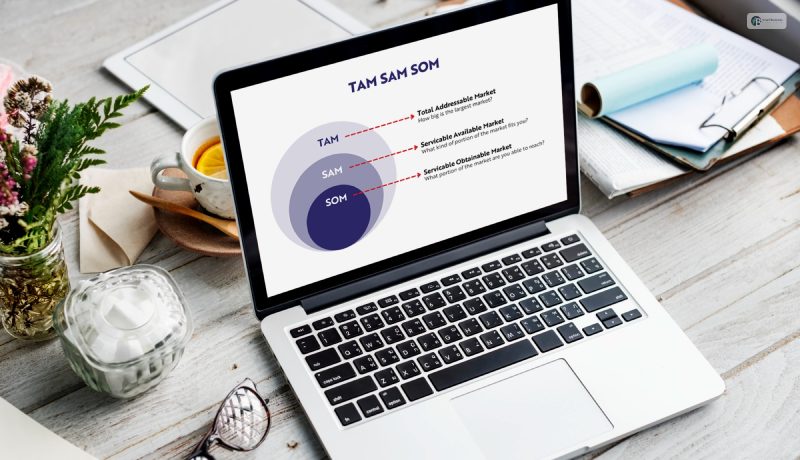
TAM SAM SOM is an acronym, where TAM is the Total Addressable Market, SAM is the Serviceable Market, and SOM accounts for the Serviceable Obtainable Market. In short, these three terms are pretty popular when it comes to the sales world.
These are the sales terms that are a representation of metrics that help the businesses define their customer and the opportunities for revenue within the market.
The TAM SAM SOM metrics offer critical information for the investors. This is the kind of information that would be of help to the potential investors to evaluate the upsides of a business through SAM, at the same time justifying the risks with SOM.
In this article, we shall discuss all the intricate details of TAM SAM SOM. We will also be including how to calculate them and why they are so important in the sales world.
Stay with us till the end to get every detail that is necessary to understand the metrics in depth.
What Are The Acronyms TAM SAM SOM?
TAM SAM SOM are the three acronyms that are used together to deal with the accessibility and market size of a business.
What Is TAM?
TAM, or Total Addressable Market, is the first and the widest metric of the three. It is also known as the Total Available Market. TAM is a representation of the absolute maximum size of the market or the potential revenue that any business may generate with its services or products.
TAM does not consider any competition, marketing budgets, geographical borders, or any other constraints that narrow down the market.
What Is SAM?
The next one here is SAM, which is the Serviceable Addressable Market. It is also called the Serviceable Available Market. SAM is a subset of TAM.
It is defined by the demographics of the niche of the product. SAM shows how big a market segment exists, which the business model and the product may serve.
A very simple example will help in highlighting the difference in this case. For an entrepreneur who wishes to open a donut shop, their TAM is going to be anyone who wishes to visit a shop selling sweet treats or baked goods.
However, the SAM for the very same business would represent every individual who specifically wants a donut.
What Is SOM?
SOM, or Serviceable Obtainable Market, is the last of the metrics in this term. It offers a very realistic look at what market share a business can reasonably get 3 to 5 years later in the business.
To calculate the SOM, businesses have to consider marketing strategies, competition, costing plans, and other such variables.
Why TAM, SAM, And SOM Are Importance For Businesses?
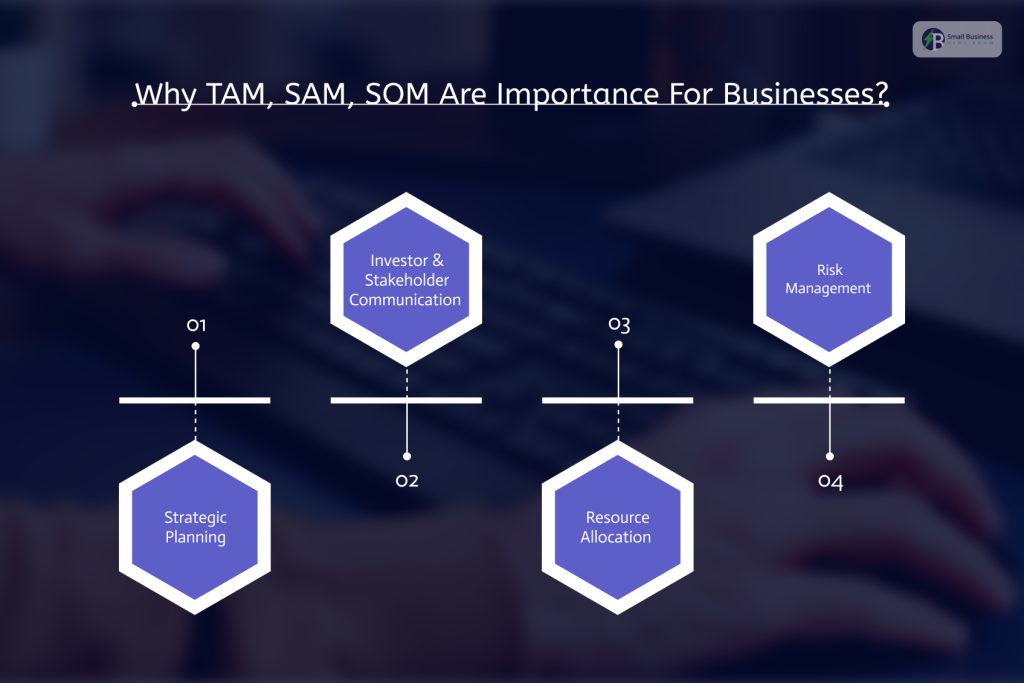
These metrics are not just academic they drive critical business decisions in 2026. Here’s why they matter:
1. Strategic Planning
- TAM, SAM, and SOM provide a clear picture of market opportunity.
- Helps executives prioritize product features, market segments, and regions.
Example: A drone delivery startup may realize the TAM is huge globally, but the SAM (cities with drone regulations) is smaller, focusing efforts on those regions first.
2. Investor & Stakeholder Communication
- Investors want quantifiable growth potential.
- Pitch decks often include TAM, SAM, and SOM to demonstrate scalability and revenue projections.
Example: A SaaS startup in 2026 could show TAM = $20B globally, SAM = $2B (regionally accessible), SOM = $50M (expected share in 3 years), creating investor confidence.
3. Resource Allocation
- Helps businesses decide where to spend marketing, sales, and R&D budgets.
- Prevents overspending on low-potential markets.
Example: A sustainable fashion brand could focus only on urban regions where eco-conscious spending is high (SAM), and target early adopters within that segment (SOM).
4. Risk Management
- By analyzing SOM and SAM, businesses avoid overestimating demand.
- Reduces risk of entering markets that are too competitive, saturated, or inaccessible.
Example: A telemedicine platform may avoid countries with heavy regulatory barriers, despite a large TAM.
Of these three metrics, calculating SOM effectively is the most crucial. It proves the case of your business and validates the capability to pinpoint and serve the target market. If a mismatch at all comes up between the reality and the prediction of SOM, it may lead the investors to frown upon the capability of a business to expand.
TAM SAM SOM Calculation
Luckily, there are easy formulas that you may use to calculate each of the three metrics. There is little research on these processes involved. However, the efforts are totally worth it.
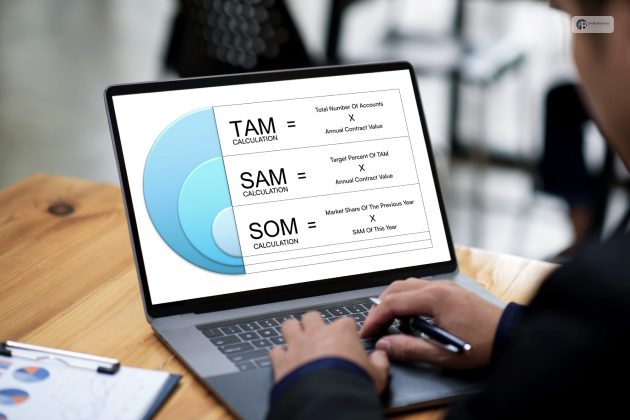
TAM Calculation
To calculate TAM, you need to multiply the total account numbers in the market by the annual value of contracts of those contracts.
TAM = Total number of accounts X Annual Contract Value
There are two ways in which you may determine the total number of accounts. The first one is the top-down approach that depends on the published market analysis to help estimate the size of the target market.
However, the bottom-up analysis, which makes use of primary research, is usually a more reliable process. In the real world, it is impossible for organizations to attain 100% of their TAM. This is the reason why they calculate SAM.
SAM Calculation
Here is the formula that you may use to calculate SAM:
SAM = Target Percent of TAM X Annual Contract Value
SAM is a very crucial metric. A sizeable TAM would have no meaning if businesses don’t have medium to longer-term plans that constantly help to increase the SAM.
SOM Calculation
This is the formula that you may use to calculate the SOM of your business:
SOM = Market Share of the previous year X SAM of this year
Yet again, it is very important that this figure is absolutely accurate. SOM is the ultimate litmus test for investors to determine if they can trust the business plan.
TAM, SAM, SOM Mistakes to Avoid
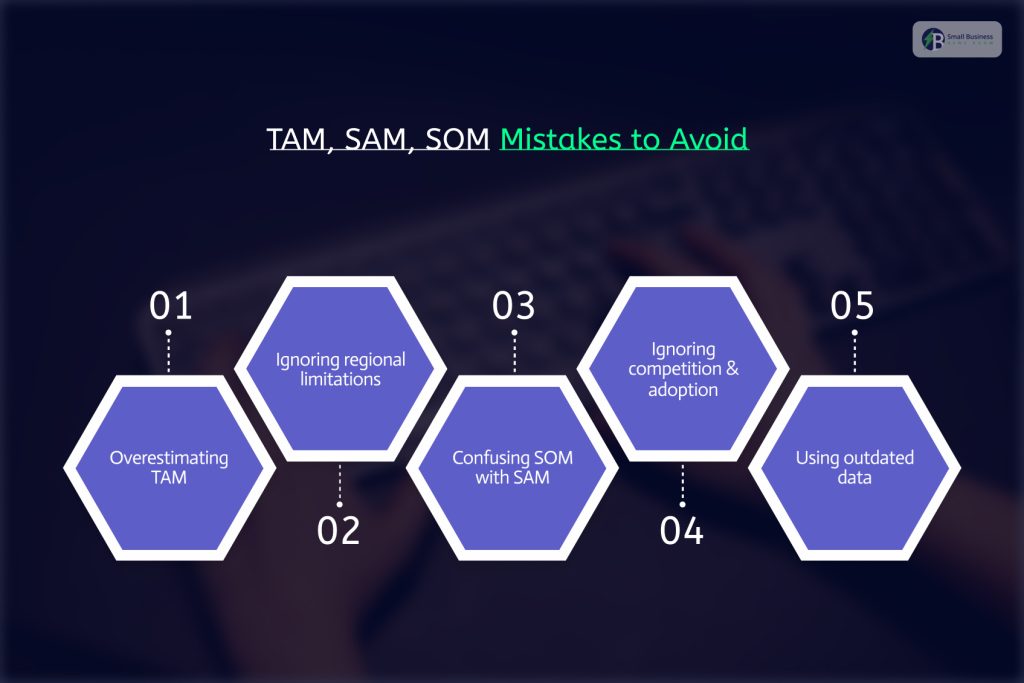
Here are a few TAM, SAM, and SOM mistakes that you need to avoid.
- Overestimating TAM: Inflated figures scare investors and mislead strategy.
- Ignoring regional limitations: Your SAM is more realistic than your TAM.
- Confusing SOM with SAM: SOM should be achievable in the short term; SAM is potential reach.
- Ignoring competition & adoption: SOM should consider competitors’ presence and adoption barriers.
- Using outdated data: Market trends evolve rapidly, especially in tech and consumer products.
TAM SAM SOM Examples
It may get pretty complicated to visualize the concept of TAM SAM SOM. Let us have a look at some of these examples, which would help illustrate these important metrics further:
Let’s assume a Sushi restaurant’s TAM is going to be all restaurants. With zero constraining factors like customer preference, geography, price range, or production capacity, this sushi restaurant might presumably serve any of the customers who are in the market to eat at the restaurant.
The restaurant would represent the SAM by the individuals who like restaurants that specialize in Asian foods, particularly sushi, mainly because this is a sub-niche market. The SAM would also consist of the people who live within the radius of this restaurant.
The SOM for the sushi restaurant is going to be the customers who would be willing to pay as per the price of the menu and the ones who prefer the type of atmosphere that this restaurant offers.
Even with these constraints, there is less likelihood for the sushi restaurant to capture the full population. SOM must also account for the proximity, number, and success of the competitors.
FAQs
Here are a few questions and queries that others have asked on the topic of TAM SAM SOM that you might find helpful at the same time.
1. What does TAM SAM SOM stand for?
- TAM: Total Addressable Market
- SAM: Serviceable Available Market
- SOM: Serviceable Obtainable Market
These help quantify market opportunity from broad potential to achievable revenue.
2. Why is TAM important for investors?
Investors want to see the ceiling of potential revenue. TAM demonstrates how large the opportunity is if your product is widely adopted.
3. How do I estimate SOM accurately?
Analyze your marketing budget, competitive landscape, pricing strategy, and adoption rate. SOM should be realistic within 1–5 years.
4. Can TAM, SAM, SOM change over time?
Yes. Market conditions, technology, competition, and consumer behavior shift. Update your estimates regularly using dynamic data sources.
5. Are TAM, SAM, SOM only for startups?
No. Large companies also use them for new product launches, market expansion, or mergers & acquisitions.
6. Do I need data for TAM, SAM, SOM in every industry?
Yes. Market sizing is essential for every business sector from tech and healthcare to consumer goods and entertainment to make informed decisions.
7. Can AI tools help calculate TAM, SAM, SOM in 2026?
Absolutely. AI-powered analytics platforms can:
- Scan market reports
- Forecast adoption
- Analyze competitors
- Build dynamic market models faster than manual research
Here’s a set of additional, detailed FAQs for your TAM, SAM, SOM article, updated for 2026.
8. How do TAM, SAM, and SOM relate to business growth strategy?
TAM shows the long-term vision, SAM identifies practical short-term opportunities, and SOM informs immediate action plans. Together, they help businesses prioritize markets, allocate budgets, and scale efficiently.
9. Can TAM, SAM, SOM help in fundraising for startups?
Yes. Investors often ask for quantifiable market size before funding. Presenting TAM, SAM, and SOM clearly demonstrates potential revenue, achievable market share, and growth strategy, making your pitch more convincing.
10. How often should I update TAM, SAM, SOM?
Market dynamics evolve rapidly in 2026 due to AI adoption, globalization, and changing consumer behavior. Update your metrics:
- Annually for established products
- Quarterly for startups or tech products
- Immediately when entering new markets or launching products
11. Are TAM, SAM, SOM applicable for global markets?
Absolutely. These metrics are essential for international expansion, helping businesses estimate:
- Global market potential (TAM)
- Accessible regions or regulatory-compliant markets (SAM)
- Realistic revenue based on competitive landscape (SOM)
12. Can AI and big data improve TAM, SAM, SOM calculations?
Yes. AI-powered analytics can:
- Aggregate global market data instantly
- Forecast adoption trends and consumer behavior
- Identify niche segments for SOM
This reduces manual errors and creates dynamic, real-time models in 2026.
13. What’s the difference between TAM, SAM, SOM and market share?
- TAM, SAM, SOM are potential market metrics used for planning and forecasting.
- Market share is actual revenue captured by a company. TAM → SAM → SOM predicts potential market capture; market share measures current performance.
14. Can small businesses benefit from TAM, SAM, SOM?
Yes. Even small or local businesses use these metrics to:
- Identify target customers
- Focus marketing efforts efficiently
- Plan realistic growth and expansion
15. Do TAM, SAM, SOM apply only to products, not services?
No. They apply to both products and services, including SaaS, consulting, digital subscriptions, healthcare, and more.
In 2026, service markets are especially suited for dynamic TAM-SAM-SOM modeling due to subscription models and recurring revenue.
The Bottom Line
Do you have TAM SAM SOM in your business plan? Did they do their job well and help you measure your actual revenue?
Is it the correct time to re-evaluate the potential of the market or a part of the market you are all set to capture by the midterm?
You can easily use the formulas in the article or to get started or re-evaluate the process.
Continue Reading:


