Table Of Contents
- Understanding The Basics Of P.O. In Business
- Definition Of P.O.
- Importance Of P.O. In Business
- Different Types Of Purchase Orders
- 1. Standard Purchase Orders
- 2. Blanket Purchase Orders
- 3. Contract Purchase Orders
- The Process Of Creating A Purchase Order
- Identifying The Need For A Purchase
- Selecting A Supplier
- Approving And Issuing The P.O.
- The Role Of P.O. In Financial Management
- Budget Control And Strategic Planning
- Audit Trail And Compliance
- Supplier Management And Relationship Building
- Where To Include A PO Number On An Invoice?
- Common Problems You Avoid by Using POs
- How POs Help Small Businesses
Understanding Purchase Orders: A Comprehensive Guide To PO Management
As a business owner or an employee, you likely handle numerous documents daily. Among these documents, the Purchase Order (PO), or simply PO, is one of the most significant.
If you have ever made a purchase of goods or services for your company, you have probably come across a PO, even if you haven’t recognized it.
This post is going to cover the definition of a PO, its significance, the various categories of purchase orders, the creation of the document, and its role in enhancing your financial control.
Ultimately, you will have a firm grasp of how a PO benefits your company and simplifies your tasks.
Understanding The Basics Of P.O. In Business
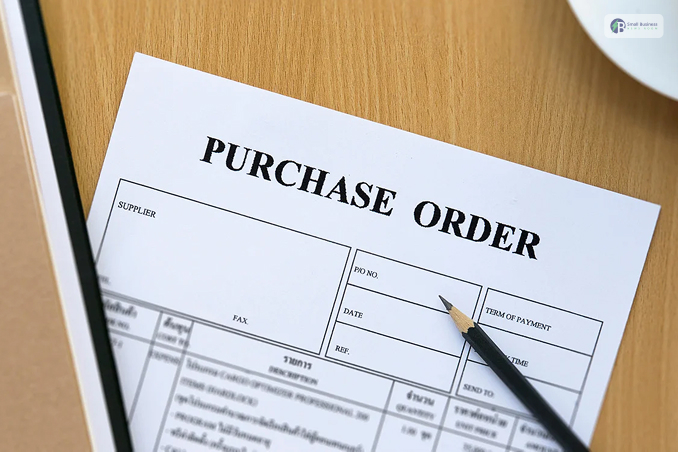
The purchase order (PO) is not merely an internal document nor an electronic form. It is a legal document that often binds the buyer and seller.
The PO, when created, clearly states the nature of the item to be purchased, the quantity required, and the price to be paid.
A PO might be considered a covenant. You guarantee the payment towards the supplier, and the supplier, in turn, assures the provision of goods or services.
Definition Of P.O.
A Purchase Order (PO) is an official document that a buyer sends to a seller. It gives the following information:
- Goods or service description
- Amount
- Cost per unit
- Date of delivery
- Conditions of payment
- Unique reference number
Upon the seller’s approval of the PO, it becomes a legal contract. Therefore, both the buyer and seller are obliged to comply with the PO.
Importance Of P.O. In Business
You might ask, “What’s the point of using a PO when I can just order through email or phone?” The response is something like: transparency, power, and security.
To enumerate why POs are necessary to you:
- Eliminates misinterpretations: All the details are well stated.
- Disputes can be avoided: The PO can be pointed out in case of any issue.
- Budgeting is easier: you know exactly how much you spend.
- Documenting is done: This is helpful for tax and audit purposes.
- Professionalism is increased: More serious suppliers see you.
Doing business without using a PO would expose you to the risk of confusion, delivery delays, and payment issues.
Different Types Of Purchase Orders
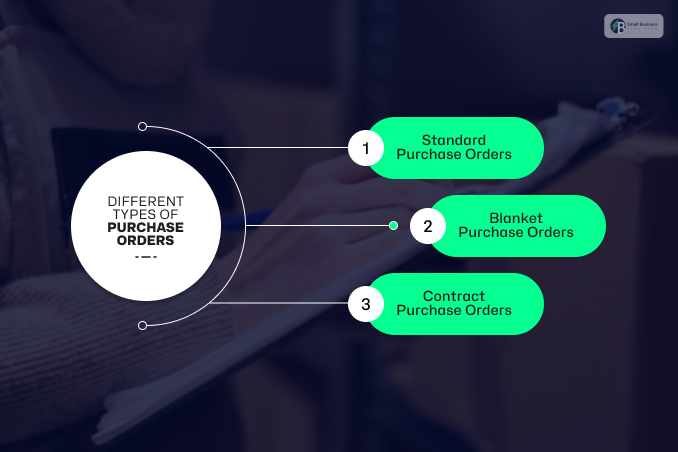
Not every PO is created equal. Depending on your business’s requirements, you can choose from a variety of purchase orders, each with a specific function.
1. Standard Purchase Orders
The standard PO is the most widely used. You use it when you have a clear idea of what you wish to purchase, the required quantity, the price, and the delivery date.
For example, you need 100 office chairs at ₹2,000 each; you will then issue a standard PO with all these specifications.
This type is great for one-off purchases and minimizes any misunderstandings between you and the vendor.
2. Blanket Purchase Orders
A blanket PO is beneficial when you repeatedly purchase the same products from one supplier.
Rather than issuing a new PO for each order, you raise a single large PO for a specified period, such as 6 months or 1 year.
It normally contains a maximum sum, general product details, and the time frame. They place the smaller orders under this blanket PO. This saves time, and the supplier is often more willing to negotiate the price.
3. Contract Purchase Orders
A contract PO is about the conditions rather than the items specified. The payment terms, delivery rules, quality standards, and legal clauses are all laid out.
Once ratified, you can release standard POs under this contract as required. You can see this in long-term relationships.
It helps both the customer and the supplier stay clear on the points of agreement and keep the interaction moving without friction.
The Process Of Creating A Purchase Order
At first, creating a PO might seem intricate, but in reality, it is very simple if you follow a few simple steps.
Identifying The Need For A Purchase
Everything starts with knowing what you want. It can be anything! Office supplies, raw materials, software, machinery, or marketing services, anything that you need.
Before you make the PO, ask yourself: Is it a must-have? Am I making this purchase within budget? Is it the right time to buy? After you are clear on these points, you are good to go.
Selecting A Supplier
Choosing the right supplier is crucial. Consider factors such as pricing, quality, turnaround time, prior interactions, and customer support.
Place a few choices side by side and pick the one that suits you best. A reliable supplier will make the entire transaction smooth, and the delivery will be on time when you need it.
Approving And Issuing The P.O.
Most companies prefer to obtain approval before issuing a PO. This move supports you in
- Controlling costs,
- Ensuring they adhered to the budget,
- Avoiding errors or fraud.
Once you get the green light, the supplier gets the PO.
And after the supplier acknowledges it, they confirm the order, and the two parties are aware of the exact terms. Such a simple process keeps your purchases neatly organized and professional.
The Role Of P.O. In Financial Management

A PO is not merely about purchasing—it’s also about managing your funds effectively.
Let’s find out how.
Budget Control And Strategic Planning
The use of POs allows you to better monitor your expenditures. You are able to:
- Figure out the destination of your money
- Prevent overspending
- Schedule coming purchases
- Establish financial objectives
For instance, if the office supply budget is ₹50,000 per month, your POs will help you stay within the limit. This will significantly strengthen your financial planning.
Audit Trail And Compliance
A record of transactions provides precise documentation of all operations carried out. POs offer you the following benefits:
- Claim expenses
- Resolve invoices with orders
- Prevent fraudulent bills
- Maintain tax compliance
In an audit, your POs would provide strong evidence of your expenditures.
Supplier Management And Relationship Building
Among the benefits of having suppliers as friends are saving money and gaining access to verticals. POs support this through:
- Defining clear expectations
- Eliminating miscommunications
- Securing prompt payments
- Creating trust
When suppliers notice that you have proper documentation, they consider you as a professional and trustworthy client.
Where To Include A PO Number On An Invoice?
A PO number on your invoice is very significant, as it links the invoice to the original purchase order, making transaction tracking easier.
The PO number serves as a reference point that clarifies everything and thus speeds up payment.
Make sure the PO number is prominently displayed, perhaps at the top where the invoice number and date are located, or in a field labeled “PO Number”.
You can also place it in the reference section or near the billing information to help your accounts team quickly match the invoice.
Always make sure to double-check the PO number is accurate to be on the safe side and avoid payment delays.
Typically, digital invoicing software provides a dedicated section for PO numbers, which helps minimize errors.
In fact, the clearer the PO number is, the smoother the payment process will be, and better supplier communication and a clear audit trail will be maintained.
Best Places to Add a PO Number:
- At the top of the invoice
- Near the invoice number
- In a separate “PO Number” field
- In the reference section
Those locations enable your accounting department to easily match invoices to purchase orders and, consequently, achieve prompt, precise payments.
Common Problems You Avoid by Using POs
If you decide to pass on POs, you would be getting involved in a process full of ups and downs that would eventually lead to a disorganized, stressful situation for your company.
A purchase order is like a beacon of light showing the way, making everything clear and organized, so there is no doubt about what, when, and from whom to buy.
Here are a few examples of the drawbacks that you face when you opt for POs:
- Wrong items delivered: The vendor is well aware of your order, so errors are very rare.
- Incorrect prices: The agreed price is recorded, eliminating the risk of surprises or overcharging.
- Missing quantities: You receive the exact number of controls since the PO stipulates the precise quantity.
- Late payments: POs enable the accounts team to match invoices accurately, ensuring timely payments.
- Disputes with vendors: Clear, accurate documentation helps resolve misunderstandings and conflicts.
Another benefit of using a PO is that it creates a documentation trail, which is really useful for audits and financial monitoring.
It also offers the benefits of a more streamlined purchasing process, quicker turnarounds, and increased confidence with suppliers.
All in all, a PO is a simple yet effective way to safeguard your business and keep your operations running smoothly.
How POs Help Small Businesses
Many people who own small businesses think that buying orders are only useful for big companies, but this is a misconception.
Actually, POs can be an excellent support for the business of any size. They help you keep things organized by clearly recording what you are purchasing, who the seller is, and the cost.
This improves your operations and suppliers’ opinions of you as more professional and reliable.
Some of the advantages of POs for small businesses are here in the list:
- Control spending: Monitor every purchase and make sure you do not exceed your budget.
- Clear transaction records: Helpful for accounting, audits, and no legal issues.
- Professionalism: Demonstrates to suppliers that your business is well-organized and trustworthy.
- Error reduction: This helps minimise the order and payment mistakes.
- Stronger supplier relationships: This helps build trust and makes communication easier.
Even if you are a freelancer, startup, or small business owner, the use of POs can streamline your purchasing process, lessen errors, and make your business more efficient and trustworthy.
It is by tying clear documentation to these practical benefits that POs become an indispensable resource for effective business management.