Table Of Contents
- What Is The Gas Pipeline Connection, or PNG?
- Who Are Eligible For A New Gas Pipeline Connection?
- Step-By-Step Process To Get A New Gas Pipeline
- 1. Check Pipeline Availability
- 2. Submit Your Application
- 3. Share Your Documents
- 4. Pay The Security Deposit
- 5. Schedule The Technical Inspection
- 6. Pipeline And Meter Setup
- Real-Life Examples: Residents Getting The PNG Connection
- What Are The Practical Tips That Can Make The Gas Connection Process Much Easier?
- What Are The Benefits And Challenges Of A PNG Connection?
- Documents That You Need For This!
- How Long Does The Process Take?
- Is There Anything You Can Do To Make The Process Easier?
- Gas Pipeliner Connections Vs LPG Cylinders: Which One Is Safer?
- Why Must Home Insurance Policies Cover The Pipeline Leaks?
- What To Do If...: Here Are The Special Scenarios!
How Can I Get A New Gas Pipeline Connection? What Should I Do To Make The Process Easier?
How can I get a new gas pipeline connection? What should I do to make the process easier?
Recently, many Indian households have been switching from old LPG cylinders to piped gas. And the biggest reason is? convenience.
You never have to book refills or worry about running out of gas while cooking, with a gas pipeline connection.
Instead, fuel flows directly to your home. This is what makes daily cooking much easier and more reliable.
Furthermore, piped gas is safer and simpler to manage. That is why demand is booming everywhere!
And still, many homeowners feel confused about how to get started, thinking it takes too much time.
Thankfully, the application process is now incredibly simple. This guide breaks it down step by step, using easy language to help you upgrade your kitchen quickly.
So, read this article as we discover how to get a new Gap pipeline connection and what makes the process much faster. Let’s dive in!
What Is The Gas Pipeline Connection, or PNG?

Nothing can be more frustrating than the situation when you run out of gas right in the middle of cooking dinner! That is the magic of a Piped Natural Gas (PNG) connection.
But what if I tell you there is a way to avoid running out of gas?
Yes, that is the magic of a Piped Natural Gas (PNG) connection. These are not heavy LPG cylinders!
Instead, it delivers fuel directly to your kitchen stove or water geyser via safe underground pipes.
So, why are modern families making the switch?
First, you enjoy a non-stop gas supply without the hassle of booking refills.
Second, it is much safer because the gas travels at a steady, controlled low pressure. On top of that, it is an eco-friendly choice that lowers your carbon footprint.
Finally, you pay only for what you actually use, just like an electricity bill. It is truly a smart upgrade for your home!
Who Are Eligible For A New Gas Pipeline Connection?
So, are you wondering who can get a modern piped gas connection? The great news is that almost anyone can apply!
For instance, you can easily get a new line if you are:
- A homeowner or tenant with a valid rent agreement.
- Part of a housing society or apartment complex.
- Running a business like a restaurant, hotel, or office.
- Managing an industrial unit.
However, there is one major catch before you sign up. Moreover, the main requirement is that the gas network must already be available in your specific area.
But do not worry if it is not ready yet! The gas company will simply schedule your installation right after they expand their pipelines to your locality.
Step-By-Step Process To Get A New Gas Pipeline
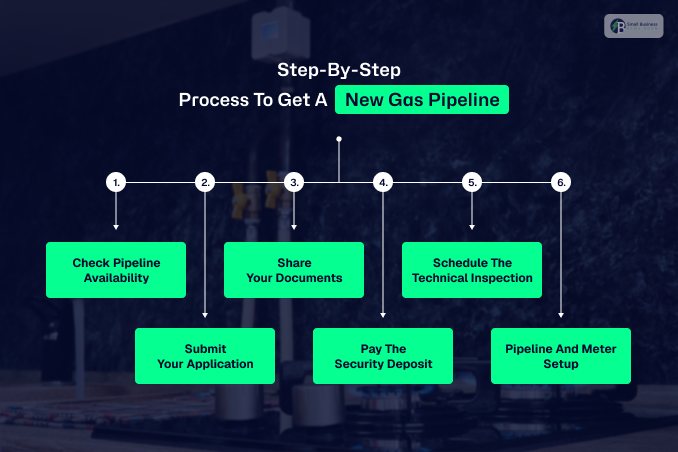
If you are wondering, “How can I get a new gas pipeline connection? What should I do to make the process easier?” here are the steps you can follow!
1. Check Pipeline Availability
Before doing anything else, you need to make sure your neighborhood has piped gas lines.
You can easily check this by visiting the provider’s website or calling customer care. Other than that, you can simply ask your housing society management.
💡Tip: If neighbours use it, you can too!
2. Submit Your Application
Next, you have to fill out a quick online form on the gas company’s portal. Just enter:
- Your name,
- Phone number,
- Address,
- Connection type.
Afterwards, a friendly customer representative will call you to guide you through the very next steps.
3. Share Your Documents
Now, it is time to upload your paperwork to verify your identity. They will just provide three things:
- Your Aadhaar card,
- A recent electricity bill,
- Proof of home ownership.
💡Tip: You need to send clear, unblurred photos. This can help you to ensure your application is approved without delay.
4. Pay The Security Deposit
After your paperwork is checked, you will need to pay a small registration fee and a refundable security deposit.
Once this payment is processed, the gas supplier will officially schedule your home for the upcoming pipeline installation.
5. Schedule The Technical Inspection
Next, a technical team will visit your house for a quick safety check. They will map out the best pipeline route and ensure everything is fully compliant.
If things are not workable, your deposit is safely refunded to you.
6. Pipeline And Meter Setup
Finally, the technicians will install your new gas meter, safety valves, and the main pipeline.
They will also tweak your current kitchen stove so it runs perfectly on the new gas. Now, you are finally ready to cook!
Real-Life Examples: Residents Getting The PNG Connection
Did you know there is a clever shortcut to get your gas pipeline up and running faster? Yes! There is!
Neighbours often team up to apply for PNG connections together, in places like Indore and Ujjain.
Consequently, when a large group of families shows interest all at once, the gas company quickly prioritises that entire neighbourhood.
For instance, the teamwork process is incredibly simple:
- First, a housing society gathers applications from 20 to 30 homes.
- Next, the provider quickly installs the main pipeline network down your street.
- Finally, workers connect the internal pipes directly to each kitchen.
- Ultimately, this group approach significantly reduces the overall installation wait time. It is a total win-win for the whole community!
What Are The Practical Tips That Can Make The Gas Connection Process Much Easier?
Now, here is the answer of yoru question: “What Should I Do To Make The Process Easier?”
I will explain it in a simple, easy way!
First, you need to apply online rather than visit the office. It reduces annoying paperwork and creates a fast digital record of your request.
Next, you have to ensure that all documentation is complete. Any sort of missing paperwork is the biggest reason for delays.
Thus, you need to double-check that everything is ready before hitting submit.
Additionally, you can just coordinate with your housing society. Gas companies usually prioritise your entire street when multiple neighbours apply together.
Furthermore, you must remain available for inspection visits. Technicians need quick access to your home to map out routes, and being there speeds up the work.
Finally, make sure to communicate only through official channels. Fake text messages about gas bills are common scams.
This is why you should always use official websites and phone numbers to keep your money safe.
What Are The Benefits And Challenges Of A PNG Connection?
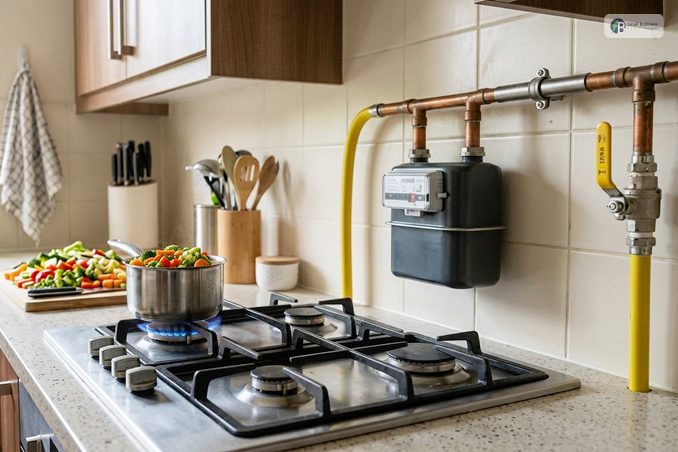
Switching to piped gas brings amazing perks to your daily kitchen life.
Most importantly, it offers ultimate convenience since you never have to book cylinders or wait for delivery trucks again.
So, you simply turn on the stove, and a continuous supply flows nonstop while you cook your favourite meals.
Additionally, making the switch offers great perks like:
- Enhanced Safety: The gas is lighter than air, so it disperses upward if there is a leak.
- Cost Efficiency: You only pay for the exact amount you use, just like a standard electricity bill.
- Eco-Friendly Cooking: It burns much cleaner than traditional fuels, making it a wonderful choice for the planet.
However, it also comes with major drawbacks! You might face a few minor speed bumps along the way.
For instance, the pipeline network might not be available on your street just yet.
Other common hurdles include documentation errors or property access issues during installation. There can also be approval delays when demand is super high.
Fortunately, you need to check your paperwork! This can help you to plan ahead in order to avoid all these hiccups!
Documents That You Need For This!
Before starting the process, make sure to keep these basic documents ready:
- Aadhaar Card & PAN Card
- Passport-size photograph & Mobile number
- Address proof (Electricity bill or Rent agreement)
- Property ownership proof
Additionally, some gas companies might ask for extra verification papers depending on your city.
However, you need to watch out for one common mistake! Many applicants accidentally submit documents in which their names or addresses do not match exactly.
Even a tiny mismatch can cause major delays.
Therefore, double-checking everything beforehand ensures your application gets approved smoothly and quickly.
How Long Does The Process Take?
Thanks to the new 2026 regulations, the whole process is now much faster and comes with strict timelines for gas providers.
Here is a simple breakdown of what to expect based on your living situation. This can give you a better idea!
| Scenario | Estimated Timeline |
| The pipeline is already in your building | 7 to 15 working days after your application gets approved. |
| Last-mile connection within 48 hours of society’s permission. | 15 to 30 working days to bring it to your door. |
| Brand-new area that needs a main line extension | 2 to 6 months since it requires a bigger expansion project. |
| Apartments with existing building pipes | Last-mile connection within 48 hours of society permission. |
Under these updated rules, local authorities and housing societies must grant access permissions within three working days.
Consequently, you will no longer face endless delays!
Is There Anything You Can Do To Make The Process Easier?
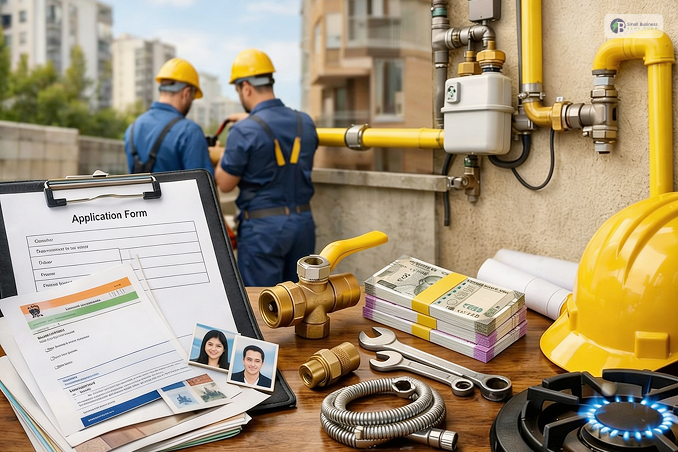
Most guides skip this part. However, a few smart moves can significantly reduce your wait time.
You just need to plan just a little ahead. This way, you can avoid annoying delays and upgrade your kitchen much faster.
1. First, take these easy steps before you apply!
- Scan files clearly: First, save your documents as crisp PDFs. Blurry photos get rejected, which can easily add 5 days to the process.
- Pick a meter spot: Second, decide where you want the kitchen meter before the team arrives so they can work quickly.
- Team up with neighbours: Third, check if your housing society is applying together, as bulk requests usually get priority.
- Get written landlord permission: lastly, if you rent, get a signed paper beforehand,d since verbal agreements are not accepted.
2. Next, make sure to apply online on a weekday morning. This avoids heavy website traffic and gets your request processed first.
3. Finally, keep your phone close by after submitting.
Technicians will call you a day before visiting, and missing that call could push your appointment back by a whole week!
Gas Pipeliner Connections Vs LPG Cylinders: Which One Is Safer?
It is completely normal to worry about safety in the kitchen.
However, the great news is that piped natural gas (PNG) is actually much safer than traditional LPG cylinders.
Here is a quick look at how modern pipeline systems protect your home, to show you why:
| Safety Feature | How It Protects You |
| Automatic Pressure Control | Keeps the gas flowing at a steady, safe, and very low pressure. |
| Leak Detection Systems | Constantly monitors the lines to catch any issues early. |
| Emergency Shut-Off Valves | Instantly stops the gas supply if something goes wrong. |
Additionally, natural gas is much lighter than air.
This is why, if a leak occurs, the gas quickly rises. It further disperses safely into the air rather than pooling on your kitchen floor as LPG does.
Of course, regular maintenance and safe usage are still important. However, if you can switch, it gives you incredible peace of mind in such cases!
Why Must Home Insurance Policies Cover The Pipeline Leaks?
Many people assume that if a gas pipeline causes any damage, the gas company will automatically pay for it.
However, that is only partially true! If a gas incident damages your kitchen walls, internal pipes, or personal belongings, the gas company might not cover the costs.
Instead, that responsibility usually falls on your own home insurance.
Therefore, having a solid home insurance policy is a smart move to protect your house from fires or explosions.
Before your new gas line goes live, it is wise to check your policy. Make sure it covers fire damages, matches your home’s current value, and does not exclude pipeline accidents.
Fortunately, SMC Insurance makes this super easy. We can quickly help you find the perfect plan from top trusted insurers to protect your modern kitchen.
What To Do If…: Here Are The Special Scenarios!
Sometimes, life throws a few curveballs when you are trying to upgrade your kitchen.
To help you navigate any unexpected bumps smoothly, here is a quick, friendly guide on exactly what to do in different situations:
| Situation | What to Do |
| Moving to a brand-new house | First, ask your gas company to disconnect the old line. They will refund or adjust your security deposit. Next, check if piped gas is active at your new place and simply reapply. |
| No pipelines on your street | Do not worry! Just register your interest on the gas company website. After that, team up with your neighborhood committee to send a group request. Higher demand always speeds up expansion. |
| Got an LPG stop-cooking notice | Act fast and reply within the deadline, then apply for piped gas immediately. However, if lines are not ready yet, send a formal written note to your gas provider. |
| Application delayed over 20 days | It is time to speak up! File an online complaint on the PNGRB portal or call the gas company officer. New rules strictly mandate fixed, speedy approval timelines. |
| The landlord says no to the setup. | Write a formal letter to the owner explaining the mandatory gas transition rules. Furthermore, if they still refuse to cooperate, it is best to consult a friendly legal adviser. |