Table Of Contents
- What Is A Small Manufacturing Business?
- Top Small Manufacturing Business Ideas
- Low-Investment & Home-Based Manufacturing
- Traditional & Local Market Manufacturing
- Tech-Driven & Modern Manufacturing
- How To Start A Small Manufacturing Business (Step-By-Step)
- 1. Conduct Market Research & Idea Validation
- 2. Write A Solid Business Plan
- 3. Legal Framework & Registration
- 4. Funding & Capital Planning
- 5. Set up Production & Operations
- 6. Quality Control & SOPs
- 7. Sales & Marketing Strategy
- Cost Breakdown & Profit Estimation
- 1. The Initial "Start-Up" Stack
- 2. Fixed vs. Operating Costs
- Fixed Costs
- Operating (Variable) Costs
- 3. Profit Margin Scenarios
- · Hand-Poured Soy Candles
- · Eco-Friendly Tote Bags
- · Small Electronics (e.g., Smart Home Sensors)
- 4. The Break-Even Point
- 5. 2026 Pro Tip: The "Buffer" Fund
- Key Challenges & How To Overcome Them
- Supply Chain Snags
- Fighting The Giants
- Regulatory Red Flags
- Finding Great People
- Expert Tips & Best Practices For Small Manufacturers
How To Start And Grow A Profitable Small Manufacturing Business In 2026 (Step-by-Step Guide)
Last Updated on: August 21st, 2026
The economic trends of 2026 currently favor small manufacturing businesses, which have begun to establish themselves in the market.
Small manufacturers in the United States operate as flexible organizations with small teams and limited earnings.
And yet, they make up the largest share of the industry while developing new products and meeting rapidly changing customer demands.
Furthermore, industry experts report that small and medium manufacturers comprise almost all manufacturing companies in the United States.
This shows their continuous presence in the market and their ability to endure challenges.
In particular, the rising demand for locally produced, personalized, and ethically sourced products drives this growth.
Consequently, shoppers increasingly select products that offer local options.
This delivers sustainability benefits and distinctive features instead of choosing common imported items.
The manufacturing industry gains new opportunities through this trend. This helps small businesses that specialize in particular markets.
Moreover, commercial research shows multiple ways to operate small manufacturing businesses through artisanal products and technology-based production methods. This helps to meet current market needs.
Ultimately, small manufacturing businesses create essential economic value for their communities through their production activities.
These businesses create employment opportunities by partnering with suppliers and use their profits to invest in their communities.
It helps develop local economic systems. This complete guide will show you all the necessary steps to build and expand your successful small manufacturing enterprise in 2026.
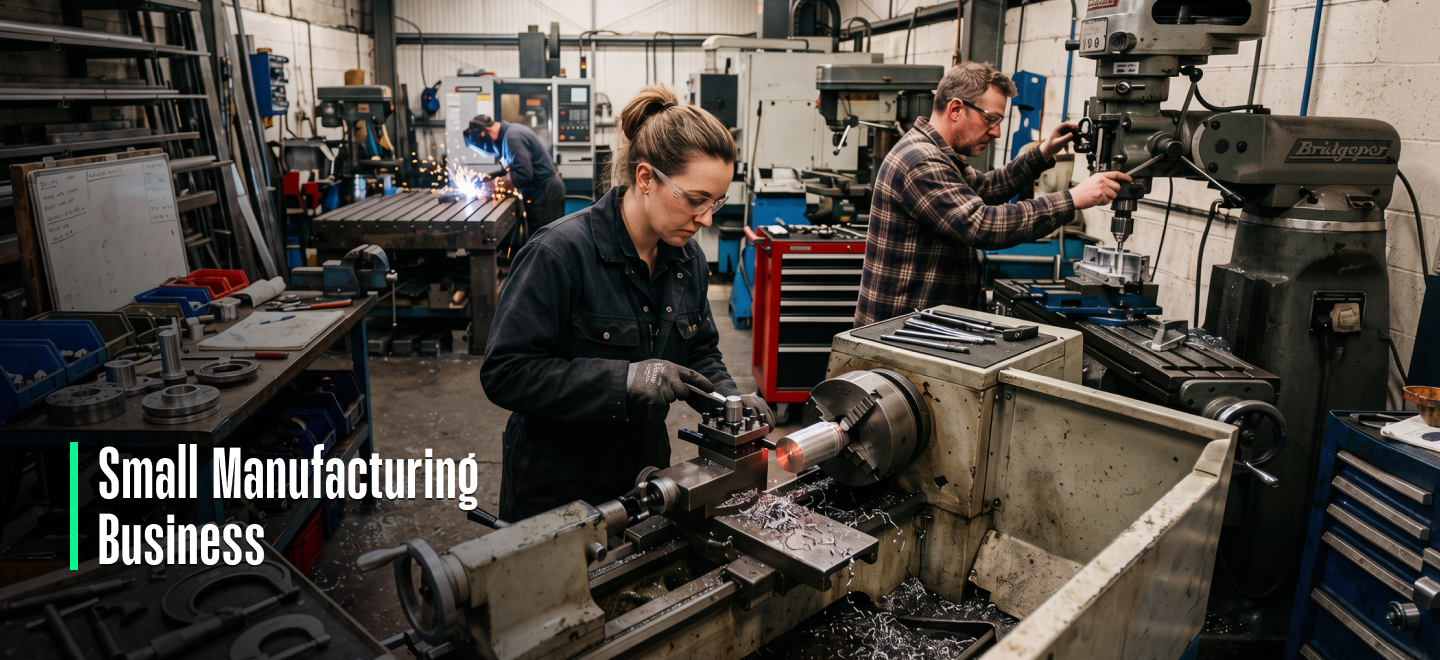
What Is A Small Manufacturing Business?

The small manufacturing business establishes physical production capacity through
- reduced employee count,
- lower financing requirements,
- operational system
This operates between two extreme points of manufacturing capacity. Therefore, small manufacturers use flexible production methods to create specialized products.
They also produce in short production runs and deliver to customers quickly.
For example, some businesses produce finished consumer goods, which include furniture, food products, and personal care items.
Then there are a few that produce industrial components. This includes metal parts and packaging, as well as electronic assemblies.
They create specialty products designed for specific customers. The scope is broad, but the common thread is controlled scale and hands-on operations.
Specifically, most small manufacturers follow one of three models:
- Batch manufacturing (which produces goods in small lots),
- Custom production or made-to-order production
- On-demand manufacturing, which depends on real-time orders.
The inventory collection system for each model protects businesses from inventory losses while enabling them to maintain their pricing and profitability.
The requirements of regulatory systems differ between nations. Small manufacturers must follow
- U.S. federal, state, and local licensing requirements,
- Tax regulations and safety standards.
Similarly, the regulatory environment in India establishes its framework through
- MSME classification,
- Udyam registration, and
- GST compliance requirements.
A basic understanding of these matters will prevent costly compliance problems later.
Top Small Manufacturing Business Ideas
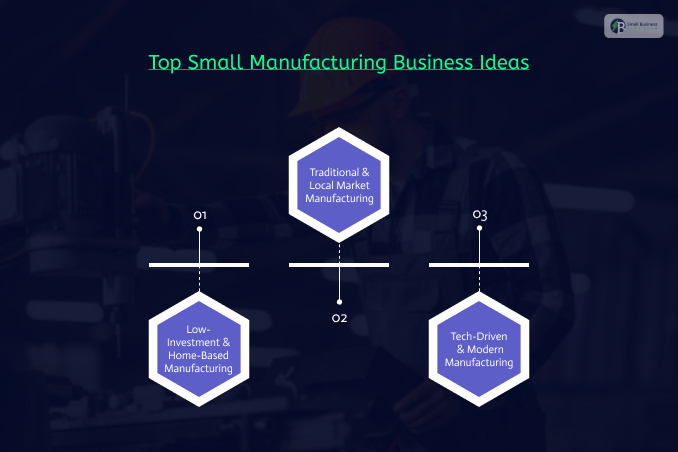
The most effective method for assessing small manufacturing business opportunities is to establish three categories that reflect their investment needs, market demand, and potential for business growth.
In 2026, the most profitable ideas fall into three clear categories.
Low-Investment & Home-Based Manufacturing
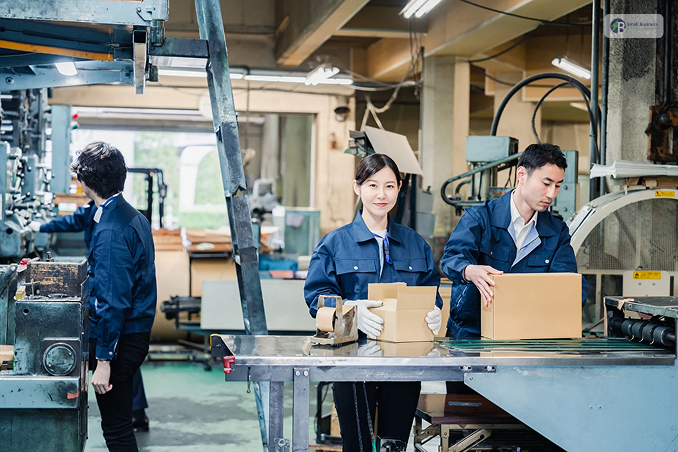
These businesses are ideal solutions for entrepreneurs!
These people want to build their own business from the ground up. And along with that, testing market demand and expanding their operations does not stop either!
That too is possible, without needing additional operational facilities. Commonly chosen products include:
- Handmade candles, soaps, and skincare products that exist because customers prefer clean-label products and artisanal brands
- Paper products, which include bags, notebooks, and custom stationery
- Eco-friendly small goods, which include reusable household items
- Custom 3D-printed items, which include prototypes, accessories, and personalized products
The following explanation shows why this system functions effectively:
- The system requires minimal equipment and space to operate
- The system provides simple startup options through eCommerce platforms and online marketplaces
The investment range: $2,000 to $15,000
The Advantages: Reduced risk and quick establishment
The Challenges: High competition and the necessity to build a brand identity for future development
The market demand: It shows strong growth, which will continue to grow in the future.
Traditional & Local Market Manufacturing
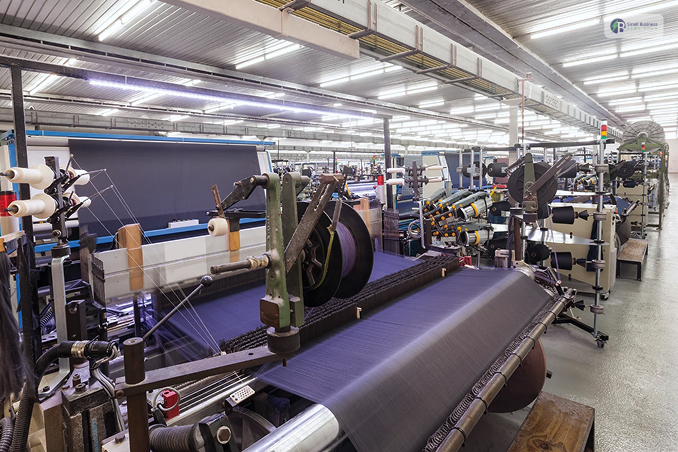
Niche U.S. communities and export markets create consistent consumption patterns. This way, it can fulfill cultural demands for these businesses.
Common product categories:
- Incense sticks and textile accessories
- Paper plates and disposable products
- Organic snacks and food processing items
- Toys and craft-based goods
Why this works:
- Repeat purchases and predictable demand
- Retail sales in ethnic markets, plus bulk order sales and export sales, show strong business results
Investment range: $15,000–$50,000
The advantages: The business has stable sales because it sells to bulk buyers
The challenges: The business needs to follow regulations, which results in higher expenses and reduced profits
The Demand: Product demand will remain constant as long as export opportunities exist in the market.
Tech-Driven & Modern Manufacturing
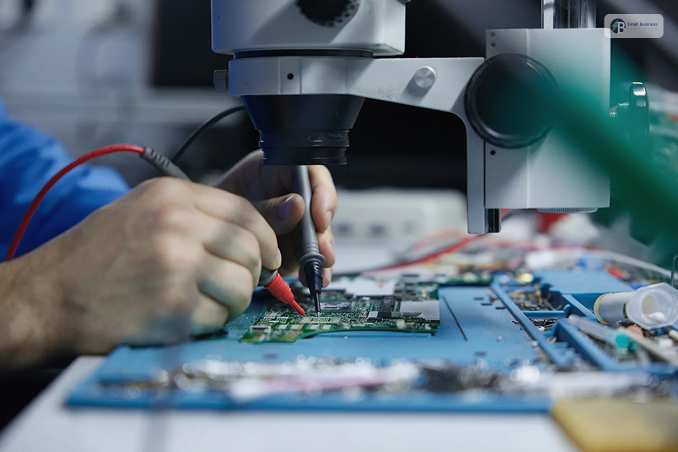
This category shows the future direction of manufacturing. This will use three main elements: automation, customized production, and digital technology integration.
The following markets show potential for strong growth:
- Small electronic components and accessories
- Portable chargers and power solutions
- Eco-friendly and smart packaging
- Customized furniture and décor using CNC or modular systems
The following reasons explain why this approach succeeds:
- Higher margins through customization
- Digital tools provide better inventory management capabilities
Investment range: This project typically falls between between $40,000 and $150,000
The Advantages: The system provides benefits because it can grow and develop for future needs
The challenges: The system requires higher expenses for initial establishment, while demanding specialized knowledge
The demand: The product demand will reach a peak and continue to grow.
How To Start A Small Manufacturing Business (Step-By-Step)
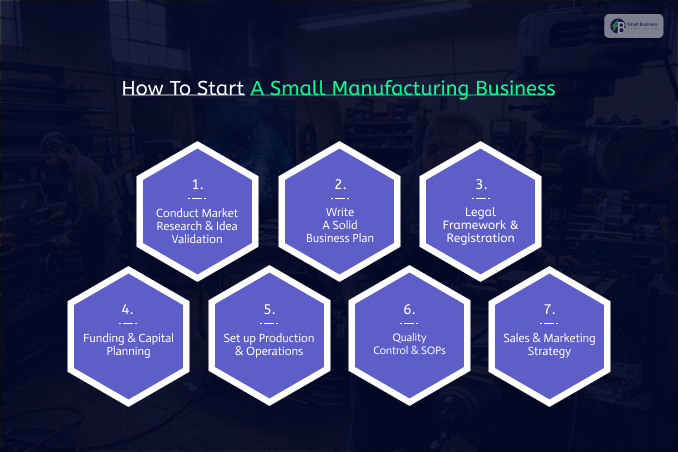
Are you prepared to transform your product concept into a tangible product?
Starting a manufacturing unit in 2026 is easier than ever thanks to smart tech and global demand.
The following guide provides you with the necessary steps to create a brand that will continue executing its mission beyond your lifetime.
1. Conduct Market Research & Idea Validation
Building in the dark is a poor approach to development. Google Trends lets you observe current user search behavior.
Use social media surveys to determine which solution your customers prefer. Analyze your competitors to discover.
These aspects of your product can help you to improve through
- Faster delivery,
- Reduced costs
- Better quality.
You must first validate demand before making any equipment purchase.
2. Write A Solid Business Plan
This document serves as your GPS navigation system. Your Unique Selling Proposition (USP) requires you to identify which elements of your business make you different from competitors.
You need to present your initial business expenses, including:
- Operational costs
- Projected income.
A clear plan isn’t just for you. It’s essential if you want to convince banks or investors to fund your vision.
3. Legal Framework & Registration
You need to select an official business structure, such as an LLC or a Private Limited Company.
Your company must complete the official company registration process through the Ministry of Corporate Affairs (MCA) to receive its Incorporation Certificate.
You can simply MCA v3 login to complete the entire process.
In India, register on the Udyam Portal to avail MSME benefits and obtain your GST number.
The trademark registration process through the IP India portal protects your brand name and logo from unauthorized reproduction.
Also Check: 31 Unique Business Name Ideas For Startups In 2026
4. Funding & Capital Planning
What methods will you utilize to cover your expenses? You have two options: bootstrap with your savings or explore government schemes, including Make in India.
The SIDBI website offers information about small business loan options.
If your product is innovative, try crowdfunding on Kickstarter or pitching to angel investors who love hardware.
5. Set up Production & Operations
The location needs to be determined because it will provide essential advantages for businesses that need to maintain proximity to their suppliers to minimize transportation costs.
For example, if you are targeting South American supply chains, understanding how to set up a company in Brazil will help you establish a strategic and legally compliant operational base.
Evaluate your budget requirements to determine whether actual new equipment purchases are necessary or if you can use certified refurbished equipment instead.
Apply Lean Manufacturing principles by maintaining an organized layout. This enables efficient operations through waste reduction and fast operational movement.
6. Quality Control & SOPs
Your brand needs to deliver consistent results because this approach creates the most effective marketing strategy for your business.
Document all Standard Operating Procedures (SOPs) to ensure that every product receives identical manufacturing treatment.
Create basic checklists that track the “Incoming Parts” stage, the “In-Progress Assembly” stage, and the “Final Polish” stage.
Shipments will only occur once products achieve complete perfection.
7. Sales & Marketing Strategy
Businesses should not wait for customers to arrive at their establishment. List your products on IndiaMART to generate B2B leads, or start a D2C store on Shopify.
Use SEO to show up when wholesalers search for your product.
Customers encounter your product through its attractive packaging. This establishes their first contact with your brand.
Cost Breakdown & Profit Estimation

Your manufacturing vision for 2026 requires you to master all numerical aspects of your business operations.
Don’t let the math scare you! Your understanding of cash flow determines whether you operate a hobby or run a successful manufacturing business.
1. The Initial “Start-Up” Stack
Before production begins, your structural capital must be allocated efficiently. Your initial startup layout consists of:
- Equipment Acquisition (CapEx)
Avoid buying outdated machinery. Focus on modular, IoT-enabled machinery that supports predictive maintenance.
- The Legal & Regulatory Bundle
Budget for domestic corporate structure filing and IP protection. For US entities, a trademark application with the USPTO across specific international classes ranges from $250 to $350 per class in federal filing fees alone.
For Indian entities, file through the IP India portal.
- Raw Material Sourcing
Secure your first production run materials plus a 20% Safety Stock buffer to absorb initial supply chain transit delays.
2. Fixed vs. Operating Costs
You need to track your monthly expenses because your sales volume can range from 1 product to 1,000. Your expenses remain constant regardless of your production level
Fixed Costs
These stay the same. Studio space rental, general liability insurance, and accounting software subscriptions are all fixed costs that will remain constant.
- Product Liability Insurance: Essential for manufacturers. It protects your enterprise if a defective batch causes property damage or bodily injury to an end consumer.
- Commercial Property & Equipment Breakdown Insurance: Safeguards capital-intensive physical machinery against sudden electrical or mechanical failures not covered by basic warranties.
- Workers’ Compensation: A non-negotiable statutory requirement to protect your shop-floor operators from workplace injuries.
Operating (Variable) Costs
These costs vary with the quantity of products you manufacture. The company requires additional materials and sustainable packaging, and shipping costs increase as order volume rises.
In 2026, business owners use cloud-based inventory systems to operate their businesses with continuous inventory visibility.
3. Profit Margin Scenarios
How much will you actually pocket? Let’s look at three popular 2026 niches:
· Hand-Poured Soy Candles
These high-margin products demonstrate their economic value. A candle costing $5 to make (wax, wick, jar, scent) often sells for $25+.
That results in a higher gross margin for the business.
· Eco-Friendly Tote Bags
These products generate revenue through their high production volumes. The product costs $4 to create from recycled materials.
This allows you to sell it in bulk at $8 or through retail at $15. Also, the products have lower profit margins, yet you will likely sell multiple items to nearby stores.
· Small Electronics (e.g., Smart Home Sensors)
The product requires expensive components. The retail price for a gadget that costs $15 to build will be $45. On top of that, your margin needs to cover high R&D and potential tech support costs.
4. The Break-Even Point
Calculating your precise break-even threshold is critical to determining your minimum viable operational volume. Rather than guessing, apply the formal Contribution Margin formula:
Contribution Margin = Total Sales Revenue – Total Variable Costs
Scenario Breakdown (Soy Candles):
- Fixed Costs (Rent + Software): $2,000 / month
- Retail Selling Price: $25.00
- Variable Cost (COGS): $5.00
- Contribution Margin per Unit: $20.00 ($25.00 – $5.00)
- Break-Even Point: 100 units per month ($2,000 / $20.00)
Any unit sold past the 100th unit directly builds your net operational profit margin.
5. 2026 Pro Tip: The “Buffer” Fund
Your business needs a fund that will cover unexpected expenses at a 15% rate. Your production process maintains continuous operation.
Reason? Well, it is because you have a financial reserve that protects against unexpected shipping cost increases and equipment breakdowns.
Key Challenges & How To Overcome Them
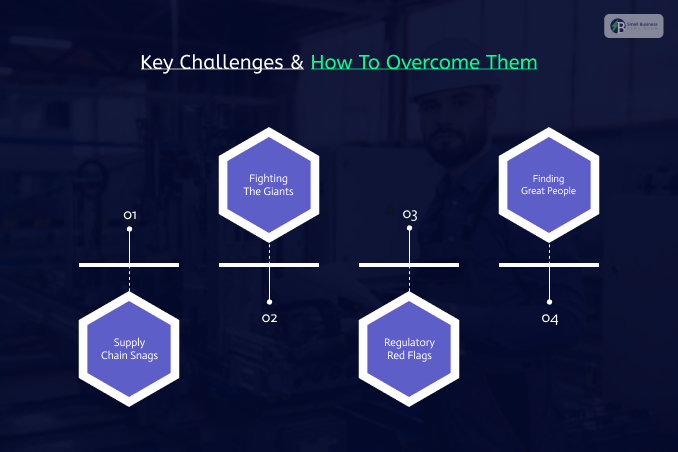
The business world will experience exciting changes as entrepreneurs launch new ventures in 2026, despite various challenges.
The following guide will teach you how to manage these situations like an experienced professional.
Supply Chain Snags
Shipping delays are real. Businesses should avoid depending on a single supplier. Create a secondary vendor list that includes nearby US suppliers.
Moreover, the more expensive options will protect you during periods when global shipping operations are disrupted.
Move away from single-source dependencies. Implement a Dual-Sourcing Strategy where 70% of your components
This comes from primary international partners, and 30% are secured via localized regional suppliers.
This safeguards your Total Landed Cost during macroeconomic freight spikes.
Fighting The Giants
Your company needs to demonstrate its unique story because you cannot match the lower prices of bigger companies.
Use your “Small Business” status as a badge of honor. Customers in 2026 love buying products with a face and a mission behind them.
Regulatory Red Flags
Mistakes in this area can be costly. Avoid the “I will complete it later” tendency when dealing with safety requirements.
You need to verify your workspace’s compliance with OSHA rules before the trademark registration deadline. On top of that, legal compliance costs less than paying violation penalties.
Structural safety is an immediate business survival metric. In the US, confirm your facility layout adheres strictly to OSHA General Industry Standards (29 CFR 1910).
In India, maintain complete compliance with state-level Factories Act regulations to avoid immediate operational shutdowns.
Finding Great People
The process of finding skilled workers remains challenging. The search for ideal specialists should begin with people who demonstrate strong positive qualities.
Automated training tools should be included in your budget because they provide basic instruction on the necessary skills.
Expert Tips & Best Practices For Small Manufacturers
Do you want to transform your small store into an efficient operational system? The following professional practices distinguish expert performers from beginner workers in 2026.
- Execute the 5S Workplace Methodology
Optimize floor space by systematically utilizing Sort, Set in order, Shine, Standardize, and Sustain.
Mark pathways clearly to slash transit times within the assembly cell, which directly increases your Overall Equipment Effectiveness (OEE).
- Implement Kaizen Frameworks
Commit to continuous, incremental 1% structural changes weekly.
Dedicate the final 30 minutes of every operational cycle to identifying and removing one of the Lean Manufacturing 8 Wastes (such as overproduction or excess motion).
- Sustainable Materials Sourcing
Green manufacturing is an operational advantage. Transition to biodegradable, plastic-free packaging to capture premium enterprise contracts.
Now, modern B2B procurers heavily vet vendor supply chains for sustainability benchmarks.