



Table Of Contents
- What Is Marketing? (Simple Explanation for Beginners)
- Different Types Of Marketing You Should Know
- 1. Content Marketing
- 2. Social Media Marketing
- 3. Search Engine Optimization (SEO)
- 4. Search Engine Marketing (SEM)
- 5. Email Marketing
- 6. Influencer Marketing
- 7. Affiliate Marketing
- 8. Video Marketing
- 9. Paid Advertising
- 10. Referral Marketing
- 11. Local Marketing
- 12. Mobile Marketing
- 13. Partnership Marketing
- 14. Event Marketing
- 15. Guerrilla Marketing
- 16. Retargeting
- 17. Direct Marketing
- 18. Word-of-Mouth Marketing
- 19. Relationship Marketing
- 20. Brand Marketing
- 21. Product Marketing
- 22. B2C Marketing (Business to Consumer)
- 23. B2B Marketing (Business to Business)
- 24. Niche Marketing
- 25. Mass Marketing
- 26. Seasonal Marketing
- 27. Cause Marketing
- 28. Experiential Marketing
- 29. Interactive Marketing
- 30. Personalized Marketing
- 31. Conversational Marketing
- 32. Community Marketing
- 33. User-Generated Content Marketing
- 34. Loyalty Marketing
- 35. Sustainability Marketing
- Which Types Of Marketing Should You Choose As A Small Business Owner?
The Ultimate Breakdown Types Of Marketing : Which One Is Right For You?
If you are a small business owner or an entrepreneur just starting, you might have noticed people using terms like digital marketing, influencer marketing, content marketing, etc. And to be honest? The whole thing gets very confusing quite quickly.
You might ask yourself:
- What is the best marketing type for me to use?
- Is it necessary to do all of them?
- What is best for a small business like mine?
Relax, it’s not only you.
This guide will be your companion as I explain, in non-technical terms, the various types of marketing. You will gain an insight into each type, how it works, and when it is appropriate for your business.
By the time we are done, you will be in a better position to decide where to invest your time and money.
So, let’s start.
What Is Marketing? (Simple Explanation for Beginners)

Marketing is the process that gets your company noticed and considered by potential customers.
It is much more complicated than merely marketing a product or providing a service. It involves slowly guiding consumers through a process in which they get to know your product, its benefits, and your trustworthiness.
In the end, marketing can build a relationship between you and the people if it is done correctly.
Ponder this: when you see a brand on Instagram, find an interesting blog post, receive a discount email, or a friend talks about a product, it implies that a marketing effort is going on behind the scenes.
If you happen to be a small business owner or a beginner entrepreneur, marketing will be your weapon to get the right people to notice you, to come out of the competitors’ shadow, to build trust, and eventually, to make a profit over time.
A marketing-less good product can turn out to be completely useless.
Consequently, no matter what type of business you have, whether it is online or not, marketing is an absolute necessity. It is obligatory.
Different Types Of Marketing You Should Know
Various types of marketing exist, and honestly, there’s no need to adopt all of them. The key is to understand what each type can do for you, so you can select the one that feels best for your business.
Let’s take a closer look at the most significant ones and explain them in a way that anyone can understand.
1. Content Marketing

Content marketing is mainly about helping people, not selling to them.
Rather than directly advertising your product, you will produce interesting content, for example, blog posts, videos, guides, or social media posts that meet users’ needs or solve their problems.
Gradually, people will trust you if your content is helpful, and then they will buy from you.
For instance, if you offer health products, then you can provide tips on workouts, eating guides, and even advice for beginners.
Eventually, people will consider you a specialist, and they will choose your brand over others.
This type of marketing is very effective because the original content continues to attract traffic months or years later.
2. Social Media Marketing

Social media marketing is one of the types of marketing that uses social media platforms like Instagram, Facebook, LinkedIn, or TikTok to get the word out about your business.
In this case, you don’t just sell; you also build your community. You chat with your followers, answer their queries, reveal some company secrets, and even showcase your brand’s uniqueness. This strategy makes your business seem less robotic and more approachable.
For startups and small businesses, social media is a very strong weapon because it is cost-effective and provides you with instant access to your target customers.
3. Search Engine Optimization (SEO)

SEO is a search engine optimization strategy that helps your website appear in Google when a person looks for something related to your business.
For instance, if a person searches for “best bakery nearby” or “cheap graphic designer,” SEO will select and rank the websites, respectively.
Free traffic is generated for your site through ads while ranking high on search engines. It is a time-consuming process, but once it is done, it can provide a steady stream of customers.
SEO suits you if you aim to grow your business over the long term, with a gradual increase in customer numbers.
4. Search Engine Marketing (SEM)
SEM is the practice of running paid ads on search engines such as Google.
With SEM, you do not have to wait for months, as in the case of SEO. Rather, you can pay to get the top position in the search results right away. Whenever someone clicks on your ad, a small fee is charged to you.
This is effective in situations where you need immediate results, such as introducing a new product, organizing a sale, or entering a highly competitive market.
5. Email Marketing

Email marketing refers to the process of sending emails to individuals who have previously shown interest in your brand.
Depending on your strategy, it can be used to convey information, provide discounts, enlighten your audience, or just be around.
If we compare it with social media, email gives you a list of subscribers, so no algorithm can deactivate it.
It is one of the most efficient types of marketing from a cost perspective, as you are having the conversation with the people who already trust you.
6. Influencer Marketing
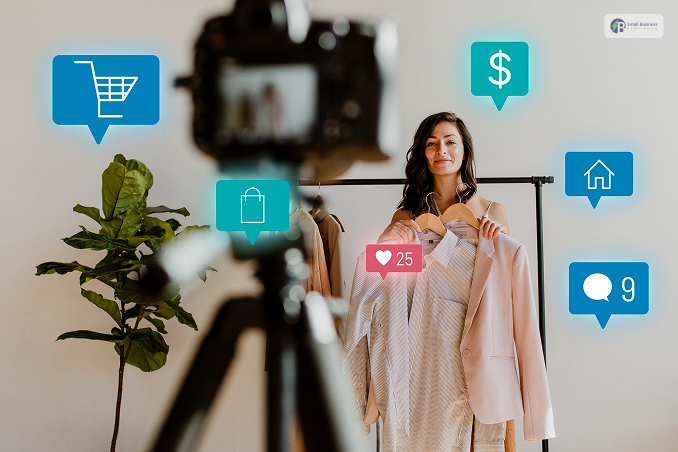
Influencer marketing is a process in which you partner with individuals who already have a built-in following.
They tell their followers about your product, and because people trust them, your brand gains credibility instantly.
You don’t always need big celebrities; micro-influencers with smaller but more dedicated audiences often work better for small businesses, if not always.
7. Affiliate Marketing
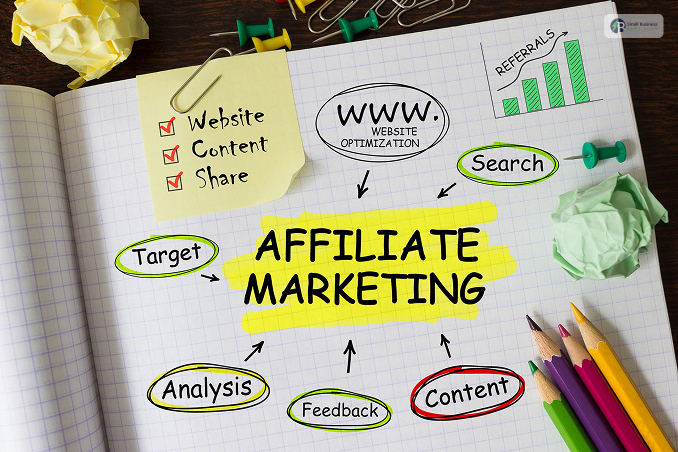
In affiliate marketing, other people promote you, and you only pay them when they generate a sale for you.
This tactic is considered low-risk, as you will not lose any money upfront if the results are not achieved. It is an excellent way to widen your reach without having to do all the work yourself.
8. Video Marketing

Video marketing is the use of video to explain, promote, or educate the audience. People prefer videos because they require less effort to watch and yield greater understanding.
Video can be used to demonstrate how the product works, narrate customer experiences, or impart useful knowledge.
Short videos are popular on social media and can help rocket your growth.
9. Paid Advertising
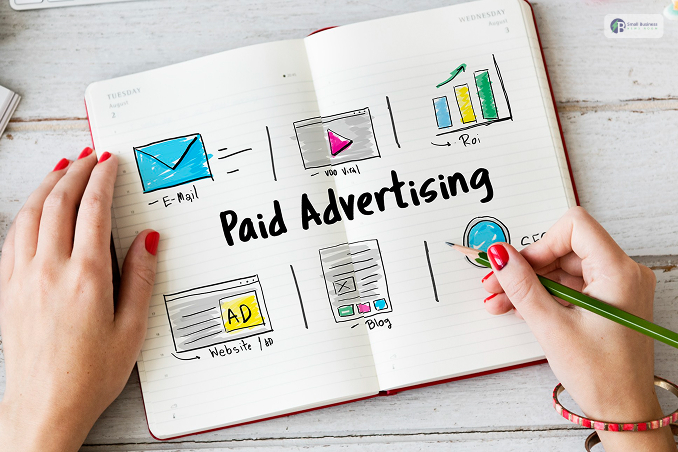
Paid advertising is a method of allocating funds to reach your business image with platforms such as Google, Facebook, Instagram, and YouTube.
Moreover, paid ads can provide instant visibility, unlike organic methods that require time. Delivering your ads to very specific people based on their age, location, interests, or activities is possible.
This is effective if you want to drive traffic quickly, make fast sales, or build brand awareness instantly, but if you do not handle it well, the costs can spiral.
10. Referral Marketing
Referral marketing is a strategy in which your current customers refer new customers to you.
Think of it that way, people are more likely to trust a friend’s recommendation than an ad. That is exactly how referral marketing gets so much credit.
You can support this by offering small tokens, such as discounts, cashback, or even free products. It is easy, cheap, and very effective.
11. Local Marketing
The target market for local marketing is mainly the residents around your business.
If you own a brick-and-mortar store, coffee shop, hairdresser, or provide a service, then this is extremely important.
It includes activities such as Google My Business, local SEO, community events, flyers, and collaborating with locals.
The aim is straightforward: when someone in the area needs your product or service, you should be the first to come to mind.
12. Mobile Marketing

Mobile marketing is about reaching users on their cell phones. It might cover SMS marketing, WhatsApp messages, mobile-friendly websites, or app notifications.
Since most people are glued to their phones for hours each day, mobile marketing lets you stay in touch with them wherever they are, whenever they want.
Also Check: SMSbombers Org: Full Guide To SMS Bombing, Risks, Legality & Safety In 2026
13. Partnership Marketing

Partnership marketing is when two or more companies collaborate to promote each other. For instance, a gym and a healthy café can collaborate on cross-promotions. Both brands will have access to new customers without incurring additional costs.
This strategy is a win-win and great for business growth through cooperation.
14. Event Marketing
Event marketing is using events to promote your brand, whether online or offline.
This could include holding workshops, conducting webinars, launching products, setting up pop-up shops, or participating in trade fairs.
Events give people the opportunity to experience your brand rather than simply hearing about it. This experience creates a stronger bond.
15. Guerrilla Marketing
Guerrilla marketing is a pure-play approach that uses creative, unexpected ideas to attract attention.
Instead of getting confused between marketing vs advertising, you become different and memorable. It’s all about getting people to see, talk, and even create word-of-mouth for your brand.
If you are a true artist and want your brand to be noticed, then this is the tactic for you.
16. Retargeting
Have you ever been on a site and suddenly had its ads appear most frequently? That’s retargeting.
It is a method for showing ads to users who have previously been in contact with your brand but have not yet purchased. This keeps you in their minds, and usually, those people return to you.
This is one of the most effective methods for maximizing sales.
17. Direct Marketing
Direct marketing is a method of personal communication with clients rather than advertising to everyone.
It can be via email, SMS, WhatsApp, postcard, or phone. The aim is to deliver personalized, relevant, and targeted messages.
This is effective because the recipient is more likely to react favorably to a message that seems to be only for them.
18. Word-of-Mouth Marketing
Word-of-mouth marketing is when customers talk about your brand to others.
This mostly happens when customers are really happy with their products or the service. This marketing strategy is really effective because people trust personal recommendations more than advertisements.
Exceptional service, high-quality products, and unforgettable experiences are the main reasons why people will talk about you.
19. Relationship Marketing
Relationship marketing is all about establishing a long-lasting rapport rather than quick sales.
You keep the customer updated, add continuous value, and treat him/her like a special person.
Trust and loyalty are thus baked in. After some time, the customer is happy and therefore a repeat buyer, and on top of that, he/she may tell others about your brand.
20. Brand Marketing

The influence of brand marketing on people’s perceptions of a business is very significant.
Customers’ feelings toward the company are a combination of several factors, such as products, values, personality, voice, and story.
A brand that communicates strongly will be recognized, trusted, and remembered by people.
If the brand is perceived as familiar, customers will most likely choose it.
21. Product Marketing
Product marketing focuses on the specific product they are selling. They discuss the features and benefits of the product, with a focus on its superiority over alternatives.
This marketing tactic is crucial, particularly during new product launch stages.
The art of problem-solving is what one needs to communicate very clearly as a product’s distinctive quality.
22. B2C Marketing (Business to Consumer)
B2C marketing is the sale of goods or services directly to consumers. Also, it can be recognized as retail for clothes, edibles, skin care products, educational courses, or apps.
Here, feelings have great importance.
What the product does or how it impacts the customers’ lives is the main focus: Easier, Better, or Happier.
Thus, this helps in creating brand loyalty by building enduring relationships with customers and making them feel good about their choices with the brand.
23. B2B Marketing (Business to Business)
B2B marketing refers to the sale of products and services to other companies. In such cases, companies are mostly interested in outcomes, benefits, and long-term gains.
Hence, the message must be communicated very clearly, professionally, and practically.
The emotional aspect is nearly non-existent here; rather, it is the efficiency aspect through time, money, and effort that your product offers that you focus on.
24. Niche Marketing
Niche marketing is about narrowing your market to a specific group of people, rather than everyone else.
This not only makes your communication clearer but also gives it a more intimate touch.
When consumers perceive that the offering is specially tailored to them, they rarely lose trust in you, and so customer loyalty is established.
25. Mass Marketing
Mass marketing is about reaching everyone with a single message. This strategy is commonly used by big brands.
For small businesses, this can be a costly and less effective marketing method.
It is often better to target a specific audience rather than trying to satisfy the whole market.
26. Seasonal Marketing
Seasonal marketing is promoting your products at specific times, such as festivals, holidays, or seasons.
For example, Diwali sales, Christmas reposts, or New Year giveaways. The strategy works well since the people are already in a buying mood during these times.
27. Cause Marketing
Cause marketing is one of the types of marketing that links your company with a particular social or environmental issue. Such as supporting a charity or living an eco-friendly lifestyle.
It lets the public know that your business is not only interested in making money. If done truthfully, this will create emotional trust with the market.
28. Experiential Marketing
Experiential marketing aims at giving people a tangible experience of your brand. It could be through events, pop-ups, workshops, or live demonstrations.
Rather than just explaining your product, you allow people to experience it, and that is what makes your brand stand out in their memory.
29. Interactive Marketing
Interactive marketing encourages people to engage with the content on your digital platform. The methods can be polls, quizzes, games, live sessions, or Q&As.
People become more attached to your brand if they have some degree of interaction—and that attachment usually evolves into trust.
30. Personalized Marketing
Personalized marketing is the process of tailoring your message to each individual.
Such actions may include addressing the customer by name, recommending products based on previous purchases, or sending personalized offers.
People appreciate it when they feel that there is someone out there who notices them or is trying to understand. This helps in increasing the effectiveness of this type of marketing.
31. Conversational Marketing

Conversational marketing is the same as real-time communication. They utilise the Live chat, chatbots, WhatsApp, Instagram DMs, or website messages.
Talking to people instantly rather than making them wait is the approach you have to take.
It is more human and personal, which helps build trust faster and often leads to quicker decisions.
32. Community Marketing
Community marketing concerns the company’s surrounding community. This might be a Facebook group, WhatsApp community, or online forum.
Rather than merely selling, this creates a space where people can connect, learn, and share. Customers are likely to stay longer if they feel part of the community.
33. User-Generated Content Marketing
This is a situation where the customers make the content for you. Consider reviews, testimonials, photos, videos, or social media posts.
The honesty and relatability of this type of content stem from the fact that people trust real users much more than ads.
It’s, in fact, one of the simplest and cheapest ways to build trust without spending any additional money.
34. Loyalty Marketing
Loyalty marketing is all about making your existing customers satisfied. Points, discounts, early access, or special offers are some of the ways to reward them.
This marketing approach aims to generate long-term profits and make people feel valued, as repeat customers are likely to keep buying.
35. Sustainability Marketing
Sustainability marketing is an effective way to let the world know that your company has a heart for the Earth and the future.
Examples include eco-friendly packaging, ethical sourcing, and low-waste practices.
Nowadays, many customers prefer brands that are responsible in their dealings and not just talk about profits.
Which Types Of Marketing Should You Choose As A Small Business Owner?
If you’re a beginner, don’t try to do everything at once. Concentrate on the categories that align with your audience, budget, and goals.
Generally speaking, the combination of social media marketing, content marketing, email marketing, and local marketing is a good fit for most small companies.
To maintain customer retention, introduce referral or loyalty marketing.
Experiment with various methods, identify the effective ones, and then slowly expand your efforts.


