
Table Of Contents
- What Exactly Is Target Company URL Research?
- Why Bad Website Data Is Quietly Sabotaging Your Growth?
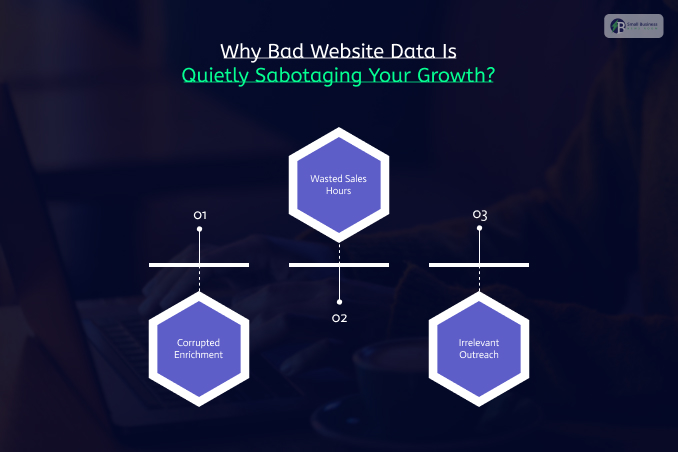
- Corrupted Enrichment
- Wasted Sales Hours
- Irrelevant Outreach
- The Step-by-Step Corporate URL Research Process
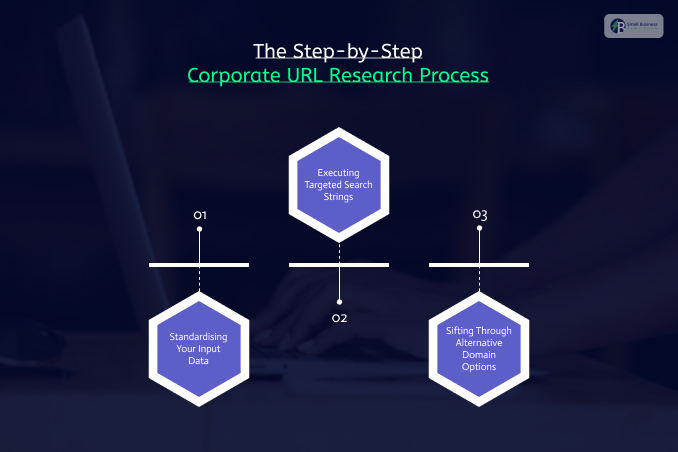
- 1. Standardising Your Input Data
- 2. Executing Targeted Search Strings
- 3. Sifting Through Alternative Domain Options
- A Structured Framework For Validating Business Domains
- Manual vs. Automated Research: Finding The Perfect Balance
- Automated Enrichment Engines
- Manual Verification
- Cross-Departmental Value: Who Profits From Clean URL Data?
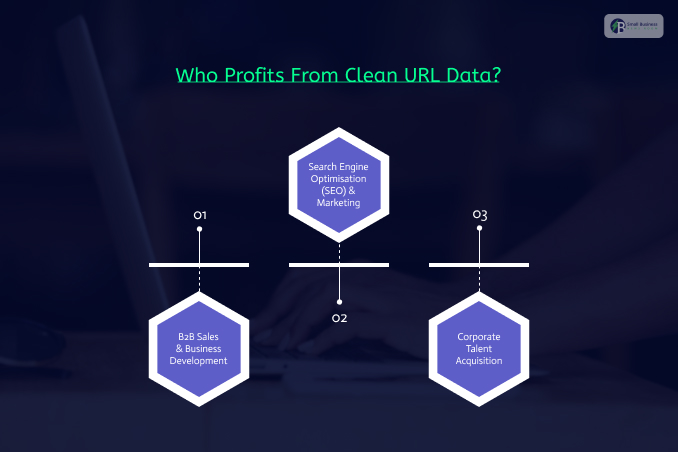
- · B2B Sales & Business Development
- · Search Engine Optimisation (SEO) & Marketing
- · Corporate Talent Acquisition
- Common Mistakes That Destroy Database Integrity
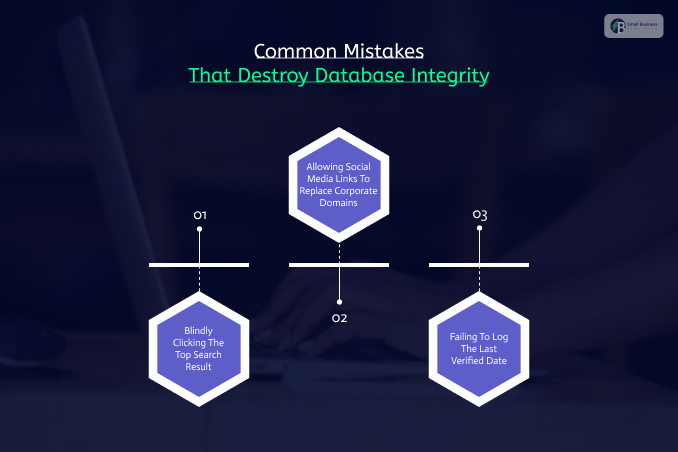
- · Blindly Clicking The Top Search Result
- · Allowing Social Media Links To Replace Corporate Domains
- · Failing To Log The Last Verified Date
How To Master Target Company Url Research: A Complete Guide To Cleaning Your B2B Data
Have you ever opened a nice, fresh spreadsheet with 500 premium business leads, only to find a wall of empty cells where the website addresses should be?
Every sales representative, recruiter, and digital marketer knows this situation.
You have the business names, but no digital doorway to enter and learn more.
This is where target company url research becomes the backbone of your entire business operations.
At first glance, it seems like an easy way to find a website address. Right?
As if you just simply have to type in a business name into a search engine and hit on the first link result, before copying whatever text you find in the address bar, right?
However, when you are scaling business data, this casual approach is the fastest way to waste time, create a corrupted database, and waste ad spend.
Real data optimisation requires a blend of automated discovery and oversight. This means that your team can always work with accurate information.
What Exactly Is Target Company URL Research?
To understand this process, we first have to clear up a common point of confusion.
In the world of corporate intelligence, a “target company” does not mean you are investigating Target Corporation, the famous red-and-white American retail chain.
A target company actually refers to any piece of business which you have actively selected for prospecting, recruitment, competitive analysis, or account-based marketing purposes.
Therefore, target company url research is the systematic process of identifying and logging the correct official domain name for a specific list of businesses.
The basic workflow follows a clean, linear path:
Company Name ⟶ Identify Candidate Domain ⟶ Verify Corporate Identity ⟶ Data Enrichment
The word “official” is the absolute linchpin of this entire operation. When you enter a basic corporate name into a modern search engine, you will rarely get just one clean result.
Instead, you will be overwhelmed by an unorganised collection of:
- Third-party business directories
- Regional map listings
- Social media profiles
- News articles
- Unrelated companies that share a similar name
True URL research means sifting through this digital noise to pinpoint the exact primary domain the business owns and operates.
Why Bad Website Data Is Quietly Sabotaging Your Growth?
In the modern business world, a company’s domain name is their primary digital identity.
As a result, if your database contains incorrect URLs, every single step of your operational pipeline will begin to degrade.
Let’s see how a small data error can snowball into a massive waste of resources.
Imagine your business development team is building an outbound campaign targeting a fast-growing financial technology startup named Apex.
Now, the researcher was in a rush and copied the first search result.
It accidentally logged the website for Apex Manufacturing, an industrial parts supplier on the other side of the country.
Because that foundational piece of data is wrong, look at what happens next:
Corrupted Enrichment
Firstly, your automated lead intelligence tools scrape the manufacturing website.
They incorrectly label the prospect’s industry, revenue bracket, and employee count in your CRM.
Wasted Sales Hours
Secondly, your sales representatives spend their valuable time reading through industrial parts catalogues.
Moreover, they try to craft a personalized pitch which makes absolutely no sense to a fintech executive.
Irrelevant Outreach
When you finally send the message, it either bounces, lands in the wrong inbox, or is immediately marked as spam.
This severely damages your company’s email sender reputation.
It also protects your team from these issues. You just have to set up a rigorous verification protocol,
You can ensure that your go-to-market resources go towards highly qualified, accurately identified accounts.
The Step-by-Step Corporate URL Research Process
Creating a highly accurate corporate database requires a repeatable, disciplined system, and target company url research can help you in that.
Expert research teams also break this workflow into distinct operational phases to maximize speed and data integrity.
1. Standardising Your Input Data
The old saying “garbage in, garbage out” applies perfectly to data management.
Before you even open a search engine or run an automated lookup tool, you must clean your raw list of company names.
Moreover, this involves systematically stripping away legal suffixes which clutter automated search algorithms, including:
- LLC / LLC.
- Inc. / Incorporated
- Ltd. / Limited
- Pvt. Ltd.
- GmbH
For example, a company name listed in legal registries as Bright Future Technologies Private Limited is almost always referred to on the open web just as Bright Future Technologies.
By removing the legal suffixes, you allow search algorithms to match the core brand name much better.
However, be careful not to accidentally delete words that are a part of the brand identity itself.
2. Executing Targeted Search Strings
When performing manual verification, typing a bare name into a search engine is incredibly inefficient.
Instead, train your research team to use specific search operators that add context.
If you are looking for a business called Pioneer Solutions, a raw search will return thousands of conflicting results.
Instead, you should format the search string to include known geographic or industry anchors:
“Pioneer Solutions” + “Mumbai” + “Software” + “Official Website”
By adding the city and industry as contextual anchors, you can instantly filter out regional namesakes and pin on the exact corporate entity you are looking for.
3. Sifting Through Alternative Domain Options
A major point of failure in data workflows is assuming every company will operate a standard .com domain. Modern corporate architecture is highly fragmented.
A single enterprise might run a global .com landing page, use country-specific extensions (like .co.uk or .in) for local operations, or host specific departments on dedicated subdomains (like company.com).
The best practice for database architecture is to design your CRM to hold two separate fields:
1. Primary corporate domain: This is used for global corporate matching
2. Regional operating URL: This is used for local sales and marketing campaigns
This ensures your marketing team can segment audiences geographically without losing track of the parent corporate structure.
A Structured Framework For Validating Business Domains
To maintain an elite standard of data quality, your research team should never guess or rely on gut feeling.
Cross-reference every domain added to your primary database against a strict verification checklist.
| Evaluation Signal | Verification Checklist Item | Operational Action Required |
| Corporate Identity | Does the exact brand name appear clearly in the header, footer, or copyright notice? | Open the site, scroll to the bottom, and check the formal legal entity listed in the copyright text. |
| Geographic Alignment | Does the corporate headquarters address match your original prospecting data? | Cross-reference the address listed on the “Contact Us” page with known corporate registration records. |
| Commercial Offering | Do the listed products and services match the target industry? | Review the primary navigation menu to confirm the business actually sells what your database claims it sells. |
| First-Party Evidence | Are there active, working links to official, verified corporate social profiles? | Click the LinkedIn or X icon to confirm the digital profiles match the website’s stated leadership team. |
| Domain Redirection | Does the entered domain instantly redirect to an entirely different brand name? | Investigate the destination URL to determine if the target business has recently undergone an acquisition or full corporate rebrand. |
Manual vs. Automated Research: Finding The Perfect Balance
When managing corporate intelligence, operations leaders often find themselves caught in a debate.
Should they rely completely on automated data scraping tools, or should they hire human researchers to verify everything manually?
Moreover, the truth is, relying exclusively on either method creates an operational bottleneck.
Automated Enrichment Engines
These tools scan thousands of lines of data in seconds. They process names, look for matches in their internal databases, and return instant candidates.
However, algorithms lack human context.
They are easily fooled by slight spelling variations, abbreviations, or two completely different businesses operating with identical names in different parts of the world.
Manual Verification
Human eyes can spot visual cues, read fine print in privacy policies, and instantly spot corporate rebrands.
However, manual searching is slow. It becomes completely unscalable when your lead lists grow into the thousands.
The most cost-effective, hyper-accurate workflow is a hybrid operational model. This means:
- Bulk Discovery: Firstly, you run your raw company list through an automated domain lookup tool to handle the repetitive, heavy lifting.
- Confidence Sorting: Secondly, you segment the output into clear buckets based on match confidence scores.
- Targeted Human Triage: Thirdly, you route low-confidence matches, ambiguous names, and high-value strategic accounts to an expert human researcher for manual verification.
This hybrid approach lets your business scale data-generation pipelines rapidly without sacrificing the clinical accuracy required for successful execution.
Cross-Departmental Value: Who Profits From Clean URL Data?
Maintaining a clean database of verified business domains is not just an administrative chore.
It provides a massive return on investment across multiple core business departments.
· B2B Sales & Business Development
For sales development representatives (SDRs), a verified website domain is a goldmine of contextual intelligence.
Once you log the correct URL, sales professionals can quickly review the target’s “Newsroom” or “Press” sections.
Moreover, this highlights recent product launches, funding rounds, or geographic expansions.
This first-party data lets them turn a cold, generic pitch into a highly relevant, customized solution that commands attention.
· Search Engine Optimisation (SEO) & Marketing
In digital marketing, verified domain data is essential for accurate competitive intelligence.
SEO specialists use lists of verified competitor domains to run comprehensive keyword gap analyses and deep backlink audits.
If you plug an unverified or incorrect URL into an SEO tools platform, the resulting traffic and keyword metrics will be completely skewed.
This leads your content team to write articles for the wrong target audience.
· Corporate Talent Acquisition
Recruitment teams rely heavily on website data to build talent pipelines.
By verifying corporate websites, recruiters can map directly to a company’s internal “Careers” page or applicant tracking portal.
This direct access lets them track accurate corporate hierarchies and real-time job openings.
Moreover, it saves them from relying on stale, aggregated listings on massive public job boards.
Common Mistakes That Destroy Database Integrity
Even seasoned data operations teams occasionally stumble into predictable traps. Knowing these pitfalls is the first step to avoiding them altogether.
· Blindly Clicking The Top Search Result
Search engines prioritise paid advertisements and hyper-optimized directory listings.
The first option you see is often an ad from a direct competitor or a generic industry directory, rather than the target company’s official home page.
· Allowing Social Media Links To Replace Corporate Domains
While a company’s LinkedIn profile is great for verifying that a business is currently active, it should never replace the primary website in your CRM.
Moreover, social platforms don’t give you access to structural site metadata, technical integrations, or detailed product documentation.
· Failing To Log The Last Verified Date
Corporate data decays quickly. Businesses close down, merge with competitors, change their branding, or let old domains expire. If your CRM does not include a “Last Verified” date field, your sales team will inevitably waste time chasing dead ends and inactive domains.