
Table Of Contents
- The Concept Behind The Small Business CPA
- Bookkeeper vs. Accountant vs. CPA: What’s the Difference?
- How A Small Business CPA Can Be A Huge Help Before You Start A Business
- Evaluate Your Overall Business Idea
- Pick A Specific Business Entity
- Figuring Out All Of Your Tax Responsibilities
- Set Up The Entire Bookkeeping
- Planning Out Your Deductions
- How Much Does A Small Business CPA Cost?
- Comprehensive CPA Cost Breakdown Table
- How Can I Lower The CPA Cost?
- Top Small Business Financial & Accounting Solutions (2026 Rankings)
- 1. Bench Accounting (Best for Tech-Forward Bookkeeping)
- 2. Pilot (Best for Venture-Backed and Tech Startups)
- 3. Bookkeeper.com (Best for All-In-One Small Business Financials)
- 4. Wing Assistant (Best for Basic Administrative Data Entry)
- Direct Comparison: Which Financial Solution Fits Your Business?
- So? Are You Ready To Hire A CPA?
Avoiding Common Pitfalls: A Small Business CPA’s Guidance
Last Updated on: August 25th, 2026
Are you a small business owner? Or are you planning to start one yourself? Whatever the situation, a small business CPA is necessary for all small business owners, startups, managers, and entrepreneurs.
While managing a business, you must record all the financial records and further categorize them.
On the other hand, payroll, budgeting, financial reporting, analysis, and taxes require your attention.
When you have a small company or a new one, it is obvious to rely on accountants and bookkeepers for small business CPA services. In that case, the certified public accountant is at your rescue.
Yes! You may not need a CPA for the weekly payroll. However, these certified public accountants can be useful for the other segments of your small business, such as financial statements or opting for a bank loan.
Want to learn more about small business CPAs and how to use them to manage your finances? Read on…
The Concept Behind The Small Business CPA

Small business CPAs are referred to the Certified Public Accountant who works with all kinds of small businesses. They focus on providing accounting services such as preparing for taxes, analyzing financial statements, and even consulting with businesses.
They can further tailor their services based on the services required by the small businesses. This way, small businesses can manage their finances effectively.
Here are a few key points about CPA:
Expertise in all sorts of small business news. They typically understand the financial challenges and complexities that small businesses face.
They provide a very comprehensive service. Small business CPAs can help you handle payroll processing, tax planning, and compliance checks.
Guidance and advice. They have the expertise to offer you strategic financial services. As a result, small businesses can make proper, informed decisions.
They must be state-licensed. This is applied to all the CPAs. They need to have a license from their state to practice accounting.
Bookkeeper vs. Accountant vs. CPA: What’s the Difference?
To manage your finances effectively, you must understand exactly who you are hiring:
- Bookkeeper: Focuses on daily administrative tasks. They record transactions, reconcile bank accounts, and categorize monthly expenses. They cannot file corporate tax returns or represent you before the IRS.
- Accountant: Holds a financial degree and analyzes financial data, prepares financial statements, and assists with basic tax planning.
- CPA: A highly regulated, state-licensed professional with fiduciary responsibility. Only CPAs can perform certified financial audits and legally represent small business owners in IRS tax audits.
How A Small Business CPA Can Be A Huge Help Before You Start A Business

A CPA can be a huge help for you. You have your idea ready. All you have to do is to have a conversation with the CPA.
They can help you understand how exactly you can make the business planning and make it happen! Here’s how…
Evaluate Your Overall Business Idea
The small business CPA evaluates the viability of the business plan. Starting a company may sound like a good idea, but you should not make any decisions in a rush! A CPA can help you understand whether the plan will be profitable.
Pick A Specific Business Entity
If your business idea makes sense, a CPA can help you determine the business entity type you should use: a C corporation, S corporation, LLC, sole proprietorship, or partnership.
Figuring Out All Of Your Tax Responsibilities
The small business CPA also lets you know about your tax responsibilities. Working on the tax responsibilities is necessary. You may not realize when you are missing a tax unless you get a bill that includes the interest and penalties from the government.
Set Up The Entire Bookkeeping
A bookkeeping system can be useful to keep track of all your business transactions. These include your sales and expenses. A small business CPA can help you stay organized through a system that is also easy to use.
Planning Out Your Deductions
Finally comes the deductions part. Your CPA can help you to figure out your deductions. Let’s say you have larger and more complicated deductions for auto expenses. The CPA can teach how you can qualify.
How Much Does A Small Business CPA Cost?

Small business CPA costs vary widely based on your geographical location, operational complexity, and the volume of monthly transactions.
Comprehensive CPA Cost Breakdown Table
| Service Type | Estimated Cost Range | Billing Structure | Best Used For |
| Basic Corporate Tax Return (Form 1120S / 1065) | $800 – $2,500 | Flat Fee | Annual Federal & State tax filing |
| Hourly Business Consulting / Audit Defense | $150 – $450 / hour | Hourly Rate | Complex IRS notices, entity restructuring |
| Monthly Fractional CFO & Advisory Services | $1,500 – $5,000 / month | Monthly Retainer | High-growth startups needing strategic scaling |
| Basic Monthly Accounting & Reconciliations | $300 – $800 / month | Monthly Retainer | Ongoing financial health checks |
Key Factors Driving CPA Fees:
- Business Complexity: A business with multi-state sales, inventory management, or international e-commerce requires highly advanced tracking, which naturally costs more than a local service-based company.
- CPA Experience & Credentials: Established CPA partners charge premium hourly rates, whereas newer associates or smaller local firms offer more accessible pricing.
- Location Matters: CPA firms in major metropolitan areas face higher overhead costs, which can translate into higher billable hours than rural or fully virtual CPA firms.
How Can I Lower The CPA Cost?
To be very frank, there are two ways to help you keep a low cost while hiring a CPA. You can do nothing if your business structure is complex or covers multiple states. However, you can at least keep the books clean.
You must ensure your record is thorough, properly organized, and error-free. This can help the CPA understand your bookkeeping immediately. They can also easily access all kinds of paperwork.
This will allow them to spend less on lowering their taxes, causing the costs to fall gradually.
Another way to lower your overall tax cost is to create a tax strategy for your small business. A CPA doesn’t know any magic.
However, their expertise can provide feasible suggestions for making money with the IRS. They may also have some ideas on how to cut costs in other areas of your business.
Top Small Business Financial & Accounting Solutions (2026 Rankings)
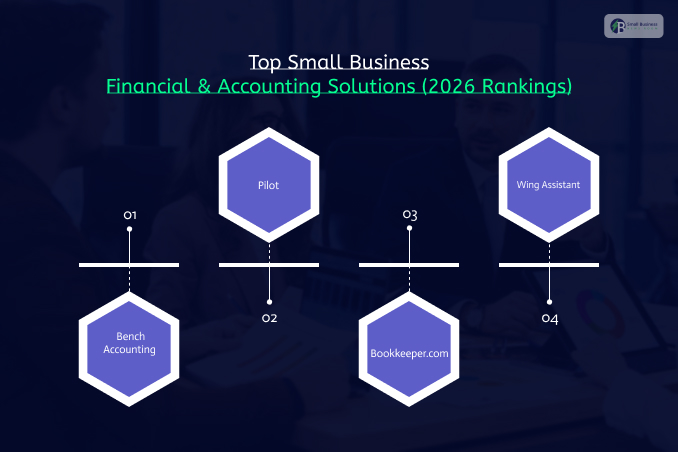
Crucial Selection Context: To make the best financial decision for your business, you must distinguish between two modern marketplace models:
- Virtual Bookkeeping Software Solutions (built for ongoing transactional tracking)
- Full-Service Certified CPA Firms (required for legal structural adjustments, regulatory filing, and active tax defense).
After that, you need to start reviewing the trusted, verified providers below to see where your business aligns best:
1. Bench Accounting (Best for Tech-Forward Bookkeeping)
Bench Accounting pairs small business owners with a dedicated, professional software-backed bookkeeping expert.
They use intuitive proprietary financial software to automate monthly cash-basis records, giving you real-time insight into your cash flow.
- 2026 Pricing Structures:
- Bookkeeping Grow: $189 / month (billed annually). Built for lean startups; includes basic financial packages, P&L statements, and 1099 reporting.
- Bookkeeping Core: $339 / month (billed annually). Adds unlimited advisory communication with your dedicated bookkeeping expert.
- Bookkeeping Core + Tax: $599 / month (billed annually). Bundles complete bookkeeping with end-of-year tax filing from an integrated, licensed tax team.
- QuickBooks Layering: $55 / hour (plus a $1,200 onboarding fee) if you prefer to have a Bench expert work directly within your pre-existing QuickBooks Online ecosystem.
- The CPA Distinction: Bench natively manages your bookkeeping. For legal tax returns and complex advisory structures, they bundle licensed, partner-network CPAs to file your returns.
2. Pilot (Best for Venture-Backed and Tech Startups)
Pilot is one of the largest specialized virtual accounting, tax, and fractional CFO firms operating across the United States.
They focus heavily on high-growth companies, e-commerce stores, and tech startups requiring complex accrual-basis accounting.
- 2026 Pricing Structures:
- Starter Plan: $99 / month. Strictly cash-basis bookkeeping capped at $100,000 in monthly business expenses; leverages automated software.
- Core Plan: $499 / month (billed annually). Includes a dedicated U.S.-based bookkeeper, financial reporting, and standard accrual close.
- Plus & Custom Plans: Bespoke pricing tailored directly to high-transaction complexity, multi-currency operations, and ongoing CFO needs.
- The CPA Distinction: Unlike simple software plugins, Pilot deploys an advanced hybrid infrastructure.
Experienced, dedicated U.S. accounting professionals and licensed tax specialists/CPAs supervise your account and handle institutional investor-ready reports.
3. Bookkeeper.com (Best for All-In-One Small Business Financials)
Operating with over three decades of professional operational history, Bookkeeper.com serves as a traditional, high-touch financial office scaled into an efficient online platform.
They consolidate bookkeeping, financial management software, and human advisory teams into a single, cohesive workflow.
- 2026 Pricing Structures:
- Small Business Tiers: Plans range from $300 to $ 850+/month, depending entirely on your enterprise’s average monthly ledger transactions and transaction volume.
- CPA Add-Ons: Specialised corporate tax preparation, entity optimization analysis, and multi-state payroll reporting are handled through standalone flat-rate extensions.
- The CPA Distinction: They host an integrated team of processing professionals. You can handle day-to-day administrative data entry.
Moreover they can immediately escalate your financial file to an internal, certified public accountant for legal tax optimization under one unified roof.
4. Wing Assistant (Best for Basic Administrative Data Entry)
If your small business already uses software like QuickBooks Online or Xero but you lack the time to enter data, sort digital invoices, or record physical receipts, Wing Assistant bridges the gap.
- 2026 Pricing Structures:
- Bookkeeping Virtual Assistant: Starts at $899 / month for dedicated, specialized support.
- General Administrative VAs: Range from $699/month (part-time) to $999/month (full-time) if you need broader office help alongside light tracking.
- The CPA Distinction: Wing Assistants are not licensed accountants, bookkeepers, or CPAs.
They are highly trained administrative assistants who organize your receipts, categorize your bills, and log clean records into your software before the clean financial bundle is handed to your official licensed CPA for auditing.
Direct Comparison: Which Financial Solution Fits Your Business?
| Platform | 2026 Starting Price Range | Primary Strength | Fills Corporate Tax Returns? |
| Bench Accounting | $189 – $599 / month | Seamless, proprietary automated software dashboard. | Yes, via integrated partner CPAs. |
| Pilot | $99 – $499+ / month | Accrual accounting optimized for venture and tech scaling. | Yes, through dedicated tax specialist tier. |
| Bookkeeper.com | $300 – $850 / month | Traditional, all-in-one unified human firm approach. | Yes, full certified public accounting services. |
| Wing Assistant | $699 – $899 / month | Low-cost dedicated labor to input clean receipt data. | No. Requires an outside accountant or CPA. |
So? Are You Ready To Hire A CPA?
Well, there is no right time to hire a small business CPA. But it is profitable to go for one once if you feel like your business has started to make a profit.
If your business is experiencing rapid growth or is about to be audited, you can immediately consult with a small business CPA.
Read Also: