
Table Of Contents
- What Exactly Is A Research Dossier?
- Research Dossier Target Company: Why Better Research Is Your Secret Weapon
- Step-By-Step: How To Build Your Dossier
- 1. Set Your Research Goal
- 2. Know Your Target’s Identity
- 3. Determine The Company’s Ownership And Finances
- 4. Research The Executive Leadership
- Breaking Down The Business Model
- Research Dossier Target Company: Factoring In Financial Health
- Researching The Competitive Landscape
- The Power Of A 24-Month Event Timeline
- Spotting The Current Strategic Priorities
- · Vacancy Announcements
- · Earnings Call Transcripts
- · Interviews
- Embracing The Unknowns
- Turning Your Research Dossier Target Company Into Action
The Ultimate Guide To Building A Research Dossier For A Target Company To Outsmart Your Competition
Have you ever walked into a client meeting, an investment pitch, or a job interview and wished you knew more about the company than you learned in your due diligence?
Do you wish you had more actionable intelligence that goes beyond guesswork?
By compiling a research dossier on a target company, you can organize your knowledge and turn it into a valuable asset.
Let’s take a closer look at how to create a useful dossier that will help you win over clients, investors, and even jobs.
What Exactly Is A Research Dossier?

A research dossier target company is a document containing selected evidence about a particular topic or company.
It goes beyond a simple collection of news articles by organizing the evidence into categories so others can quickly absorb it.
The information you need to gather depends on your purpose: a sales team may want more information on buying signals, while an investor may be more interested in potential liabilities and risks.
Similarly, if you are targeting a potential job, you may need more information about the leadership qualities the recruiter expects.
In all cases, think about the end use first, and collect only the evidence that will help you achieve a specific, action-oriented goal.
Research Dossier Target Company: Why Better Research Is Your Secret Weapon
Most people start researching by typing a company name into a search engine and copying the first three paragraphs they find.
As a result, they end up with a shallow overview that offers zero competitive advantage.
When you take the time to build a structured dossier, you gain deep context.
You move past generic marketing jargon and begin to see how the business actually operates.
This approach satisfies search engines looking for high-quality, helpful content, but more importantly, it directly serves your real-world business goals.
Step-By-Step: How To Build Your Dossier
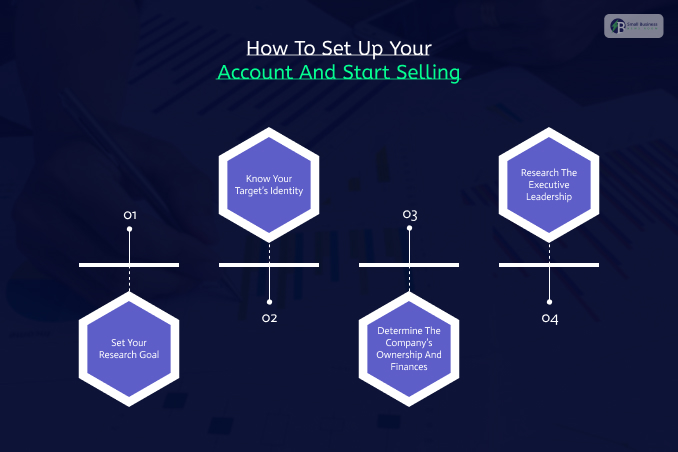
While it may seem daunting, creating a dossier is quite simple as long as you follow a standard research process. Here’s a brief overview of what you need to do:
1. Set Your Research Goal
Avoid vague research objectives such as “researching everything about xyz” since such goals are too broad and unfocused.
Instead, try to write your objective as a clear sentence. For example:
- I want to decide whether or not to pursue this company as a strategic partner this quarter
- I need to determine whether this enterprise account is worth pursuing
- I need to identify the primary risks associated with this acquisition
Also, you must include up to 5 supporting questions that will guide the research process.
Your supporting questions should be things that you want to determine when completing this research dossier target company.
For instance, if your main research objective is to decide whether or not to pursue this company as a strategic partner, your supporting questions may be:
2. Know Your Target’s Identity
This may seem like an obvious step, but you would be amazed at how many people fail to correctly identify the company that they are targeting.
In fact, many people confuse their prospects and end up using the same information for different companies.
To avoid confusion, always include an identity block when compiling a dossier. This block should include:
- The full name of the company and its trade name, if applicable.
- The website URL and the country of jurisdiction.
- The headquarters address and the countries in which it operates.
- Tax identification numbers, if any.
3. Determine The Company’s Ownership And Finances
This step is relatively simple for public companies because most of this information is available in regulatory filings.
For private companies, you may need to rely more on startup research databases to identify the main shareholders and funding sources.
When researching private companies, stay wary of estimated figures, especially for valuation.
Whenever possible, always note whether the figures you are using are estimates or verified statistics.
4. Research The Executive Leadership
Identify the chief executive officer and the other executive directors, if any.
Additionally, you should highlight the department heads in the sphere of influence of your target.
If you are targeting a company as a potential business partner, it is a good idea to highlight the heads of the departments relevant to your niche.
When reviewing the leadership structure, always pay close attention to new appointments.
A newly appointed director can significantly influence the company’s strategic direction.
Related Article For You: Mastering LinkedIn: How To Update Resume In LinkedIn For Career Advancement
Breaking Down The Business Model
Before digging into complex financials, you must understand how the business makes money in plain English.
So avoid repeating their corporate website copy.
For example, if a website says they offer “AI-powered ecosystem transformation,” translate that into what it actually means.
Ask yourself these three core questions:
| Core Question | What to Look For | Real-World Translation |
| Who pays them? | Target customer segments | Enterprise finance teams, small retail shops, or everyday consumers. |
| What do they buy? | Main products or services | Software-as-a-Service (SaaS) monthly contracts, or physical goods. |
| Why choose them? | Real market differentiation | It saves clients 10 hours a week, or it costs half as much as competitors. |
Research Dossier Target Company: Factoring In Financial Health
For public companies, you can easily find verifiable statistics on revenue, profit margins, and cash reserves.
For private companies, you have to rely more on filed accounts.
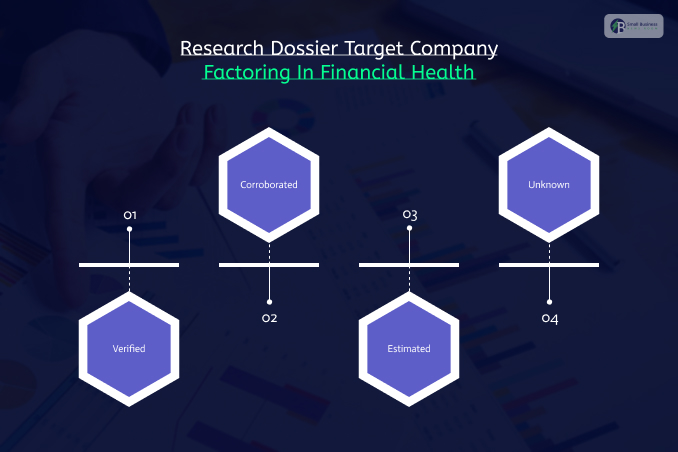
Do not forget to indicate the level of reliability of the figures using these categories:
- Verified: These figures have been published in regulatory filings or company reports
- Corroborated: These are the information that has been verified by multiple credible news outlets
- Estimated: These figures rely on third-party market analysis
- Unknown: These figures are not available in public databases
Researching The Competitive Landscape
When analyzing a company, it is important to consider its direct competitors.
Interestingly, most companies have a completely different set of competitors in the public eye than in reality.
To find your target’s real competitors, search review sites and user forums.
When compiling this section, be sure to separate direct competitors from alternative solutions.
Also consider “do it yourself” solutions, particularly using Excel spreadsheets and other traditional but effective management tools.
The Power Of A 24-Month Event Timeline
News headlines are often useless out of context; however, when placed in chronological order, they can reveal valuable patterns.
When compiling your dossier, always create a 24-month event timeline.
List all the major events that took place in the last 12 to 24 months in chronological order. For example:
[Product launch] -> [New CFO appointment] -> [Price increase] -> [Regional expansion]
If something unusual stands out in the timeline, it can indicate what the company is up to.
For instance, if a company has just hired a new CFO, started cutting costs, and reduced hiring, it may be preparing to sell the company.
Spotting The Current Strategic Priorities
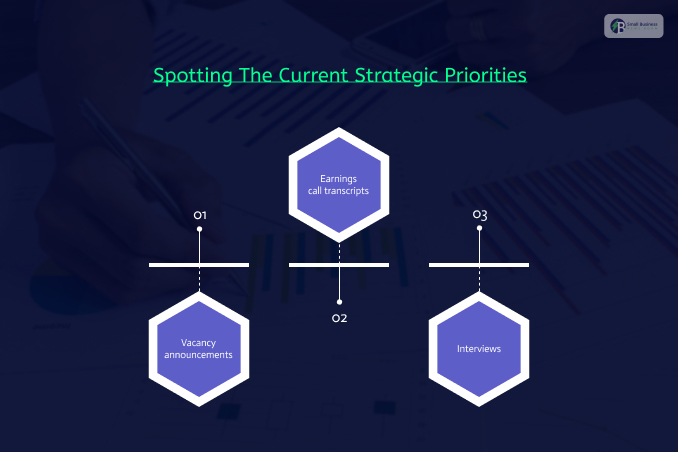
When compiling your dossier, look for evidence that helps you determine what a company is currently prioritizing. There are several ways to spot strategic priorities, including:
· Vacancy Announcements
If a company begins advertising job positions in a specific department, this can be an early signal that the company is targeting a particular market
· Earnings Call Transcripts
Listen to the transcripts of the last few conference calls with investors to learn about the concerns of the executive leadership
· Interviews
Read the most recent interviews given by the company executives. Pay close attention to what they are saying about the competitive landscape
Embracing The Unknowns
A research dossier should not be seen as an authoritative paper that provides all the answers.
In fact, a good dossier should always highlight what is known and what is not known.
Make sure to always leave space for “unknowns.”
This way, anyone who reads your dossier will know what questions to ask you during a face-to-face meeting.
Turning Your Research Dossier Target Company Into Action
Once your research dossier target company is complete, keep a clean source log at the very bottom, with direct links and access dates.
This way you can ensure if anyone challenges a claim in your report, you can instantly point to the exact source.
Building a comprehensive dossier takes upfront effort. However, it pays massive dividends.
It saves you time and protects you from making assumptions. Moreover, it gives you a massive advantage over everyone else who is just skimming the surface. So, pick a target company this week, build your first structured dossier, and watch how much sharper your business strategy becomes!
Additional Resource: Arcarrierpoint Net: Best For Free Study Materials, Admit Cards, And The Latest Govt Job Notifications!