Table Of Contents
- How Advanced Slit Lamps Are Revolutionizing Diagnosis In Opthalmology?
- 1. The Slit Lamp: Still Your Clinical MVP
- 2. Diagnostic Accuracy Begins With Better Optics
- 3. Illumination Matters (More Than You Think)
- 4. Integrated Imaging Elevates Everything
- 5. More Filters, More Clarity
- 6. Ergonomics, Efficiency, and Accuracy
- The Manzo Advantage: Model-by-Model Breakdown
- Final Thought: A Diagnostic Edge Worth Investing In
How Advanced Slit Lamps Improve Diagnostic Accuracy in Eye Care
Modern-day ocular examination is not about quantity, but it highly focuses on quality. Hence, the practitioners have to be more efficient with their tools. Moreover, the tools of the practitioners define their ability to diagnose, educate, and act as promptly as possible.
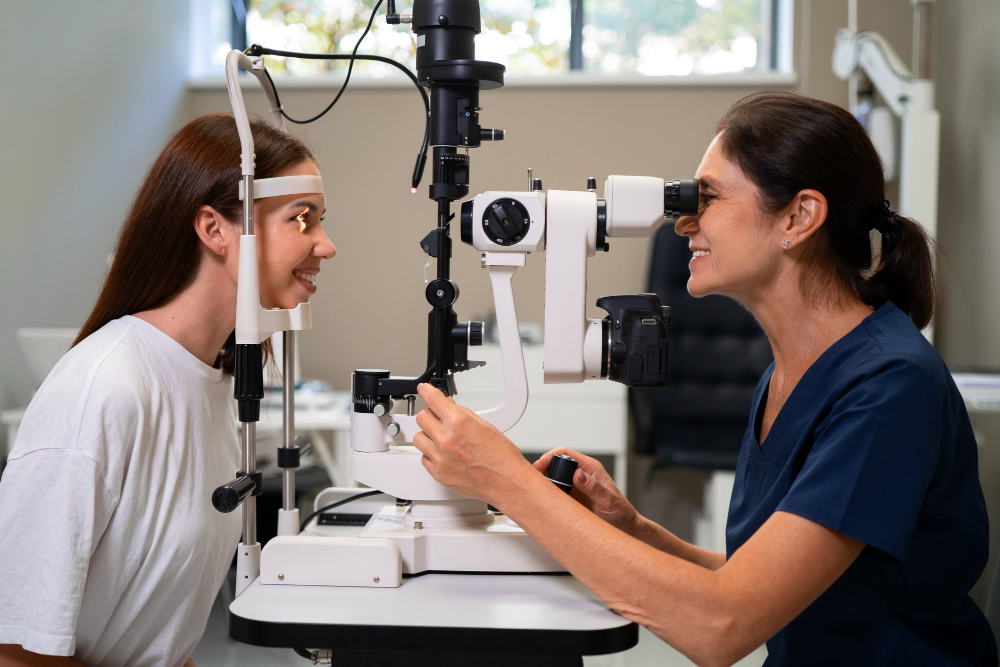
The slit-lamp plays the most important role for an optometrist or ophthalmologist. An ophthalmologist can just have a glance with a slit lamp and tell their patient about the disease.
Irrespective of whether it is glaucoma, cataract, retinopathy, or Keratoconus, a good doctor with a proper slit lamp can detect all these things if they have an efficient slit lamp with them. Hence, it is important to understand how advanced slit lamps are revolutionizing diagnosis in the field of ophthalmology.
For decades, slit lamps have been the backbone of anterior segment exams, allowing clinicians to evaluate everything from corneal clarity to cataract grading with confidence.
Additionally, recent advances in optics and digital integration have further revolutionized the field of ophthalmology. Now, devices do a lot more than they used to.
If you haven’t upgraded in a while, or if you’re outfitting a new exam lane, it’s worth asking: what can advanced slit lamps do today that older models can’t?
And more specifically: how do Visionix slit lamps stack up when it comes to improving diagnostic accuracy and overall clinical performance?
Let’s take a closer look.
How Advanced Slit Lamps Are Revolutionizing Diagnosis In Opthalmology?
The slit lamp plays a major role in vision diagnosis. Irrespective of cataract, glaucoma, or any other problem. The doctors learn about the early signs using a slit lamp.
1. The Slit Lamp: Still Your Clinical MVP
Before diving into the upgrades and options, let’s not forget why the slit lamp earned its place in every exam lane in the first place.
- Binocular magnification allows stereoscopic viewing of the eye’s anterior structures.
- Adjustable slit illumination provides high contrast between layers of the cornea, lens, iris, and more.
- Filters (like cobalt blue and red-free) aid in identifying subtle signs of disease.
- Tonometry attachments, lenses, and dye-based diagnostics expand their clinical capabilities.
The modern-day slit lamp plays multiple roles in ophthalmology. It helps with Intraocular Pressure testing, fluorescein staining, and also meibomian gland evaluation.
But as patient expectations grow and clinical demands evolve, a basic slit lamp isn’t enough. Advanced slit lamps have become essential for delivering high-quality, efficient, and well-documented care.
2. Diagnostic Accuracy Begins With Better Optics
Let’s start with the basics: optical clarity and magnification flexibility.
In older or entry-level models, limited magnification steps (or poor image fidelity at high magnifications) can make detailed exams a chore. Corneal infiltrates? Hard to differentiate from scars. Lens opacities? Difficult to stage precisely.
Visionix slit lamps—particularly the VX75 and VX85 models—step this up with multi-step magnification systems (up to 40x) and high-transmission optics that offer exceptional resolution and contrast.
This means:
- You can spot earlier signs of keratoconus or epithelial irregularity.
- You can differentiate corneal edema from early dystrophies.
- You’ll see flare in the anterior chamber without second-guessing.
It’s not just about seeing “more.” It’s about seeing accurately—the fine lines, the micro-opacities, the faint inflammatory cells—so you can make confident calls early.
3. Illumination Matters (More Than You Think)
The slit lamp’s other half? It’s the light source.
Outdated halogen bulbs tend to fade, burn hot, and distort color rendering. That’s not great when you’re trying to evaluate the subtle yellowing of a cataract or the vascularization creeping onto the cornea.
Newer LED systems, like those used in Visionix slit lamps, solve all of that.
- True white light for natural color representation
- Cool operation for longer lamp life and patient comfort
- Consistent brightness across all magnification levels
This matters more than you might realize. A well-illuminated image is easier to focus on, easier to interpret, and more comfortable for both the doctor and the patient—especially during extended evaluations or imaging sessions.
4. Integrated Imaging Elevates Everything
Let’s be honest: the days of describing pathology to patients without visuals are numbered.
Modern clinics are embracing digital slit lamp imaging not just to document, but to educate and differentiate.
Whether it’s:
- Showing a patient their own blepharitis
- Documenting corneal staining for a dry eye treatment plan
- Sending pathology photos to an ophthalmologist for comanagement
…slit lamp imaging closes the gap between clinical insight and patient understanding.
The Visionix VX85 offers seamless digital integration, with:
- High-resolution image capture
- Live video feed for real-time display
- Easy upload to EMR systems
- Auto-exposure and contrast adjustment
This transforms your slit lamp into an education tool, documentation device, and medico-legal ally, all in one.
Not every clinic needs that level of integration—but for those who do, it’s hard to imagine practicing without it.
5. More Filters, More Clarity
Another feature often overlooked in slit lamps? The filter wheel.
Visionix models (including the VX75 and VX85) come with built-in filters that enhance diagnostic precision:
- Cobalt Blue for fluorescein staining
- Red-Free (Green) for visualizing blood vessels and hemorrhages
- Neutral Density to reduce glare and improve comfort
- Heat-absorbing material to protect patients during longer exams
These filters aren’t just “nice to have”—they’re diagnostic enhancers. When used properly, they bring out details you’d otherwise miss or struggle to distinguish.
6. Ergonomics, Efficiency, and Accuracy
One of the hidden enemies of diagnostic accuracy is fatigue. Poor posture. Awkward controls. Unstable patient positioning.
That’s where ergonomics comes in—and where Visionix shines again.
Their slit lamps are built with:
- Smooth joystick controls for micro-adjustments
- Comfortable chin and forehead rests
- Wide-field eyepieces for glasses-wearing clinicians
- Thoughtful layout of dials, filters, and focus mechanisms
The result? You can stay in control longer, with less fatigue and more consistency. When you’re comfortable, your exams are smoother, faster, and more accurate.
The Manzo Advantage: Model-by-Model Breakdown
Still unsure which Visionix model is right for your workflow?
At Manzo Eye Care, their expert comparison guide breaks down:
- Model features
- Use cases
- Ideal practice types
- Value vs. investment
Whether you’re running a high-volume optical chain, a boutique dry eye clinic, or a medically focused referral center, they help you match the right Visionix slit lamp to your goals and budget.
Here’s a quick snapshot:
| Model | Best For | Standout Feature |
|---|---|---|
| VX70 | Entry-level/general optometry | Compact, reliable, no-frills |
| VX75 | Versatile practices & growing clinics | 5-step magnification + imaging-ready |
| VX85 | Advanced diagnostics & EMR integration | Built-in digital imaging system |
Final Thought: A Diagnostic Edge Worth Investing In
We all want faster workflows. Better tools. Happier patients. Fewer follow-ups.
But none of that is possible without clarity at the diagnostic level.
Advanced slit lamps don’t just make exams easier—they make them better. They give you the tools to detect disease earlier, to document findings more accurately, and to involve patients more deeply in their own care.
Visionix slit lamps offer that sweet spot between precision optics, modern tech, and practical ergonomics. Whether you need a basic model for routine exams or a digital powerhouse to elevate your specialty services, there’s a Visionix slit lamp built for your clinic’s reality.
Curious about which model fits your setup best?
Check out the complete breakdown at Manzo Eye Care’s comparison guide and equip your clinic with diagnostic tools that match your clinical excellence.
Because when it comes to eye care, seeing the difference starts with how well you can see.