Table Of Contents
- Before You Begin: Is Your Region Eligible For An Etsy Seller Account?
- What You Can (And Can't) Sell
- Documents And Details You'll Need
- 1. Photo ID: Government-Issued
- 2. Tax Information (Varies By Country)
- 3. Bank Account Or Payoneer (If Available In The Region)
- 4. Dual-Factor Authentication
- How Much Does It Cost To Open An Etsy Shop?
- Setting Up Your Account, Step By Step
- Step 1: Initialize Your Profile
- Step 2: Establish Regional Parameters
- Step 3: Choose Your Shop Name
- Step 4: Pay The Setup Fee & Verify Identity
- Building A Compliant First Listing
- What Happens After You Publish?
- Tools Worth Knowing About (And Who Can Skip Them)
The Ultimate Guide To Managing An Etsy Seller Account (Without Getting Banned On Day One)
Opening an Etsy seller account is an invigorating opportunity for any creativepreneur.
The modern demand for unique goods makes this growing marketplace an irresistible opportunity for those who want to monetize their hobby.
Yet, take a few precautions before activating your merchant profile to avoid registration issues.
While some general guides suggest otherwise, online marketplaces such as Etsy now use rigorous security measures to prevent platform abuse.
This means eager sellers must be prepared for multi-step screening before activating their shops.
This guide will highlight the exact process of setting up an Etsy shop with a strong emphasis on the foundational element – the Etsy seller account.
We will also list the required documents, analyze regional fee nuances, and configure the portal to your advantage.
Before You Begin: Is Your Region Eligible For An Etsy Seller Account?
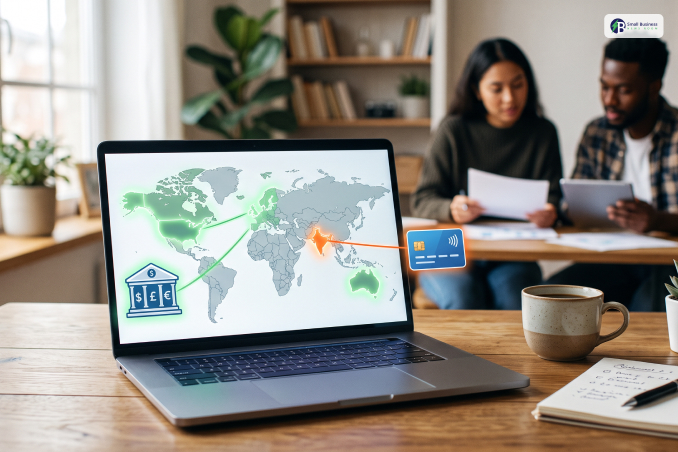
Before learning how to sell on Etsy, double-check whether your region is eligible for registration. Etsy Payments will only accept applicants from specific regions:
- Local Integration: Individuals from the United States, United Kingdom, Canada, Australia, and the European Economic Area (EEA) can link their Etsy account directly to their local bank account.
- Payoneer Requirement: Applicants from India must link a Payoneer account as their primary funding method for their Etsy seller account.
What You Can (And Can’t) Sell
Etsy allows selling goods and services falling under four categories:
- Handmade items (items made, assembled, or altered by the seller)
- Self-designed items (digital files or patterns not created by a third party; items produced on demand with the use of a print-on-demand service)
- Vintage items (more than 20 years old at the time of sale)
- Craft supplies (supplies used to create other items)
Generic goods with modified packaging are not considered handmade. Etsy actively patrols its marketplace for such violations, and sellers risk losing their accounts.
Intellectual property infringement claims are also strictly enforced by Etsy.
Even if a product listing does not explicitly mention a trademarked name or logo, changing it to a similar one (e.g., replacing “Disney” with “magic wizarding”) does not make it compliant with Etsy’s rules.
If the seller did not create the design and did not have the right to sell it, Etsy will remove the listing.
The same applies to ingredients or materials found on Etsy’s restricted items list. I
n these cases, contact Etsy support rather than trying to circumvent the restrictions by describing the item differently than it appears.
Documents And Details You’ll Need
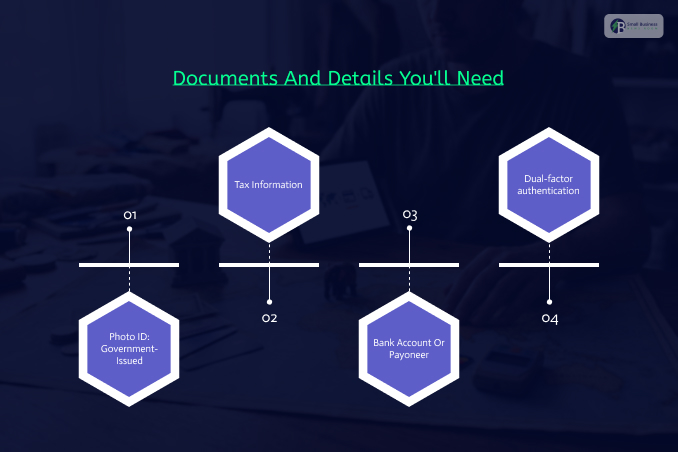
When preparing to open an Etsy shop, compile a list of documents Etsy may request during registration.
1. Photo ID: Government-Issued
Acceptable photo IDs include a passport, driver’s license, or another official document.
To verify identity, Etsy requires users to scan their ID and take a selfie with a phone camera. This procedure is carried out by a third-party service called Persona.
2. Tax Information (Varies By Country)
Depending on your country of residence and business type, you may need to provide a Social Security number, EIN, Tax ID, National Insurance number, or Companies House information.
3. Bank Account Or Payoneer (If Available In The Region)
The name that is present on the bank card or account should match the ID.
4. Dual-Factor Authentication
Enable 2FA for the Etsy account. Etsy offers several dual-factor authentication options, including apps and text messages.
How Much Does It Cost To Open An Etsy Shop?
While exploring how to start an Etsy shop, it is crucial to outline your upfront and ongoing operational fees.
The platform uses a micro-fee structure to maintain marketplace health rather than a monthly subscription model.
Complete Etsy Fee Structure Matrix
| Fee Element | Cost (USD / Local Equivalent) | Frequency and Trigger |
| New Shop Setup Fee | $15.00 to $29.00 (varies by location) | Single time, non-refundable onboarding fee required in most regions to cover secure identity checks. |
| Listing Fee | $0.20 per item | Charged whenever you publish an item. Valid for 4 months or until the item sells out. |
| Transaction Fee | Around 6.5% of total order value | Deducted automatically upon a successful sale. Applies to the item cost, shipping fees, along with the gift wrap. |
| Payment Processing | ~3% + $0.25 (varies by country) | Flat rate deducted by the platform to securely process credit cards and online payments. |
| Currency Conversion | 2.5% | Only charged if your shop currency differs from your local bank account currency. |
Setting Up Your Account, Step By Step
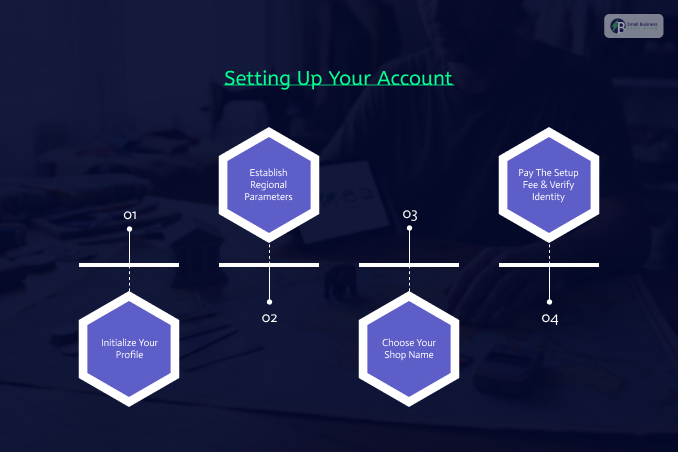
Once your documentation is organized, follow these technical onboarding steps to build your backend profile:
Step 1: Initialize Your Profile
Navigate to Etsy’s official selling portal and click “Get Started”.
Register using a secure email address, preferably one dedicated entirely to your business operations to keep customer correspondence organized.
Step 2: Establish Regional Parameters
Select your primary shop language, your physical country of operations, and your local currency.
Remember: If your bank account uses British Pounds, select GBP as your shop currency to avoid the automated 2.5% conversion fee.
Step 3: Choose Your Shop Name
Enter a unique name between 4 and 20 characters long, free of spaces or symbols. If your ideal title is already taken, don’t worry.
You can easily change your Etsy shop name later in your Info & Appearance settings once your backend verification is finalized.
Step 4: Pay The Setup Fee & Verify Identity
Enter your credit card to pay the non-refundable shop setup fee, then upload a clear government ID through the secure Persona verification prompt.
Building A Compliant First Listing
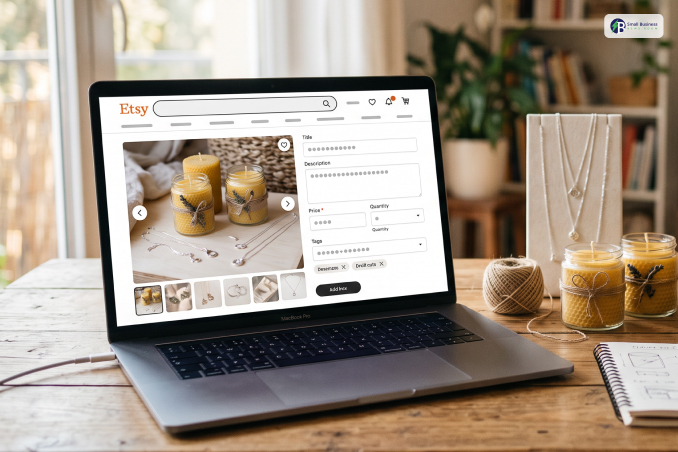
Etsy requires sellers to have at least one listing before their shop goes live for the first time.
Some novice Etsy sellers try to circumvent this requirement by publishing a listing solely to complete registration.
However, this is not recommended because Etsy’s automated systems may identify such listings as fake and subject them to additional checks, which could prolong the account opening process.
It is better to prepare a listing for a genuine product and publish it before completing the shop opening procedure.
Naturally, this requires more effort and preparation before the shop opens for the first time.
What Happens After You Publish?
According to Etsy’s official support page, new listings may take up to 48 hours to appear in search results and category listings.
Accordingly, treat claims that Etsy shops appear in search results immediately after publishing with caution.
Complete the shop page setup: add shop information, post a picture, and configure return and exchange policies using Etsy’s wizard.
Monitor the account for messages from Etsy requesting additional documentation or information.
New shops usually require some time to gain visibility and attract the first customers.
It is normal for an Etsy shop to see little or no traffic for the first few weeks after being opened.
In particular, newly created shops are much less likely to appear in search results and recommendations than shops with a lengthy history.
During this time, stay active on the platform: publish new listings, update existing ones, and respond to customer inquiries.
Tools Worth Knowing About (And Who Can Skip Them)
The tools below aren’t mandatory for anyone opening an Etsy shop.
- eRank / Sale Samurai: Tools for keyword research; the free plan works well on Etsy.
- Vela: A tool for simultaneous editing of multiple product listings; it allows editing of photos, descriptions, and banners.
- Shopify: An e-commerce platform that some Etsy sellers use in addition to Etsy. Etsy does not recommend using it to divert traffic to a separate website, since this violates their terms of service.
You don’t need the tools listed above to open an Etsy shop, and you should familiarize yourself with the platform’s basics before using them.