Table Of Contents
- What Is GST Registration?
- Appearance Of The Number
- Who Are The Users?
- Why Does This Matter?
- · Protects Your Refunds
- · Catches Fake Invoices
- · Lowers Your Audit Risk
- · Keeps Bookkeeping Clean
- GST HST Registration: Step-by-Step Guide To Get GST Number In Canada
- Step 1: Determine Eligibility
- Step 2: Gather Required Information
- Step 3: Obtain A Business Number
- Step 4: Register For HST/GST
- Step 5: Confirmation And Account Setup
- Step 6: Manage Your Account Online
- What To Do After You Sign Up
- What Are The Tips You Need To Follow For GST Registration?
Complete Guide To Online GST Registration: Process, Documents, And Eligibility
Launching a business in Canada is one of the most thrilling things you can do, but getting a hold of your taxes might appear pretty daunting at first of all.
On the bright side, registering for the Goods and Services Tax (GST) with the Canada Revenue Agency (CRA) isn’t really that bad.
This article will help you go from figuring out whether or not you need to register up to the point of handling all tax matters through your CRA online account.
At the end of the day, this guide will show you that it’s actually quite stress-free to file a tax report.
What Is GST Registration?
A GST registration number is the unique Identification provided only by the Canada Revenue Agency (CRA).
Through it, a business is authorized to charge, declare, and submit the taxes on the sales.
The number is a part of your 15-character Business Number, and nearly all taxable goods-selling Canadian businesses must have it.
Appearance Of The Number
A standard federal tax ID is formatted precisely like this: 123456789 RT0001.
If you are trying to understand it, it simply means that:
- 123456789: That’s your special Business Number.
- RT: It is a way of telling the CRA that this is your GST/HST account.
- 0001: It is basically the number of the account.
The way this is set up helps relate your sales tax to other documents like your payroll or corporate income tax.
Who Are The Users?
You, the business, will have to do away with your HST or GST registration form only once your company’s total sales reach the amount of $30, 000 over four consecutive quarters.
To a great extent, you will require it if you
- Have taxable goods or services to be sold within Canada.
- Have made more than $30, 000 in a 12-month period.
- Are a self-employed contractor or freelancer, providing services to Canadian clients.
- Engage in cross-border e-commerce where your goods are being sold or imported to Canadian shoppers.
You will become a “small supplier” when you sell less than $ 30,000 in goods & services, so there is no compulsion for you to register.
Anyway, it may still be very advantageous to get registered at an early phase because that enables you to deduct Input Tax Credits (ITCs).
In other words, you get refunded for the tax on sales you pay on the expenditure of the business.
Still remember that certain products such as medical and financial services are always tax-exempt.
Why Does This Matter?
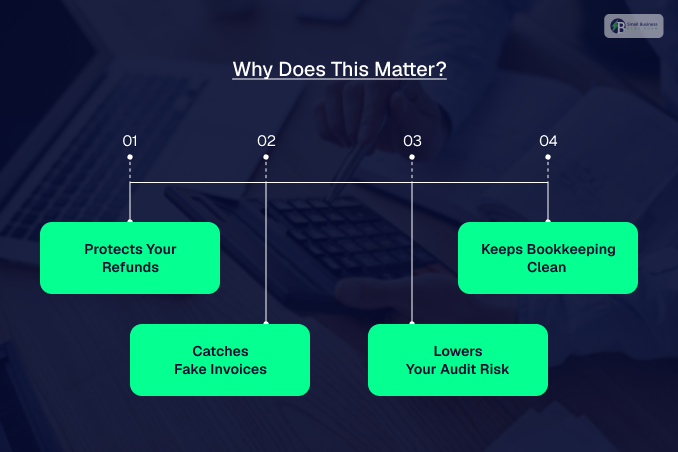
Checking the official CRA system for active GST Registration details is an essential step for protecting your business’s finances.
Taking a few seconds to verify a supplier’s tax status saves you from major headaches down the road.
Here is exactly why using the registry matters:
· Protects Your Refunds
The CRA will completely deny your Input Tax Credits (ITCs) if a supplier gives you an invalid number, is unregistered, or leaves critical tax details off their invoice.
Verifying their status ensures you get your money back safely.
· Catches Fake Invoices
Unfortunately, some dishonest suppliers will charge you GST/HST even though they are not registered with the government.
Running their info through the registry instantly exposes fake numbers, expired accounts, and inactive businesses.
· Lowers Your Audit Risk
During a tax audit, the CRA looks closely at supplier legitimacy and your eligible expenses.
Checking the registry beforehand proves your due diligence and gives you solid proof that you did things right.
· Keeps Bookkeeping Clean
Quick checks help you avoid misclassified credits, ineligible expenses, and annoying tax adjustments.
This means you will not have to waste time chasing down suppliers for reissued invoices.
Also Check: Tax Compliance for Startup Entrepreneurs: How to Do It? (2026)
GST HST Registration: Step-by-Step Guide To Get GST Number In Canada
Registering for a GST/HST registration number with the Canada Revenue Agency (CRA) is a crucial step to keep your business running smoothly and avoid costly penalties.
Here is a simple, stress-free guide to help you handle the entire process from start to finish.
Step 1: Determine Eligibility
First, check your sales numbers to see if you actually have to register.
If your business makes over $30, 000 in total taxable revenue within a single calendar quarter or over the past year, signing up is mandatory.
However, if you make less than that, you are considered a “small supplier,” and registration is completely optional.
Even so, doing a voluntary GST Registration early is often smart.
This is because it allows you to claw back money on your business startup expenses through Input Tax Credits.
Step 2: Gather Required Information
Before you jump into the application, make sure you have all your business details ready.
You will need your official business name, your physical operating address, your social insurance number (SIN), and your expected annual revenue.
Additionally, be ready to describe your main business activities and what you plan to sell.
Step 3: Obtain A Business Number
To get a tax account, you first need a 9-digit Business Number (BN) from the government. Think of this as your business’s official tax ID card.
If you do not have one yet, you can easily apply for one online using the CRA’s Business Registration Online (BRO) system.
Step 4: Register For HST/GST
Once your Business Number is ready, you can officially open your sales tax account. Using the CRA’s online BRO portal is the absolute fastest way to get this done.
If you prefer alternative methods, you can also register over the phone by speaking with an agent or by mailing a paper form to your local tax center.
Step 5: Confirmation And Account Setup
After the CRA approves your application, they will issue your official tax number.
As soon as you receive this confirmation, you must update your invoicing software to start charging and collecting the correct GST/HST rates from your customers based on their province.
Step 6: Manage Your Account Online
Finally, sign up for the CRA’s “My Business Account” portal. This digital dashboard is the easiest tool for managing your tax files.
From here, you can easily check your balances, file your tax returns, and safely remit your collected tax dollars to the government on time.
What To Do After You Sign Up
Once you get your official number, you need to follow a few simple rules:
- Charge the right tax: Collect GST or HST based on your province’s specific tax rate.
- File your returns: Send in your tax forms monthly, quarterly, or yearly.
- Pay on time: Remit the tax money you collected to the CRA before the deadline.
- Show your number: Print your GST/HST number clearly on all invoices and receipts.
- Keep your files: Save your expense receipts and sales records for at least six years.
Missing deadlines or forgetting to send in taxes can lead to unwanted penalties and interest charges.
Because of this, setting up automated tracking in tools like QuickBooks Online or Xero makes recording every single General Sales Tax transaction a total breeze.
What Are The Tips You Need To Follow For GST Registration?
Here is some very basic advice as to how you can make the tax process as smooth and free from stress as possible once you have got your GST Registration sorted out:
- Good record keeping
You can make tax returns easier for the CRA by maintaining accurate records of every sale and also the tax that you collect.
It simplifies your filing process if you keep track of business expenses, and you will easily get the money back from your expenses.
- Leverage the Online tools
CRA’s digital portal is a fantastic tool, and it allows you to securely manage all aspects online in one place.
It is also a way to register, file your returns, and make payments speedily without paperwork at all.
- Audit-ready books via Automation
Using bookkeeping/accounting software that connects to your bank account (a great choice is QuickBooks) keeps you always well-prepared for an audit. Your books are spotless and accurate all year round with this setup!.