Table Of Contents
- Pediatric Health & Compliance Standards
- Why Dubai Is A Growing Market For Baby Food?
- 1. Business Licensing And Approvals
- Regulatory Legal Framework
- The ZAD Portal And GSO Compliance
- Halal And Organic Accreditation Verification
- Medical Trust & Allergen Disclaimers
- Can I Use Temporary Stickers To Fix Arabic Translation Or Expiration Date Errors On Baby Food Packaging?
- What Happens If A Batch Fails Heavy Metal Or Contaminant Testing At The Border?
- Does Organic Certification From The US (USDA) Or Europe Automatically Count In Dubai?
Can I Start A Baby Food Trading Business In Dubai?
Last Updated on: July 28th, 2026
Disclaimer: This article is for informational and educational purposes for food trade entrepreneurs. All business operations must be explicitly vetted through the Dubai Municipality Food Safety Department prior to commercial import.
In a cosmopolitan metropolis used to speed, demand for premium baby food business in Dubai is not only rising; it’s evolving.
The emirate’s vibrant population, high birth rates among expat communities, and health-oriented premium consumers all have come together to create one of the most promising regional baby food markets.
As parents continue to become more nutrition-aware, label-aware, and planet-aware, they will pay higher prices for high-end baby food brands.
This is great news for entrepreneurs but also a highly regulated category where compliance, consistency, and credibility are required.
From product registration and labeling standards to import permissions and health certifications, every step of the process must align with Dubai’s strict food safety framework. Yet for those with the right business strategy, operational partners, and regulatory foundation, the rewards are substantial.
Pediatric Health & Compliance Standards
When entering the infant nutrition space, commercial strategy must align with pediatric health guidelines.
Modern formulation frameworks in Dubai prioritise clean-label, single-ingredient introductory foods, zero added refined sugars, and strict sodium limits in compliance with World Health Organisation (WHO) regional guidelines and the UAE
Ministry of Health and Prevention (MOHAP) infant nutrition directives. Entrepreneurs must ensure that product formulations support early childhood development milestones rather than just commercial shelf appeal.
Why Dubai Is A Growing Market For Baby Food?
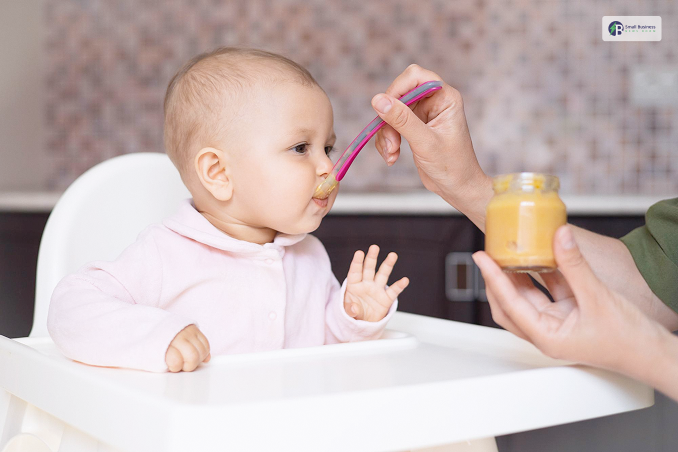
Dubai’s consumer landscape is transforming rapidly. With its high concentration of young families, dual-income professionals, and tech-savvy parents who research every purchase, the baby food sector has expanded significantly in recent years.
According to market observers, baby food business Dubai industry benefits from three major trends:
1. Premiumization: Parents are increasingly seeking high-end, organic, or sustainably sourced baby foods that align with global wellness trends.
2. Ease and Ingenuity: Convenient purees, travel packets, and delivery subscriptions are what parents want.
3. Transparency and Accountability: Today’s consumers must be informed of the story behind each ingredient — from farm to baby spoon.
This changing attitude is seen in how the shopping space of Dubai has been overhauled. Carrefour, Spinneys, and Choithrams have stretched out their baby nutrition counters, while Noon and Amazon UAE provide specially selected baby food sections with international and boutique brands online.
Even pharmacies and baby specialty stores now carry premium products like hypoallergenic formula, organic fruit mix, and fortified cereals. Expansion in boutique baby stores is driving diversification — and a window of opportunity for specialist importers of baby foods.
And since Dubai is a global hub of logistics, opportunities do not stay local. The emirate is also a strategic re-export center, and because of this access, traders are able to export baby food products economically in the Middle East and GCC — Saudi Arabia, Oman, Kuwait, and Bahrain.
You can also decide to set up a branch in Bahrain or another Middle East country where you can extend your business rapidly.
For those entrepreneurs who want to wed purpose and profit, this is one of the most sustainable and viable industries to invest in in 2025 and beyond. You can also try to conquer new markets in the region, such as Qatar, where you will need a local business consultant. He/she will offer you pro services, such as those for starting a business in Qatar.
What You Need To Get Started?
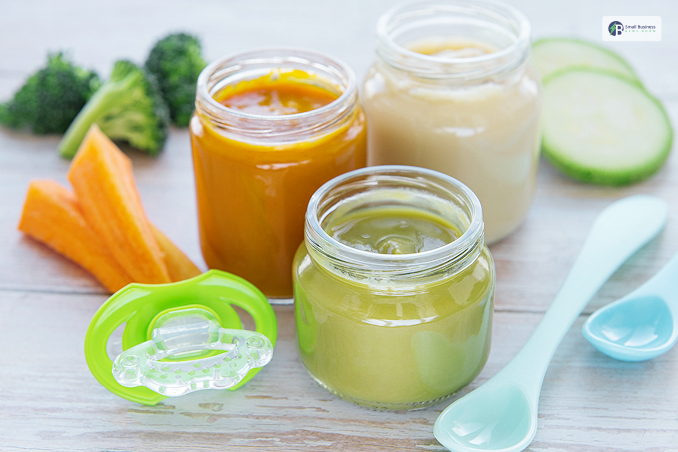
In order to start a baby food business Dubai trading business, it’s more than identifying the supplier. You require a platform that addresses all regulations, logistics, and commercial needs.
1. Business Licensing And Approvals
You will initially require a valid trade license for trading in foodstuffs or trading in baby food. Depending on the baby foods you intend to trade in — particularly if they are organic, dietary, or fortified — you might require further approval from:
- The Dubai Municipality Food Safety Department
- The UAE Ministry of Health and Prevention (MOHAP) (for particular formulations)
- The Dubai Customs Authority (for customs release)
Selection of the proper business sector also matters. Most traders opt for free zones like Dubai South Business Hub, with easy licensing and fast setup for food companies.
Regulatory Legal Framework
All food trading operations must strictly comply with UAE Federal Law No. 10 of 2015 on Food Safety.
This legislation empowers authorities to enforce strict food controls, with heavy financial and legal penalties for the importation of unregistered or mislabeled infant dietary products.
Your trade license activity must explicitly state “Infant and Baby Food Trading” to satisfy both Dubai Economy and Tourism (DET) and federal safety inspectors.
2. Product Registration And Documentation
All products are subjected to the Food Import and Re-export System (FIRS) prior to importing any baby food to the UAE. This is to confirm that all products meet UAE labeling and safety standards.
Registration generally involves:
- Ingredients breakdown and formula
- Shelf life and storage details
- Packaging and labeling information in English and Arabic
- Analysis and origin certificates
- Health certificates for the manufacturing country
Once approved, your product is now clear to be imported, marketed, and re-exported throughout the UAE.
The ZAD Portal And GSO Compliance
In the UAE, product registration must be processed directly through the federal ZAD Portal (the official UAE food registration platform) in tandem with Dubai Municipality’s FIRS.
Crucially, baby food products must strictly meet the Gulf Standardisation Organisation standards.
This is specifically GSO 1025 for formulated complementary foods for infants and GSO 2227 for healthy dietary claims.
This includes providing accredited laboratory certificates confirming zero detectable levels of heavy metals (such as lead and arsenic), pesticide residues, and mycotoxins.
3. Compliance For Storage, Hygiene, And Distribution
Infant food is a high-sensitivity product. That is to say that warehouses and distributors need to maintain extremely high standards of hygiene and temperature management.
If you are shipping perishables like purees, yogurt-based products, or organic baby food, cold chain logistics become the need of the hour. Dubai infrastructure allows this — with new temperature-controlled warehousing facilities, in the event of logistics hubs like Dubai South and JAFZA.
Additionally, you’ll need to conduct regular safety audits and adhere to local Hazard Analysis and Critical Control Point (HACCP) and ISO 22000 standards to ensure your supply chain meets international food safety benchmarks.
4. Supplier Relationships And Product Traceability
Parents want absolute confidence in what they feed their children. Building relationships with trusted, certified, and ethical suppliers is non-negotiable.
Ensure your suppliers can provide:
- Full transparency on sourcing and ingredient origins
- Certification of the form EU Organic, USDA Organic, or Halal compliance
- Quality assurance documents and sustainability certifications
Keeping clean traceability from production all the way through to point of sale will not just guard your reputation but make audits and regulatory inspections easy.
Halal And Organic Accreditation Verification
Do not take supplier certificates at face value.
The issuing certification body must be officially recognized and registered by the Emirates International Accreditation Centre (EIAC) or the Ministry of Industry and Advanced Technology (MoIAT).
This is for the for organic and Halal claims.
If a supplier’s organic certificate is not cross-verified through the UAE’s National Organic Mark system, the product will be rejected at customs, regardless of its approvals in Europe or the United States.
5. Scaling And Building Consumer Trust
In the business of baby foods, trust is your currency of choice. Parents don’t purchase a product — they purchase confidence. To grow sustainably, your brand needs to re-prove itself every time, in safety, quality, and transparency.
These are the methods by which successful Dubai merchants are gaining attention:
- Provide specialty lines of products: Provide organic, vegan, allergen-free, or fortified baby food to meet different nutritional needs.
- Transparency first: Employ transparent and honest labeling and provide full nutritional information.
- Enfranchise your audience: Develop store and digital content that tells parents about your ingredients, sourcing, and manufacturing.
- Enlist omnichannel distribution: Leverage physical stores, pharmacies, supermarkets, and digital channels to reach your audience seamlessly.
- Strategically partner: Partner with pediatric clinics, childcare specialists, and local influencers who are credible to your target audience.
- Maintain consistent quality control: Even if you’re an importer and not a manufacturer, uphold international testing and sampling standards to ensure product integrity.
By focusing on education, ethics, and experience, baby food traders can develop long-term brand loyalty among Dubai’s growing family demographic.
Medical Trust & Allergen Disclaimers
Under UAE food labelling laws, the top 8 allergens (including gluten, milk, soy, and nuts) must be clearly bolded in both English and Arabic on the ingredients panel.
Furthermore, clear manufacturing disclaimers regarding potential cross-contamination are required.
Brands that proactively offer batch-tested allergen data via scannable packaging QR codes build the highest tier of consumer trust among modern parents.
Why Dubai South Business Hub Is the Best Launchpad For Baby Food Traders?
Baby food business Dubai trade successfully demands more than business efficiency, compliance, trust, and positioning. And that is where the Dubai South Business Hub really shines.
Located strategically close to Al Maktoum International Airport and Jebel Ali Port, Dubai South provides unparalleled access to importers and re-exporters.
With its integrated ecosystem, business leaders are able to combine licensing, warehousing, and business operations under one umbrella, time and cost saving.
Why Dubai South is the best place for baby food traders:
- Simple Business Setup: Priority license facilities, limited bureaucracy, and prompt support to food trading enterprises.
- Regulatory Assistance: In-house personnel and partnerships to aid in obtaining approvals from Dubai Municipality and other regulatory bodies.
- World-Class Infrastructure: Temperature-controlled storage areas, logistics facilities, and supply chain solutions tailored for food safety.
- Networking Opportunities: Lively community of food, logistics, and retail experts — ideal for partnerships and collaborations.
- Scalability and Flexibility: Co-working to large warehouses, Dubai South allows your bus.
Whether importing high-end European baby food brands, creating private-label nutrition ranges, or breaking into regional export markets, Dubai South offers the platform to launch, operate, and scale efficiently.
Can I Use Temporary Stickers To Fix Arabic Translation Or Expiration Date Errors On Baby Food Packaging?
No. Under current GSO standards and Dubai Municipality food import regulations, using temporary stickers to correct or alter production/expiry dates is strictly prohibited.
Labels must be permanently printed or integrated, and concealing the original manufacturer’s data will result in immediate shipment rejection by Dubai Customs.
What Happens If A Batch Fails Heavy Metal Or Contaminant Testing At The Border?
In accordance with UAE Federal Law No. 10 of 2015 on Food Safety, any infant nutrition batch found to contain detectable traces of unauthorised contaminants (such as arsenic, lead, or unapproved mycotoxins) will be seized.
The importer faces product destruction at their own expense and fines up to AED 100,000 for compromising public health.
Does Organic Certification From The US (USDA) Or Europe Automatically Count In Dubai?
While internationally recognised, the physical certificate must be registered and authenticated by the Ministry of Industry and Advanced Technology (MoIAT) to be awarded the official UAE National Organic Mark.
Without this local verification step, you cannot legally market the product as “Organic” on UAE shelves.
Additional Resources: