


Table Of Contents
- What Are The Key Benefits Of Digital Strategy?
- Why It Matters?
- What Are The Key Digital Marketing Channels For Small Business Growth?
- 1. Social Media Marketing:
- 2. SEO Core Tactics:
- 3. Pay-Per-Click (PPC) Advertising:
- 4. Common PPC Platforms:
- 5. Email Marketing:
- How To Build A Digital Marketing Strategy For Small Businesses?
- Goal Setting And KPIs:
- Focus On Providing Pure Value (Information Gain):
- Knowing Who Your Ideal Customer Is:
- Digital Marketing Budgeting:
- Tools And Resources For Success In Your Digital Marketing Career:
- Free And Affordable Digital Marketing Tools:
- Content Creation Tips:
- Common Digital Marketing Mistakes Small Businesses Make
- 1. Ignoring Analytics And Data
- 2. Overlooking Mobile Optimization:
- 3. Failing To Post On Social Media Consistently:
- Case Studies: Small Businesses Who Got Digital Marketing Right
The Ultimate Guide To Digital Marketing For Small Businesses: Proven Strategies For Growth
Last Updated on: August 31st, 2026
Editorial Disclaimer: The strategies, budgeting percentages, and tool recommendations provided below are for informational and educational purposes. Marketing results vary based on industry, location, and execution.
In the present-day world of cut-throat competition, creating a digital presence is not just an option, but a necessity for businesses that want to survive and thrive.
Moreover, the customer journey of a modern-day consumer typically begins online, as they use search engines and social media to learn about products and services.
Thus, if a small business does not have a strong digital presence, it will be practically removing itself from the sight of a big part of its potential customers.
As a result, digital marketing for small businesses comes with the tools they need to fight back and even win the war for customers against larger companies.
What Are The Key Benefits Of Digital Strategy?
Digital marketing for small businesses is well-known for its remarkable advantages that directly address the resource limitations of small businesses.
Moreover, the outlined benefits above, to varying degrees, shall be the main factors guiding the digital strategy in terms of efficiency and impact.
1. Cost-effectiveness: Digital marketing for small businesses generally requires a much smaller upfront investment than traditional mass-media methods and delivers a higher return on investment (ROI).
2. Audience Targeting: Digital platforms offer such precision. Also, the focus on targeting ensures that marketing messengers reach those most likely to respond the way they want, based on
- Their age,
- Place of living,
- Interests, and
- Past online activities.
3. Measurable Results: Every digital tool includes data analytics as an integral part, providing clear, usable data.
Moreover, thanks to this transparency, companies can monitor their campaigns’ progress in real time. Based on that, either change the whole approach or just adjust the strategy.
According to industry data from HubSpot, highly segmented and targeted marketing campaigns yield up to a 2x higher conversion rate compared to broad, non-targeted efforts.
Why It Matters?
In the end, going for digital marketing for small business means being in the game and building the power to withstand the storm.
So, the ability to measure and control marketing expenses, along with the identification of the ideal audience.
This puts digital marketing in the strongest position to win new customers and thus support the long-term survival of the business in the market.
What Are The Key Digital Marketing Channels For Small Business Growth?
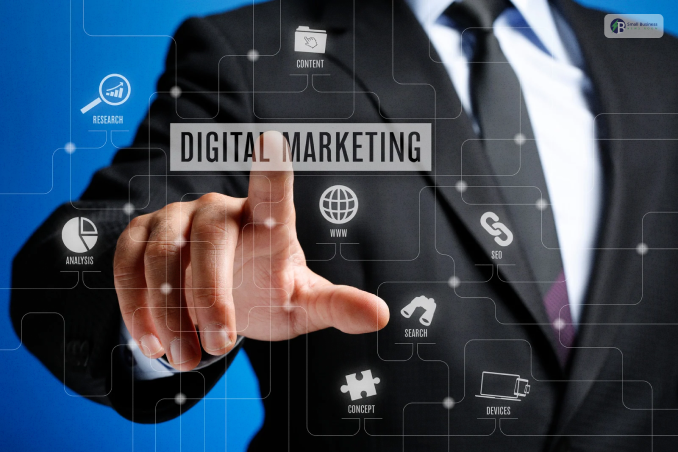
Now that you have a clear understanding of the importance of an online presence through digital marketing for small businesses! It is time to leverage the specific channels that drive growth.
Small businesses do not have to be everywhere at once; they need to strategically choose the platforms that best meet their needs.
The following are the main digital marketing channels that consistently deliver strong results.
Our Firsthand Take: In our experience managing small business accounts, we frequently see lean teams exhaust their budgets trying to master five social networks at once.
We strongly advise picking just one primary acquisition channel (like Local SEO if you rely on foot traffic, or Meta Ads if you sell products online) and dominating it completely before expanding your scope.
1. Social Media Marketing:
The social media marketing aspect is considered by many to be the most important factor in
- Community building,
- Brand promotion, and
- Direct customer interaction.
Moreover, the customer group’s preference determines the selection of the right social media platform.
A) Facebook: The platform’s main attributes are large audience reach, community-building, and very detailed, targeted local advertising campaigns.
B) Instagram: Perfect for businesses that rely on visual communication (retail, food, services) as it allows them to display products through high-quality images and videos.
C) TikTok: The platform is gaining popularity among young people as a source of creative, short-form video content that can go viral in a matter of hours.
D) LinkedIn: The platform for business networking and professional services among the industry’s thought leaders through content.
Small businesses can achieve social media success by focusing on genuine interaction and consistent posting, turning engagement into sales and customer loyalty.
In addition, by optimizing your website, search engines will give you a higher ranking in search results, bringing in the right kind of organic (unpaid) traffic.
Also, it is a gradual investment that provides a good return in the form of visibility that lasts over time.
2. SEO Core Tactics:
A) On-Page SEO: This technique focuses on the controllable factors on your site.
The inclusion of pertinent keywords in your headings, titles, and content, the optimization of images, and the provision of easy accessibility via quick loading times are the main concerns.
Also, Google Search Console and similar tools provide invaluable insights into your website’s effectiveness.
B) Off-Page SEO: This approach involves steps taken outside your site to improve its rankings.
Generating quality backlinks! Links from other trustworthy websites that lead to your website are the most important off-page factor.
This tells search engines that your site is a reliable authority and therefore deserves a higher ranking.
C) Local SEO: Absolutely critical for brick-and-mortar storefronts. You must claim and optimize your free Google Business Profile.
Fill out every field completely, actively gather authentic client reviews, and upload weekly images of your business.
According to local search ranking factors verified by industry authority Whitespark, optimized profiles are the single most influential factor for winning visibility in local map packs.
3. Pay-Per-Click (PPC) Advertising:
With Pay-Per-Click (PPC) advertising, you get instant traffic and leads, plus the added benefit of the fastest visibility, either on top of the search results or in the feeds of social media.
For small businesses, working with a PPC agency is an effective way to gain visibility while their SEO efforts mature.
Risk Mitigation Note: While PPC platforms offer immediate visibility, they can deplete limited business capital rapidly if campaigns are misconfigured.
If you are entirely new to bidding structures, set strict daily budget caps inside your ad account settings (such as 10 to 20 dollars per day) to avoid accidental overspending while you learn the platform algorithms.
4. Common PPC Platforms:
A) Google Ads: This platform lets you bid on keywords so your company can be visible when users search for specific terms (Search Ads), or display visual banners across a large network of partner websites (Display Ads).
B) Facebook Ads: Highly precise targeting powered by Facebook Ads based on the social networking site’s in-depth knowledge of user demographics and interests.
Among the social media marketing techniques, this one fits right in for ecommerce and lead generation.
A major benefit of PPC is that payment is only made when a user clicks your ad; thus, advertising costs are within reach, and performance is easily evaluated.
5. Email Marketing:
Email marketing remains one of the strongest and most cost-effective channels for building close ties with customers.
You can communicate directly with your audience via email, rather than on social media, where you do not own the audience.
Email campaigns are perfect for:
- Nurturing Leads: Providing targeted information to gradually bring potential customers to the sales pitch.
- Building Loyalty: Offering current customers exclusive deals, news, and personalized content as a means of keeping them interested.
- Driving Sales: High-converting new products or seasonal sales, direct promotions.
Using an email marketing service such as Mailchimp or Constant Contact can not only automate this process but also yield effective engagement metrics.
How To Build A Digital Marketing Strategy For Small Businesses?

The strategies of digital marketing for small businesses is not a haphazard event. It is a well-ordered plan.
Small businesses with limited resources must lay out a thoughtful strategy to ensure each effort yields measurable growth.
So, the first step is to define the success criteria and be super clear on your target audience.
Goal Setting And KPIs:
A campaign cannot be launched without clearly setting objectives. The goals need to be SMART:
- Specific,
- Measurable,
- Achievable,
- Relevant, and
- Time-bound.
The progress of these goals is monitored through Key Performance Indicators (KPIs), which serve as performance markers.
Small businesses’ common goals are:
- Sales Increase: Conversion rates and total revenue generated are the metrics.
- Website Traffic Increase: Unique visitors, traffic sources, and page views are used to measure it.
- Brand Awareness Increase: Social media engagement (likes, shares, comments), website traffic growth, and online brand mentions are used to measure it.
A realistic SMART goal could be: “15 % increase in monthly website closing leads during the next three months.”
Focus On Providing Pure Value (Information Gain):
Avoid simply rehashing generic information that already exists across dozens of blogs.
Google’s Helpful Content system rewards “Information Gain”—the inclusion of original insights, custom diagrams, proprietary data, or unique industry counter-arguments.
If you use generative AI writing tools to brainstorm layouts, make sure an industry expert manually reviews, rewrites, and adds personal experience anecdotes to the text before publishing.
Knowing Who Your Ideal Customer Is:
Marketing that works requires knowing exactly who you want to communicate with. If you try to reach out to everyone, you will end up with no one and will have wasted your resources.
Once you segment your audience, you can craft your message to be as effective as possible.
Among the techniques or methods for audience research and segmentation are:
- Demographics: The age, location, gender, income level, education, and other similar basic characteristics.
- Behaviors: Knowing how they engage online, what sites they go to, and when they buy something.
- Interests: Discovering pastimes, loves, and professional relations.
- Creating Personas: Craft detailed representations of your target customers.
These buyer personas should serve as fictional profiles of your ideal buyers. They further map out their specific pain points, preferred online communication channels, and purchasing habits.
This way, your business can speak directly to their needs.
Google Analytics and similar tools can provide useful insights into current website visitors.
Digital Marketing Budgeting:
Small business budgets are generally limited, so the right distribution of funds is crucial.
Your task is to allocate funds across the different channels, selecting the one that offers the highest return on investment (ROI) for your specific goals.
Here are the effective budget allocation tips for a successful digital marketing campaign for a small business:
- Start Small and Experiment: Don’t put a lot of money into an untested channel; instead, run small testing campaigns to discover what works best. A reliable framework for small businesses is the 70-20-10 rule: invest 70% of your funds in proven core channels, 20% in scaling secondary channels, and 10% in testing highly experimental tactics.
- Concentrate on High-ROI Channels: Prioritize low-cost channels such as SEO and email marketing that deliver long-term value.
- Set Aside Money for Paid Ads for Fast Wins: Keep a small portion of the budget for high-targeted PPC ads (like Google Ads or Facebook Ads) to attract instant traffic and leads.
- Content Creation: Quality content is the backbone of both SEO and social media; allocate a budget to produce attractive blog posts, videos, or images.
Your small business can develop a robust digital marketing strategy.
This supports sustainable growth by setting clear objectives, understanding your audience, and budgeting effectively.
Your small business can develop a robust digital marketing strategy that paves the way for sustainable growth by setting clear objectives, understanding your audience, and budgeting effectively.
Tools And Resources For Success In Your Digital Marketing Career:
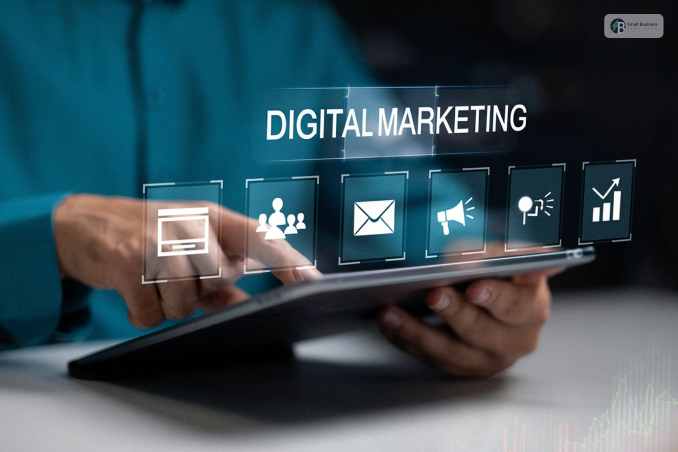
Using the right tools for successful digital marketing for a small business can make your efforts easier and more effective.
The encouraging aspect for small businesses is that powerful digital marketing resources are often either free or very cheap.
Free And Affordable Digital Marketing Tools:
These tools help to break down complex tasks and perform necessary data analysis for proper decision-making:
1. Google Analytics: A free and must-have tool for monitoring the number of visitors to a website, getting a grip on how the visitors use the site, and judging the effectiveness of the marketing campaign.
2. Canva: Makes the task of graphic design by providing ready-to-use templates for social media posts, infographics, and ad banners.
3. Mailchimp: A free package for the entire duration of e-mail list and newsletter design management, as well as automation campaigns for customer loyalty, is offered.
4. Hootsuite (Limited Free/Affordable Plans): Aids in social media post scheduling across several platforms, which will make the company’s digital presence felt all the time without the need for regular manual work.
While entry-level software democratises execution, scaling past a growth ceiling requires integrated expertise.
Partnering with a full-service creative agency helps you move from basic DIY tools to polished, multi-channel growth systems.
Content Creation Tips:
The quality of the content is the main reason SEO, social media, and email marketing work. It builds trust and attracts visitors who come naturally through organic channels.
1. Value Is The Focus: Generate content that solves your audience’s problems or answers their questions. Engagement is what good content will always attract.
2. Formats Diversification: Try out different formats, such as blog posts, how-to videos, and interactive infographics. Use Canva for creating great-looking visuals in no time.
3. Frequent Publishing Is The Rule: Release content regularly to keep the audience interested and to get search engines to consider you more favorably.
A simple content calendar managed through a basic Google Sheet can be your organization’s tool.
Common Digital Marketing Mistakes Small Businesses Make
Although small businesses can avoid these mistakes, they still sometimes fail to earn rewards. For successful, hassle-free digital marketing efforts, it is crucial to spot and address these common mistakes.
1. Ignoring Analytics And Data
One of the biggest mistakes is neglecting performance measurement.
If you do not have data from tools like Google Analytics, you will not know which campaigns are working and where your money is going down the drain.
How To Avoid? Monitor your KPIs (Key Performance Indicators) regularly. Be data-driven in your decisions and strategy adjustments, rather than relying on guesswork.
2. Overlooking Mobile Optimization:
Over half of global web traffic originates from mobile devices. If your mobile layout forces users to pinch-and-zoom, they will leave.
You can run your URL through Google PageSpeed Insights to audit your site’s Core Web Vitals.
Additionally, ensure your site uses a valid HTTPS security certificate; modern browsers flag unsecured HTTP sites as dangerous, which destroys consumer trust instantly.
How To Avoid? Utilize modern diagnostics like Google PageSpeed Insights and the Core Web Vitals report inside your Google Search Console dashboard.
These tools pinpoint exact technical rendering errors, layout shifts, and element-sizing bugs that disrupt mobile users.
3. Failing To Post On Social Media Consistently:
A brand that does not communicate through social media is one that customers will forget, and consequently, the audience will become disengaged.
Posting frequency is one of the factors that determine which accounts algorithms favor, so infrequent updates can make it seem like your business isn’t operating.
How To Avoid? Develop a content calendar that will be followed.
Utilize scheduling tools such as Hootsuite, Ordinal or Buffer to determine when posts will be published in advance, ensuring a continuous supply of interesting content.
Case Studies: Small Businesses Who Got Digital Marketing Right
The world is full of those who realize the power of strategically planned approaches through real-world examples:
A) The Local Bakery: The popular small bakery showcased its products in the best light through high-quality pictures in targeted Facebook ads.
The bakery divided its potential customers by local zip codes and interests, including ‘baking’ and ‘coffee’, among others. Foot traffic and local sales were strongly amplified in just one month.
B) The Soap Maker: The artisanal soap maker company was struggling with brand visibility until they implemented SEO best practices on their website and launched a powerful email marketing campaign.
Also, they produced highly informative blog articles on skin care that attracted thousands of readers.
By feeding this list with exclusive offers, they created strong brand loyalty and even more direct-to-consumer sales, which were not small.
C) The Consulting Firm: A small consultancy used LinkedIn for content marketing. Knowledgeable articles and industry analyses were the firm’s main weapon.
They not only increased their market power but also generated several high-quality B2B leads and raised brand awareness among their professional target audience.


