You’re sitting at your desk, staring at spreadsheets and feeling creatively drained.
And you’re aiming to gain financial freedom but can’t afford to give up your job. You need to transition.
Before designing anything, you’ll need to know how much it will cost to set up your jewelry business alongside your 9-5.
As an employee looking for how to open a jewelry store, you can calculate the real costs by doing a savings audit and estimating sample production costs.
Moreover, this will help protect your finances and let you build a controlled runway for your business using your steady 9-5 income.
This guide will explain how much does it cost to start a jewelry business and to create a safe exit strategy.
Whether you’re looking to go the Lean Bootstrap route (between $500-$1500) or go the premium route (between $5,000-$15,000), we’ll break down the exact costs of each software, manufacturing, and hidden fees so you can launch with confidence.
Quick Summary: How Much Does It Cost To Start A Jewelry Business
Trying to work out how much it will cost you to start your jewelry business while juggling a busy 9-5? Here’s what you’ll need to know for 2026.
- Lean Launch Strategy ($500-$1500) – This method includes print on demand/dropshipping. This is best for busy corporate women looking to start a business on a budget.
- Premium Brand Build ($5000-$15000) – This method includes bespoke manufacturing, private labeling, and bulk stock. This option costs more but gives you higher profit margins.
Both options will cost between $50-$150 per month in software. This means you’re keeping your risk low while testing your designs.
You’ll only need between 7-10 hours per week. This is equally important.
How Much Does It Cost To Start A Jewelry Business: Choosing Jewelry Business Model

The first thing to consider is this: Before you spend any of your hard-earned 9-5 money, you’ll need to decide what kind of business you want to run.
This will determine how much does it cost to start a jewelry business upfront. It will also determine how much work you’ll do each day and which jewelry business ideas you choose.
If you choose the wrong model for your lifestyle, you will quickly get burnt out. Let’s take a look at the two options.
The Lean Model (Dropshipping/Print On Demand)
If you have less than 5 hours of free time a week & want to avoid any stock risk, this is the route for you. You also won’t need to buy any stock.
How it works: A customer purchases a necklace from your website. The supplier creates the product and ships it directly to the customer.
Pros: You won’t have to handle any products and don’t have to worry about shipping boxes when you come home from a busy day.
Cons: On the contrary, you won’t get the highest profit margins and won’t control packaging quality.
The Premium Model (Bespoke Designs)
If you want to create an asset and have some capital to invest, then this is the best option for you. Moreover, you’ll be working with manufacturers to create unique pieces.
How it works: Design/curate some beautiful jewelry. Buy in bulk (50 of the same design). Keep at home.
Pros: You will have full control over your branding and packaging, plus high profit margins (often over 70%).
Cons: The premium model comes with higher upfront risk, and you will have to ship orders yourself on the weekend.
Also Check: How To Spot High-Margin Jewelry Sub-Niches You Already Love
The Lean Launch Budget Breakdown ($500 – $1,500)
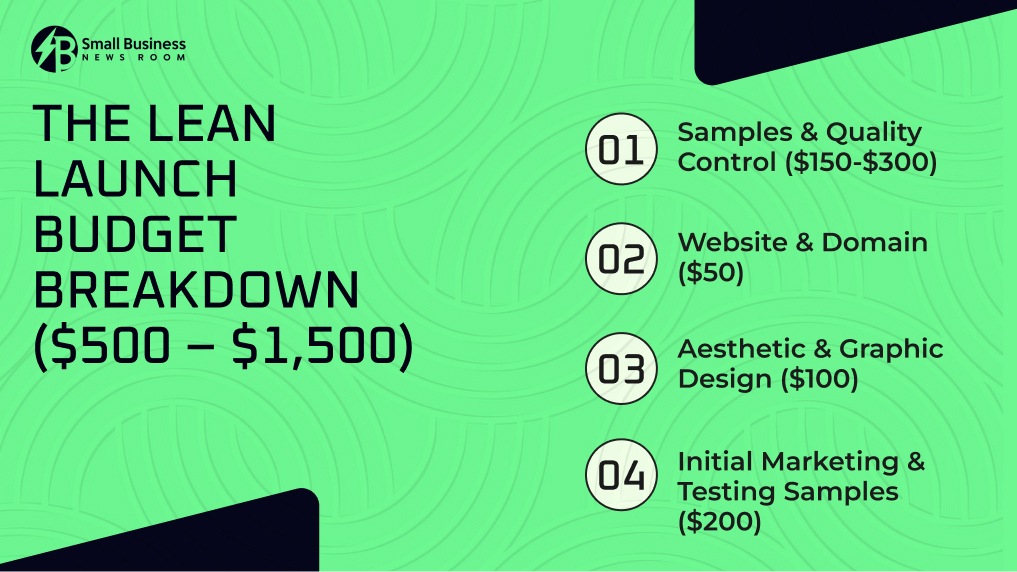
Here’s the exact cost breakdown for a lean start-up. This way you can test out your jewelry design ideas without spending too much.
As you’re testing out your market, you want to keep your costs as low as possible. Here’s how much everything will cost.
Samples & Quality Control ($150-$300)
Even with dropshipping, you will need to order samples. Never sell a product you haven’t touched.
Check that the metal doesn’t cause irritation, that the clasp doesn’t snap, and how it looks in natural light. So, you need to wear the jewelry for 2 weeks.
Moreover, you can also take hot showers, spray perfume, and wear it to bed. This way, you can test the material and its quality.
If the metal turns green or snaps, then don’t use that supplier. Your brand is your only real asset in the long run.
Website & Domain ($50)
Don’t spend a lot on a web developer or fancy digital agencies. A Shopify Starter or basic plan plus a custom domain name will cost very little.
This will act as your online shop and work for you 24/7 while you’re working your 9-5.
Moreover, you must avoid any complex website builders that will require you to learn coding.
Thus, you need to keep it simple with clean templates so customers can purchase in under 3 clicks.
Aesthetic & Graphic Design ($100)
First impressions are key. Use sites like Canva to design your aesthetic or hire a simple logo from a freelance designer on Fiverr. Keep it simple.
You can choose a clean font and 2 colors. Your jewelry should be the focus.
Initial Marketing & Testing Samples ($200)
Use micro-targeted social media advertising or send a few pieces to niche content creators.
Don’t spend a fortune on huge marketing campaigns. Find micro-influencers with a few thousand highly engaged followers.
Moreover, you can send them a beautiful piece of jewelry with a handwritten note. They’ll give you some organic support, which will bring in much better traffic.
Legal & Permits ($100-$300)
Register your business locally so you’re working legally. Depending on your state or city, you’ll need a basic LLC (Limited Liability Company) or simple DBA (Doing Business As). This will keep your personal savings safe.
Total Lean Startup Estimate: $600-$1000
The Premium Brand Budget Breakdown ($5,000 – $15,000)
If you want to compete with high-end online boutiques, then you’ll need to invest in a premium budget. So, how much does it cost to start a jewelry business, especially the premium ones?
This is best for busy corporate women who want to launch with bespoke collections, unique metal plating, and a beautiful unboxing experience.
While it will cost more upfront, you’ll be seen as a Premium Brand and can charge more.
Minimum Order Quantities (MOQ) ($2500-$5000)
A high-quality manufacturer won’t create individual pieces. They’ll require you to buy a minimum amount of pieces per design.
Furthermore, to create a cohesive collection of 5 unique pieces (50 of each piece) you’ll need to invest a fair amount. Moreover, look for a supplier with a low MOQ for your initial order.
Unboxing ($500-$1000)
Premium jewelry relies heavily on emotion. When a customer opens a magnet closure box, removes the embossed tissue paper & reads the personalized note, the perceived value will double.
Moreover, you’ll need to order bespoke boxes, velvet microfibre pouches, and thick thank-you cards.
If they feel like they’re opening a luxurious gift, they’ll be happy to pay $80 for a necklace that only costs you $12.
Professional Photography ($800-$1500)
Since you’re selling online, customers can’t touch, feel, or try on the product. Your photos will need to do all the selling.
For a premium launch, you’ll want professional macro photography to show the exact sparkle, gem clarity, and metal texture.
Furthermore, you can hire a jewelry specialist photographer. General photographers often struggle with the high shine and intricate details.
Premium Website Theme & Apps ($300-$600)
A premium theme will help you convert more. You’ll also want to buy apps that let customers zoom in on high-res images, view interactive lookbooks, and use sizing guides.
Also, a premium website needs to load in under 2 seconds, or your busy customers will leave.
Legal, Trademark & Insurance ($1000-$2000)
Protect your unique brand assets. Invest in a trademark for your brand name to stop copycats stealing your momentum.
Also invest in product liability insurance in case a customer has a severe allergic reaction to the metal alloy.
Total Premium Start-Up Estimate: $5100-$10100
How To Start A Jewelry Business: Hidden Operational Costs To Watch Out For
Many corporate professionals fail because they forget to budget for the unglamorous costs of running their business.
So, to keep your sanity while working your 9-5, you’ll need to budget for the recurring costs of your software & running your store.
E-Commerce Subscription ($39-$79 per month)
Firstly, Shopify charges a monthly fee. As your store grows, you may want to invest in some premium plugins.
This could include customer reviews, currency conversion for international shipping or advanced email abandonment flows.
Shipping & Packaging ($2-$5 per package)
Secondly, don’t forget to budget for strong bubble mailers, shipping labels, packing tape & postage.
If you’re going the premium route, you’ll also need a good thermal label printer (Rollo/Munbyn).
Don’t waste your precious evening time sticking paper labels onto boxes. Thermal printers will print a sticky label in 1 second.
Transaction Fees (2.9% + $0.30)
Lastly, every time a customer uses their credit card, PayPal, or Apple Pay, you’ll be charged a small fee.
This money will never show up, as it will automatically be taken from your bank. Include this in your pricing strategy.
The Foundational Creative Phase (Zero Dollars)
Before you spend any of your savings on stock or software, you can build your business foundation for free.
You can do this during your lunch breaks or on the weekend.
Business Name Brainstorm
Choose a name that’s easy to remember, easy to spell, and fits your brand values. Avoid trendy words and words that are difficult to spell, as they can feel outdated in 2 years.
Moreover, you need to check that the domain name is available on Namecheap and check local business registries.
Don’t fall in love with a name only to find out someone else has a trademark.
Jewelry Design Ideas
Look at the current jewelry trends. Are customers buying chunky silver abstract pieces, minimal solid gold fill, or raw gemstone pendants?
Well, in such cases, create a secret Pinterest board to collect textures, moods, and color palettes. This will help you understand who you’re designing for, and you won’t buy random stock.
How To Allocate Your Limited Weekly Time
As a busy corporate, you won’t have much time. You can’t manage a complex business model that requires 40 hours of hands-on work.
If you’re spending too much time on your business, your performance at work will drop, and you’ll get stressed. Here’s how to create an efficient 10-hour work week.
| Day(s) | Time Commitment | Focus Area | Action Steps |
| Monday & Tuesday | 1 hour each night | Digital Tasks | • Reply to customer service emails • Schedule weekly social media • Optimize your online shop |
| Wednesday & Thursday | 1 hour each night | Stock Management | • Email your suppliers • Check in on production • Design new jewelry ideas |
| Friday | 0 hours | Complete Break | • Go out for dinner or see friends • Read a book • Unwind to avoid corporate & startup burnout |
| Saturday | 3 hours | Order Fulfilment | • Pack the weekly orders • Print shipping labels • Wrap bespoke boxes • Drop packages off at the post office |
| Sunday | 2 hours | Metrics & Analysis | • Calculate actual profit margins • Analyze your small ad spend • Check website conversion rates |
Balancing The Corporate Job With The Side Hustle
The biggest trap for corporate women is letting their new business interfere with their corporate day job.
Remember: Your 9-to-5 funds your business dream. It pays your rent, covers your health insurance, and funds your inventory. Protect your day job performance fiercely until your business income completely replaces your salary.
- Never use company assets:
Do not check your Shopify dashboard on your corporate laptop. Do not answer customer service emails using company Wi-Fi networks or during company time. Keep strict boundaries between your two worlds.
- Automate client expectations
Set up automated emails that tell customers orders are processed within 48 hours.
Moreover, this stops people from expecting instant shipping updates while you’re in an important corporate board meeting.
- Use ready-made professional tools
Don’t waste hours building complex financial spreadsheets from scratch late at night.
Use reliable, pre-made templates so you can plug in your numbers and instantly see your exact profit margins.
Final Verdict: Your Low-Friction Roadmap For Tonight
You do not need to leave your job to become a successful business owner. What you do need is a strategic, super-organized plan to build your business without wasting your precious time.
If you are looking to start building your path to financial freedom tonight, here are 3 easy steps to take:
Choose your business model: First, decide whether your personal savings and spare time each week fit better with the Lean Bootstrap or Premium Brand option.
Pick a brand name: Second, brainstorm 3 unique names for your jewelry business and check whether the .com name is available.
Plan your budget: After that, you can download our budget tool or create a new document and write down what you’d like to spend to launch your business. Use the numbers from this guide.
Your future self is waiting for you to build this bridge to freedom. Don’t overthink climbing the career ladder. Start building your own assets.
Special Resource: The Ultimate Jewelry Business Starter Template Pack
Are you looking to get out of the 9-5 but not wanting to spend hours building your business foundation? Don’t worry! I have created the SBnewsroom Product Listing & Financial Planning Template Pack to help busy professional ladies who don’t have spare time.
All the tools needed to build your business quickly over the weekend:
Pre-Created Inventory & Profit Calculator (Excel/Sheets): No more guessing! Simply plug in your manufacturing & shipping costs, and it will tell you exactly how much profit you’re making.
15 High-Converting Jewelry Product Descriptions (Copy & Paste): Beautiful descriptions to convert emotionally, using in under 5 minutes.
Shipping & Customer Service Emails: Create a great email for when you’re late shipping, offering refunds and confirming orders.
Manufacturer Negotiation Scripts: Exact scripts to send to factories to reduce their MOQs without looking like an amateur.
[Download Here]
This affordable digital product will give you the exact tools you need to get your finances in order while building over the weekend, saving you hours of experimenting.
Additional Resource: How To Build Your Dream Jewelry Line Without Drowning In Inventory