You’re staring at a corporate presentation and thinking: How much of my life am I giving up to sit at a desk?
Due to burnout, your most valuable resource – your time – is going towards someone else’s profit.
After shutting your laptop at 5:00 PM, you have limited energy left, and you certainly won’t want to spend it making tiny clasps for minimal profit at your crafting desk.
Moreover, your exit plan should complement your career. Therefore, you need to think carefully about what you can sell online without burning yourself out.
This guide will help you decide between a handmade jewelry business vs wholesale model to help you create an extremely profitable side hustle whilst keeping your 9-5.
If you want to build a highly profitable jewelry side hustle while keeping your 9-5, choose high-margin items to sell.
Permanent jewelry, personalized birthstone jewelry, and sentimental milestone gifts are great sub-niches that give you the best return on your time.
Key Insights For Online Jewelry Sellers
Why it’s super lucrative: An average net profit margin for jewelry is 39%, but many niche areas offer 70-80% gross profit margins on individual items [trueprofit.io]
- Firstly, don’t go all handmade to save time! Use a mix of handmade and wholesale.
Instead, source high-quality ready-made chains and charms, then add a high-value personal element such as custom stamping or milestone gift cards.
- Secondly, don’t risk holding too much stock by using an exact made-to-order process or sample new designs in small batches (5 pieces) to test them out before purchasing large amounts of materials [shopify.com]
Deep Dive: The Handcrafted Jewelry Model
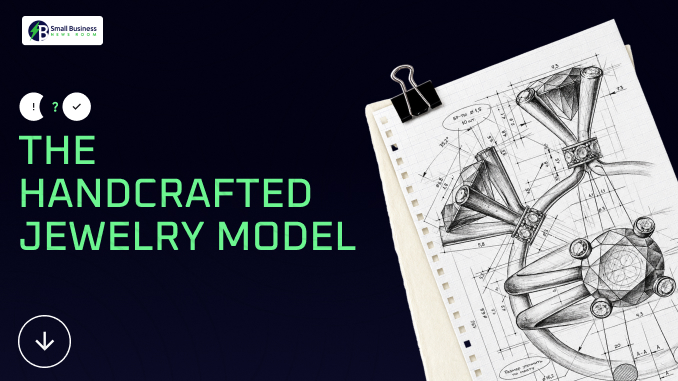
Choosing between a handmade jewelry business vs. wholesale can be tough. So, before you get confused about what to choose, let me help you understand how each model works.
First, let’s talk about the handcrafted jewelry model.
This is where you assemble each piece of jewelry by hand. You purchase raw components and make each piece. It feels very natural to many women.
These components include: loose gemstones, wire, charms, and jewelry findings
Profit Margins
The biggest benefit of this option is the strong profit margins. Raw components are cheap to buy in their raw form.
Moreover, by using raw components like wire, luxury clasps, and loose semi-precious stones to create beautiful designs, you are creating an artisan product.
Cost Of Components
You can purchase raw components to create your premium gemstone ring or delicate wire-wrapped pendant for around ₹250.
- Retail Price: First, as this is an artisan product and is unique with a story behind it, you can easily sell it online for ₹2500.
- Profit Margin: Second, you will have a massive profit margin of 90%. This means you can invest in digital marketing strategies or targeted social media campaigns knowing you have this safety net.
Time Consuming?
Although the profit margins seem amazing, this option will limit your growth as a corporate professional.
If it takes you 45 minutes to make one intricate necklace, then every single order costs you almost an hour of your evening.
On the other hand, let’s say you have spent 9 hours working on deadlines, commuting, and opening up your laptop to find 20 orders from your online store in one day.
Moreover, you will now have a second shift of 15 hours of manual work.
As many women have busy and stressful jobs, this can become a chore rather than a fun, creative venture and cause fast burnout.
Deep Dive: The Curated Wholesale Sourcing Model
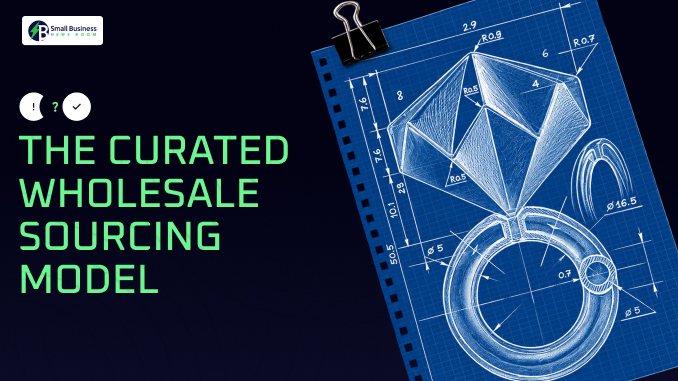
Now, here’s the wholesale sourcing model from the handmade jewelry business vs. wholesale comparison.
With the wholesale model, you’re not involved in the creation process at all.
You’re acting as a fashion curator, purchasing finished designer pieces directly from reliable manufacturers at wholesale prices.
This means you can then brand your products and increase the price.
The Power Of Real Leverage
This option removes the lengthy manufacturing process from your schedule. You’ll be focusing on branding, packaging, and marketing your products.
Numbers: You purchase a trendy, minimalist stainless steel chain from your wholesale supplier for ₹300.
You then put it into branded luxury packaging and sell it on your website for ₹1,500.
Margins: You make a strong 80% gross profit margin with zero time spent assembling the product.
Risks Of Holding Stock
The main downside is how much you need to invest at the start.
You will have to purchase stock, and manufacturers will often impose MOQs. You risk overinvesting if you get it wrong and ending up with lots of extra stock you can’t sell.
Direct Comparison: Handmade Jewelry Business Vs Wholesale
To make a clear business decision tonight, review this scannable breakdown of how both models stack up across key corporate side-hustle metrics.
| Business Metric | Handmade Jewelry Business | Wholesale Sourcing Business |
| Average Production Time | 30 to 60 minutes per item | 0 minutes per item |
| Average Gross Profit Margin | 85% – 95% | 70% – 80% |
| Inventory Complexity | Low (Raw materials are flexible) | High (Pre-made styles cannot change) |
| Scalability Potential | Hard (Tied to your physical hours) | High (Fulfillment can be outsourced) |
| Upfront Financial Risk | Extremely Low (Buy components as needed) | Low to Medium (Requires bulk purchases) |
How To Choose Your Perfect Sourcing Strategy
To decide which route to take, you need to understand your goals, your skills, and how much energy you have.
Use this checklist below to ensure you make an objective decision.
Step 1: Evaluate Your Skills
Honestly, look at your skills. If you feel like you do not have the skill to create something, then do not waste your energy learning them whilst you’re also working in a high-pressure corporate role.
This will add stress and frustration when you’re trying to learn a new trade. If you don’t have assembly skills, then please pick wholesale.
Your main focus will be building an amazing brand, not doing a manual job.
Step 2: How Much Time Do You Have?
Look at your schedule and work out how much you have.
Do you have a consistent block of time each week (10-15hrs) where you can sit down and start making your jewelry?
If your job is long, unpredictable, and involves traveling, then it won’t be realistic to make your jewelry manually, so choose wholesale.
You’ll be able to complete orders quickly in short bursts over the weekend.
Step 3: Scale Test
Imagine your store goes viral and within 48 hours you have 100 orders.
Firstly, with a handmade model, this would create a huge production issue and affect your performance at your day job.
Secondly, with a wholesale model, you’ll be able to manage the increase in orders easily.
Thus, you simply take 100 pieces from your drawers, place them in your bespoke gift boxes, add printed shipping labels, and send them off over the weekend.
The Winner For Corporate Women: The Smart Hybrid Strategy
If you want to make the highest possible profits from your handmade jewelry creations but also scale your brand quickly with wholesale, the most successful companies use a Smart Hybrid Model.
Moreover, this gives you the ability to create trendy products to sell, but you won’t get stuck with any manual work or be left with too much stock.
Hybrid 3 Step Framework: Handmade Jewelry Business Vs Wholesale
Source Wholesale Components: Buy high-quality ready-made chains, blank stamped tags, or basic stone settings from a reliable supplier [faire.com].
- Add Minimal Personalization: Use a metal stamping kit to add a single initial charm to your jewelry. Or attach a specific birthstone charm with a simple jump ring.
- Emotional Packaging: After that, package your semi-personalized item with an emotional personalization card (e.g., To My Brave Sister on Your New Beginning).
Efficient Production
By using a ready-made chain and adding one ready-made charm, you’re reducing your production time to under 2 minutes from 45 minutes. This helps protect your time.
Increased Profit Margin
Adding a personalization element makes this a thoughtful, personalized gift.
This means you can charge higher retail prices to match the high profit margins of artisan jewelry.
No Money Wasted
To keep your cash flow healthy, use the Lean Testing Method. Don’t purchase hundreds of pieces of unknown styles.
Moreover, purchase 5 sample pieces of a wholesale design. Add them to your store and see how the consumers react.
If they sell quickly, take your profits and invest in a bigger wholesale order. If they don’t sell, you can sell your 5 pieces, leaving you with no expensive surplus stock.
Final Verdict & Next Steps
You can actually have a good work-life balance while creating your e-commerce exit strategy!
You’ll create an asset that grows passively for you by removing the lengthy manufacturing process and curating your products.
So, start small, test with just 5 pieces, and let your customers tell you what to scale.
Your Action Items for Tonight
- Firstly, you need to spend 10 minutes writing down your favorite design style (e.g., Minimalist Gold Plated, Timeless Pearls, Statement Crystals)
- Secondly, use wholesale directories such as AliExpress or Faire to find 5 ready-to-ship items that fit your target brand’s aesthetic.